Back
Healthcare & Clinical

An AI Receptionist That Keeps a Clinic's Calendar as the Single Source of Truth

How Pfactorial Technologies built James, a 24/7 voice and chat clinical receptionist that never double-books a patient because every action is checked against the clinic's live calendar.

August 21, 2026
Share
ENGAGEMENT SNAPSHOT

Pfactorial_Case_Study_Clinical_Assistant_James image 1
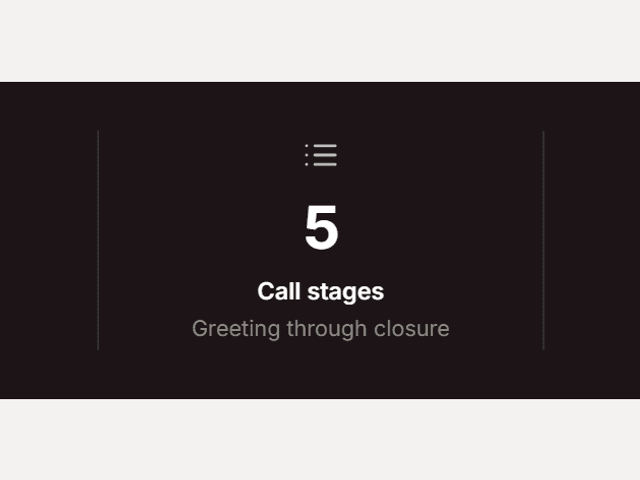
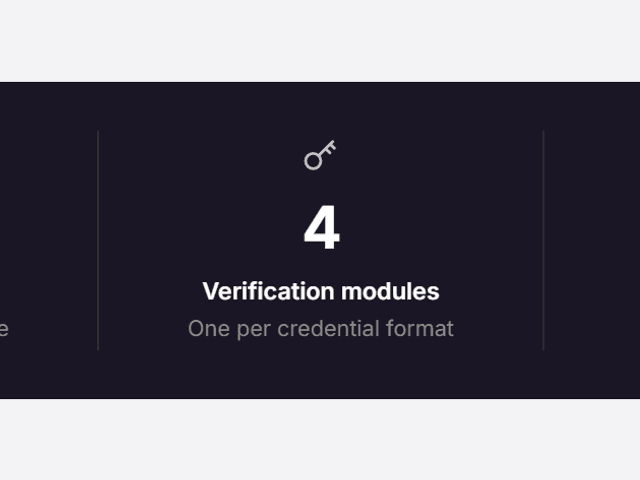
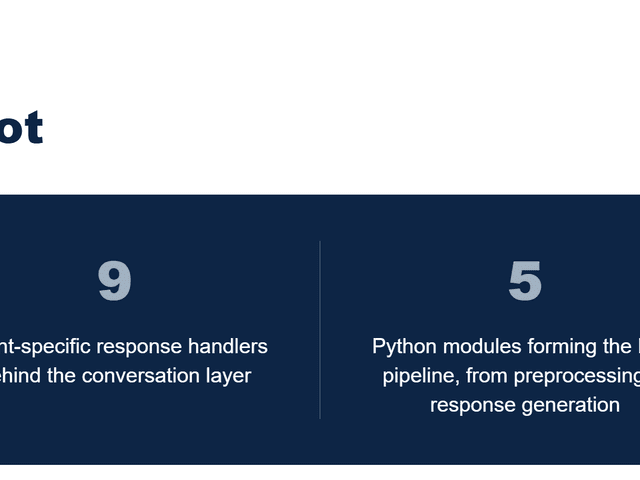
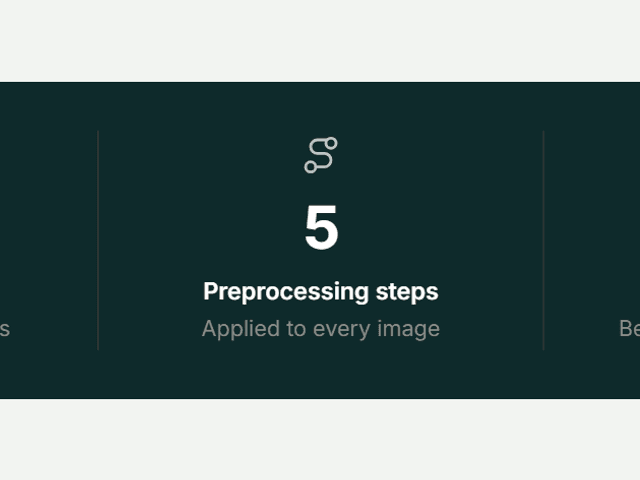
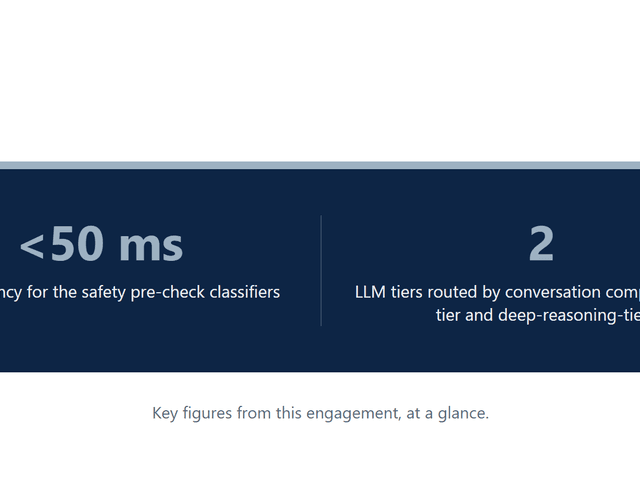
Figure 1 - Key figures from this engagement, at a glance.
EXECUTIVE SUMMARY
Clinics lose bookings when reception isn't staffed - after hours, during walk-ins, or simply when phones are busy - and our client wanted an AI receptionist that could handle appointment booking, rescheduling and walk-in queries around the clock without ever conflicting with the clinic's real calendar.
The risk wasn't sounding robotic - it was booking against a stale calendar. An assistant that feels helpful but double-books a slot or offers a time that's actually taken creates more work for staff than it saves.
Pfactorial built James: a voice and chat clinical receptionist where every calendar action routes through a small set of backend operations that always check the live Google Calendar before confirming anything, so the assistant can sound natural without ever being wrong about what's actually available.
Why this engagement is representative This engagement demonstrates Pfactorial's ability to build a conversational AI system where the calendar - not the conversation - is the real source of truth, and to design the architecture so that constraint is structurally enforced rather than merely hoped for.
THE CHALLENGE
Turning “answer the phone with AI” into a receptionist staff could actually trust required solving four problems.

1. Staffed reception hours don't match when patients call

After-hours and walk-in queries need to be handled the same day, not queued for the next business morning - every gap in availability is a booking the clinic doesn't get.

2. A booking is only as good as the calendar behind it

An assistant that “sounds” helpful but double-books or offers stale slots creates more work than it saves, and quickly loses staff trust.

3. Voice and chat can't be two different products

Patients should get identical booking capability and identical accuracy whichever channel they use, including mid-session if they switch.

4. Failure has to degrade gracefully, not silently

A missed calendar sync, a save failure, or a misconfigured environment all need to fail in a way staff can see and act on, not one that quietly loses a booking.
The real brief Not “answer the phone with AI” but “make the calendar the single source of truth, and make everything else - voice, chat, booking logic - subordinate to what it actually says.”
THE SOLUTION
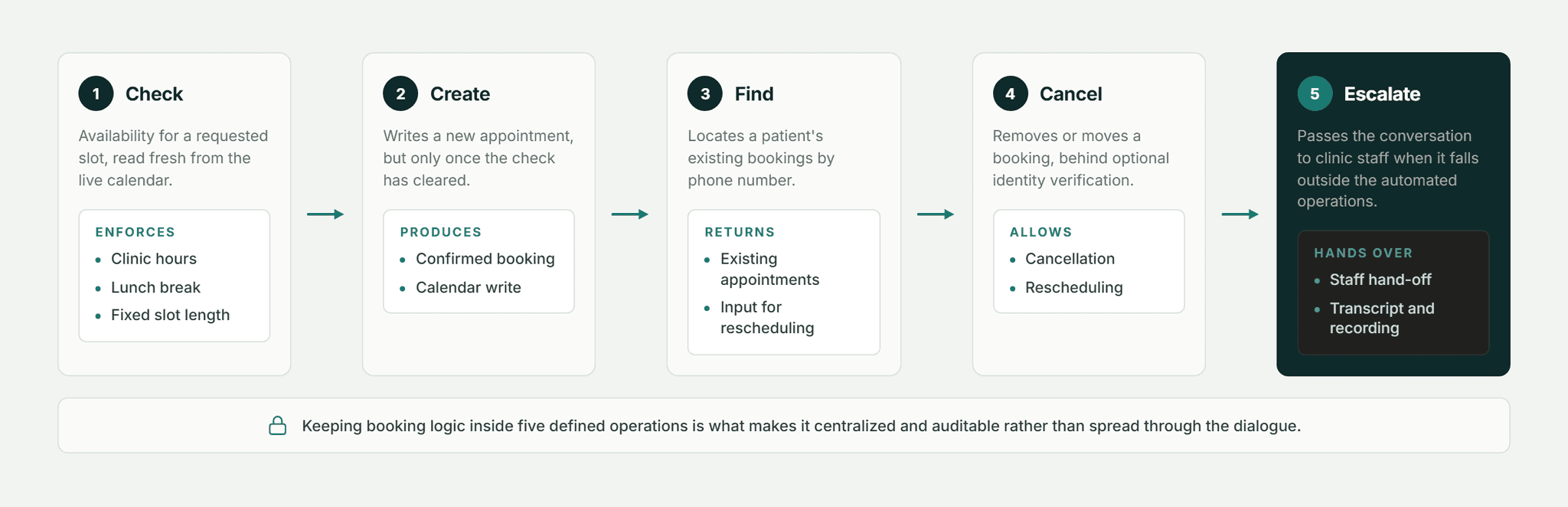
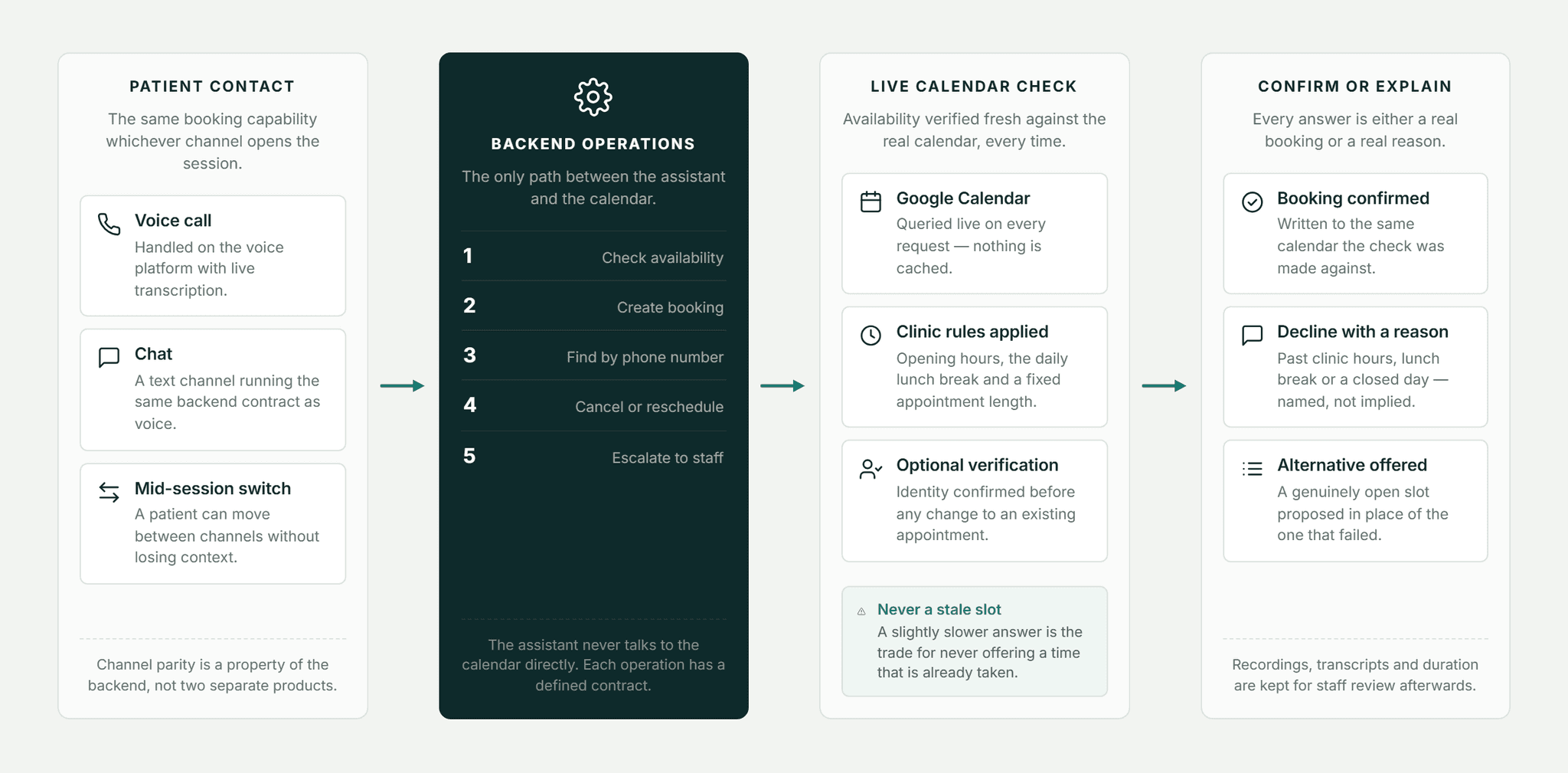
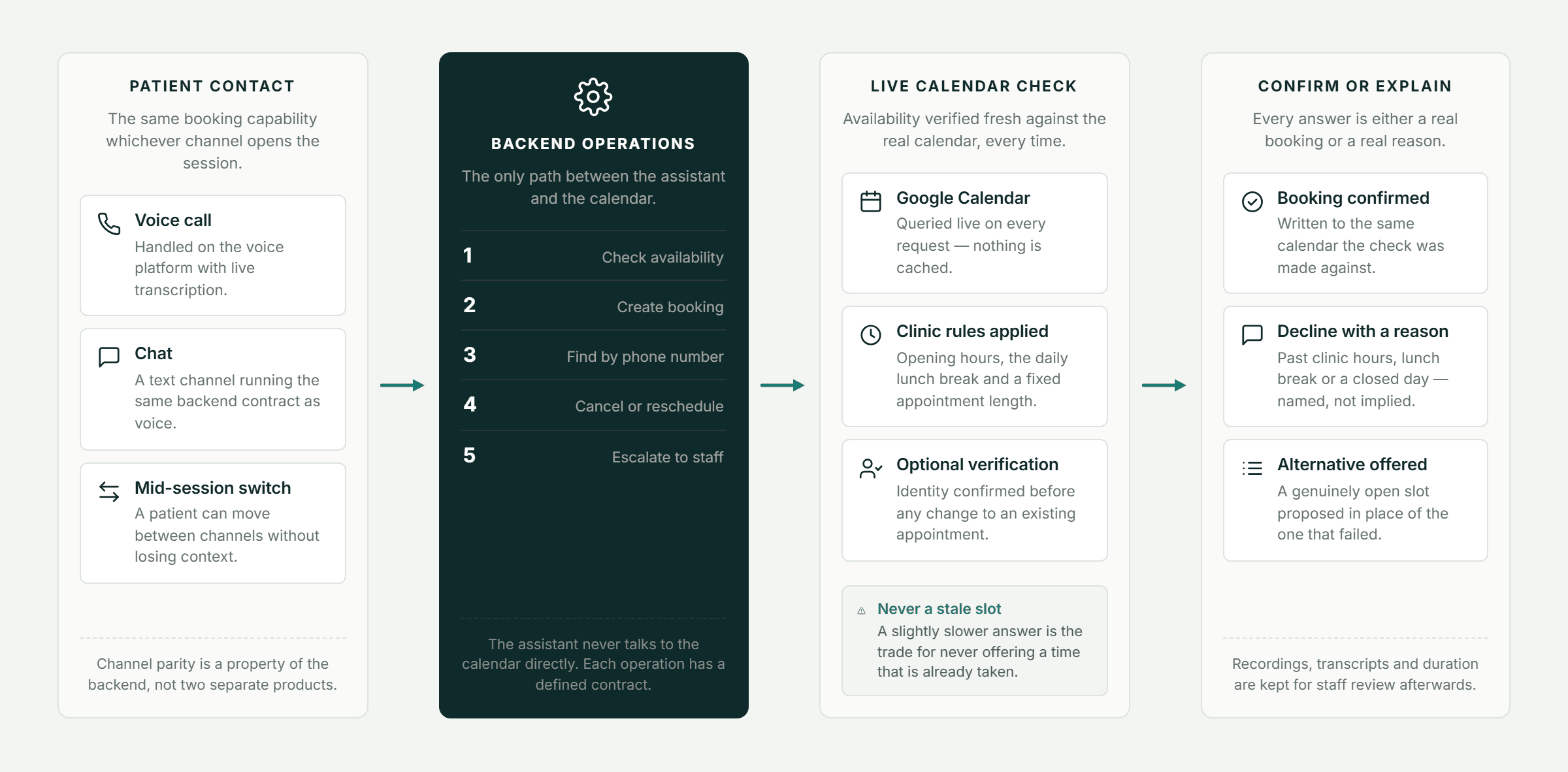
Pfactorial built James around a calendar-authoritative backend: the assistant never talks to the calendar directly, and every appointment action routes through one of five well-defined backend operations that check live availability before confirming anything.
Pfactorial_Case_Study_Clinical_Assistant_James image 2
Figure 2 - Every booking is checked against the live calendar before it's confirmed.

Architectural principles

  • Backend as calendar authority - The voice/chat assistant never talks to Google Calendar directly; every appointment action routes through one of five backend operations - check, create, find, cancel, escalate - each with a defined contract.
  • Always check before confirming - Availability is verified fresh against the live calendar before any slot is offered or booked, accounting for clinic hours and the daily lunch break, with an alternative offered automatically if the request is unavailable.
  • Channel parity with session continuity - Voice and chat share the same booking flow and backend, and a patient can move between channels within one session without losing context.
  • Explain, don't just decline - When a requested time isn't available, the system identifies why - past clinic hours, lunch break, closed day - and offers a real alternative instead of a bare rejection.
CAPABILITIES DELIVERED
Each capability supports the same underlying goal: a booking a patient makes with James is a booking staff can trust.
CAPABILITY
WHAT IT DOES
24/7 call & chat handling
Live transcription on voice calls, with the same booking capability across both channels.
Live-checked appointment booking
Booking, rescheduling and cancellation, always verified against the current calendar.
Patient lookup
Existing bookings found by phone number, for rescheduling or cancellation.
Optional identity verification
An added safeguard before any modification to an existing appointment.
Full call/chat history
Recordings, transcripts and duration, paginated for staff review.
Configurable clinic parameters
Clinic hours, lunch break and fixed appointment length set per deployment.
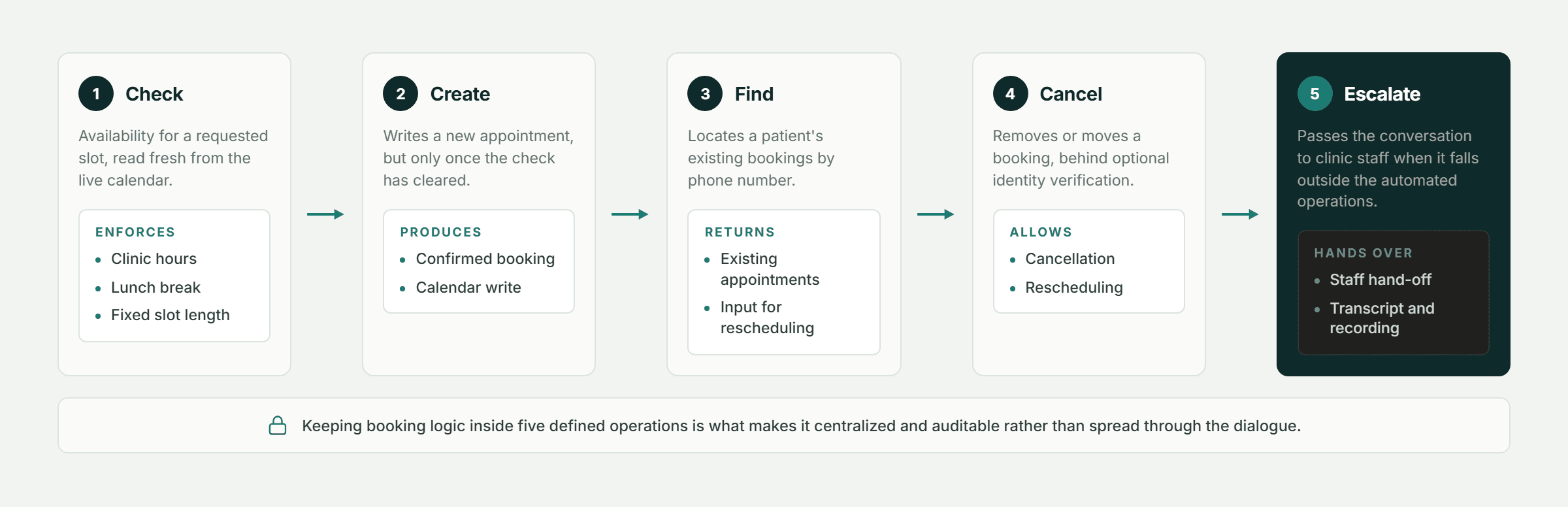
Pfactorial_Case_Study_Clinical_Assistant_James image 3
Figure 3 - Five backend operations are the only path between the assistant and the calendar.
Design note Checking availability fresh on every request, rather than caching it, is the single decision that keeps James trustworthy - a slightly slower response beats a booking made against a stale calendar.
ENGINEERING FOR SCALE AND RELIABILITY
Six decisions keep James from ever becoming the reason a clinic's calendar is wrong.

Calendar-authoritative backend architecture

Five discrete operations - check, create, find, cancel, escalate - are the only interface between the assistant and the calendar, keeping booking logic centralized and auditable.

No-cache availability checks

Availability is checked fresh on every request rather than cached, so every offered slot reflects the true current calendar state.

Structured decline-with-reason logic

Unavailable requests are paired with the specific reason (clinic hours, lunch break, closed day) and an automatically offered alternative time.

Graceful audio/storage failure handling

Audio resources are released safely if a call fails mid-session, and transcript save failures are logged without interrupting the patient's already-completed call.

Explicit configuration-error states

A missing voice-platform key surfaces as a clear status message rather than a silent or confusing connection failure.

Resource-conscious storage

Transcripts are stored as JSON and parsed only on retrieval, and call history loads a page at a time to stay responsive for clinics with long histories.
DELIVERY APPROACH
The engagement built the calendar-authoritative backend first, then layered the voice and chat experience on top of a trusted booking contract.
1. Booking-flow & backend-operation design - the five core operations - check, create, find, cancel, escalate - and their information contracts.
2. Voice pipeline integration - VAPI.ai voice platform with live transcription and a visual speaking indicator.
3. Chat channel - a text channel sharing the same backend contract and booking flow as voice.
4. Calendar-availability logic - clinic hours, lunch break and fixed slot-length rules enforced on every check.
5. Error-handling & edge-case hardening - unavailable-slot explanations, configuration-error states, and safe audio/storage failure handling.
6. Call history & administrative interface - a paginated history view with recordings, transcripts and usage statistics.
RESULTS AND IMPACT

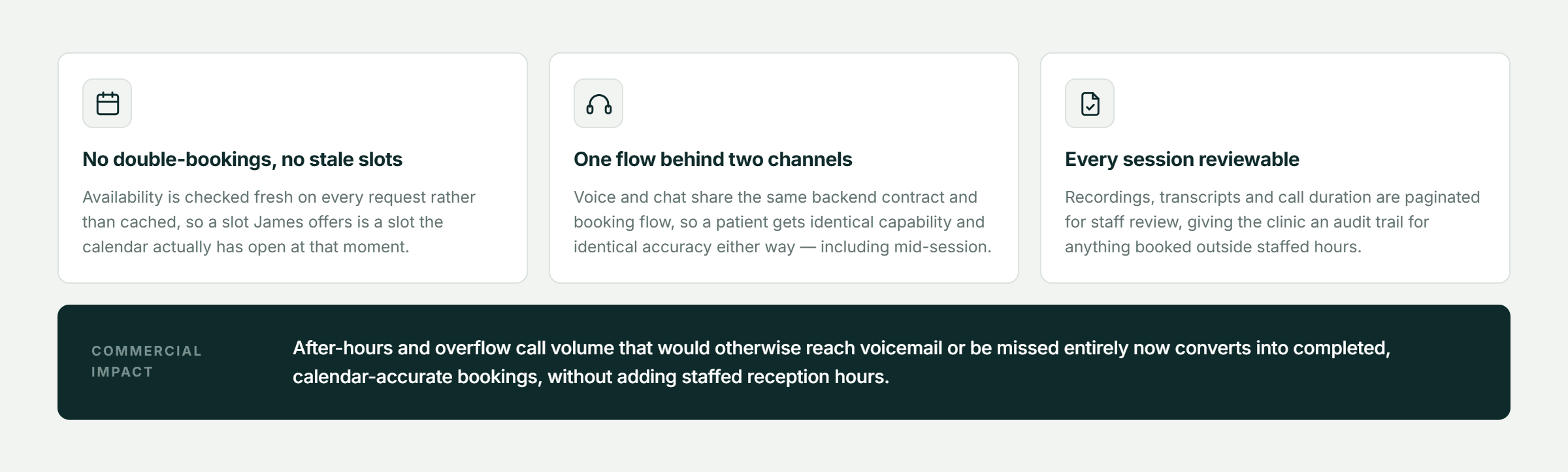
Pfactorial_Case_Study_Clinical_Assistant_James image 4
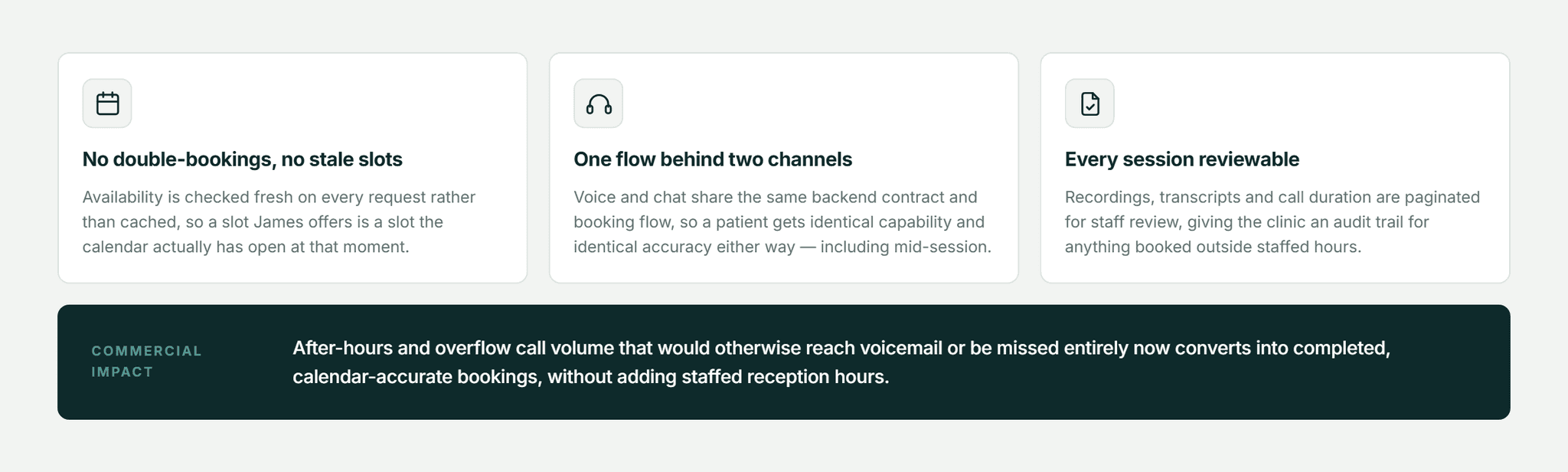
Figure 4 - Key outcomes from this engagement.
Patients get a consistent, always-available booking experience across voice and chat, with the clinic's calendar remaining authoritative at every step.
No double-bookings and no stale-slot offers - every call is reviewable afterward via transcript and recording, giving staff a clear audit trail.

What it enabled commercially

After-hours and overflow call volume that would otherwise go to voicemail or be missed entirely now converts into completed, calendar-accurate bookings, without adding staffed reception hours.
WHY PFACTORIAL
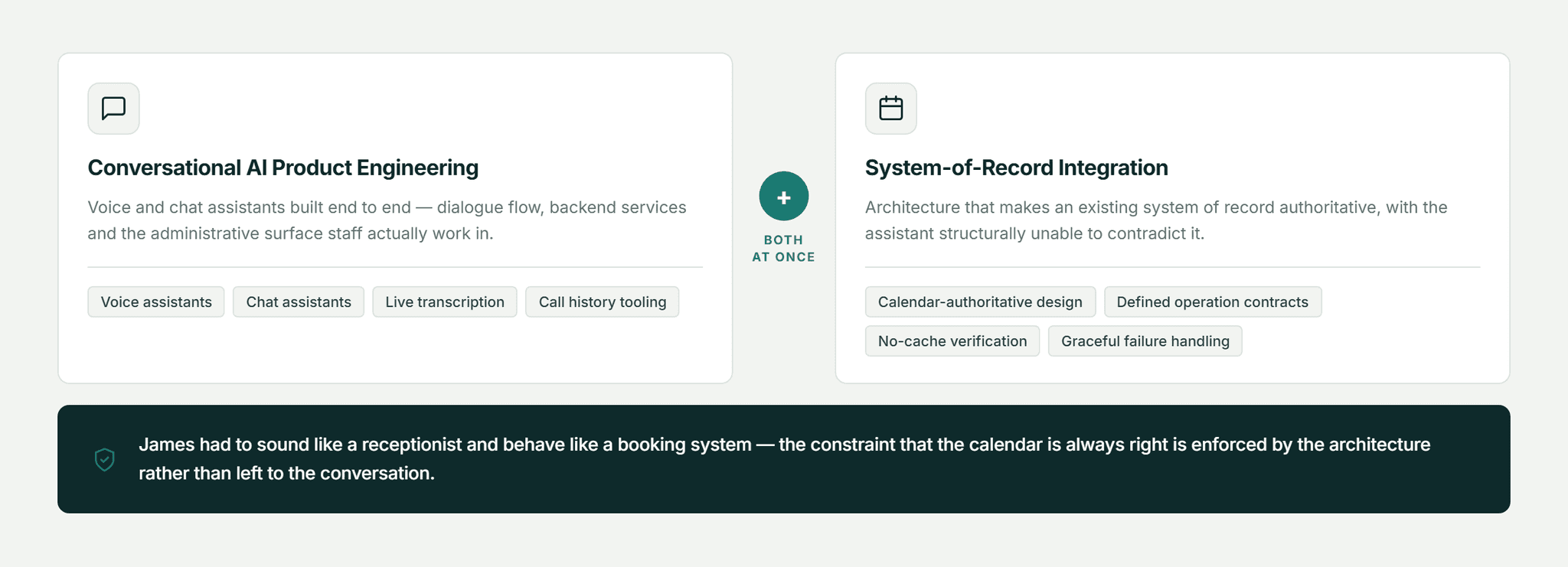
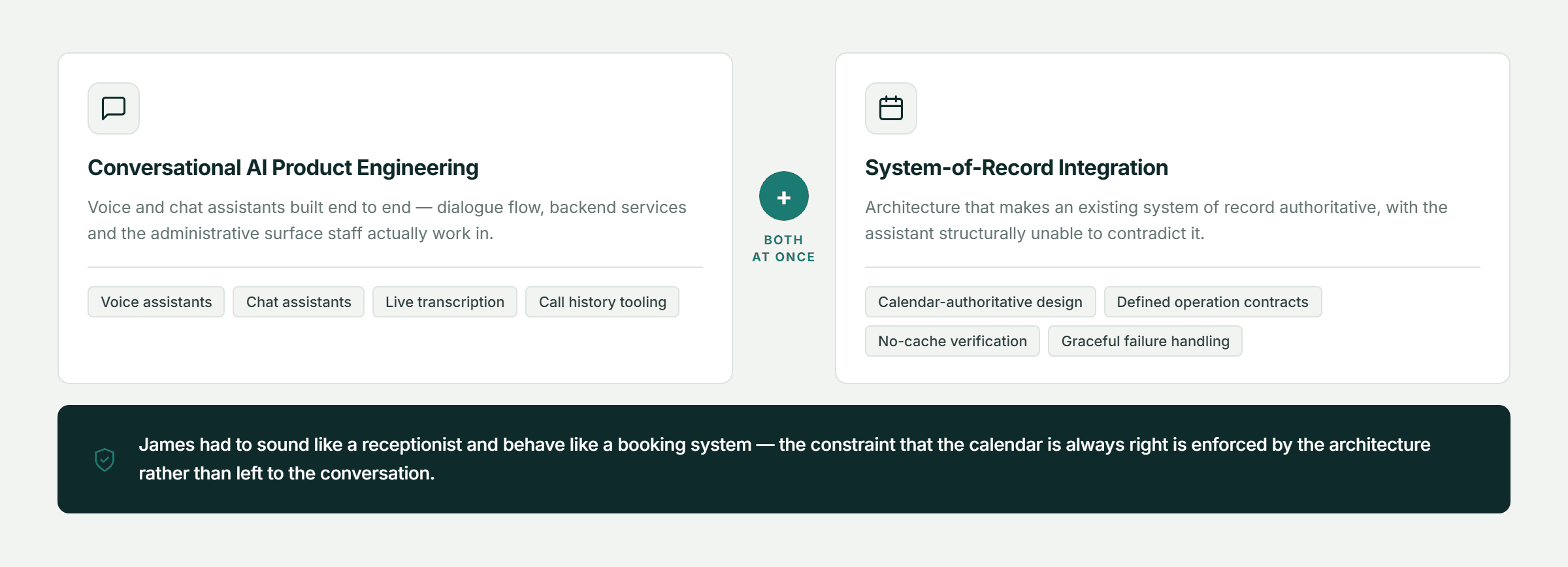
This engagement reflects Pfactorial's conversational AI product engineering service line, applied to a domain where the assistant's real job is protecting the integrity of a system of record, not just holding a pleasant conversation.
Pfactorial_Case_Study_Clinical_Assistant_James image 5
Figure 5 - Service lines this engagement draws on.
Engagement enquiries Pfactorial Technologies works with clinics and healthcare providers that lose bookings to limited reception hours. If you're evaluating what an AI-driven scheduling assistant would take to bring to production, we're happy to give you an honest read on scope and risk before anyone commits to anything. · pfactorial.ai
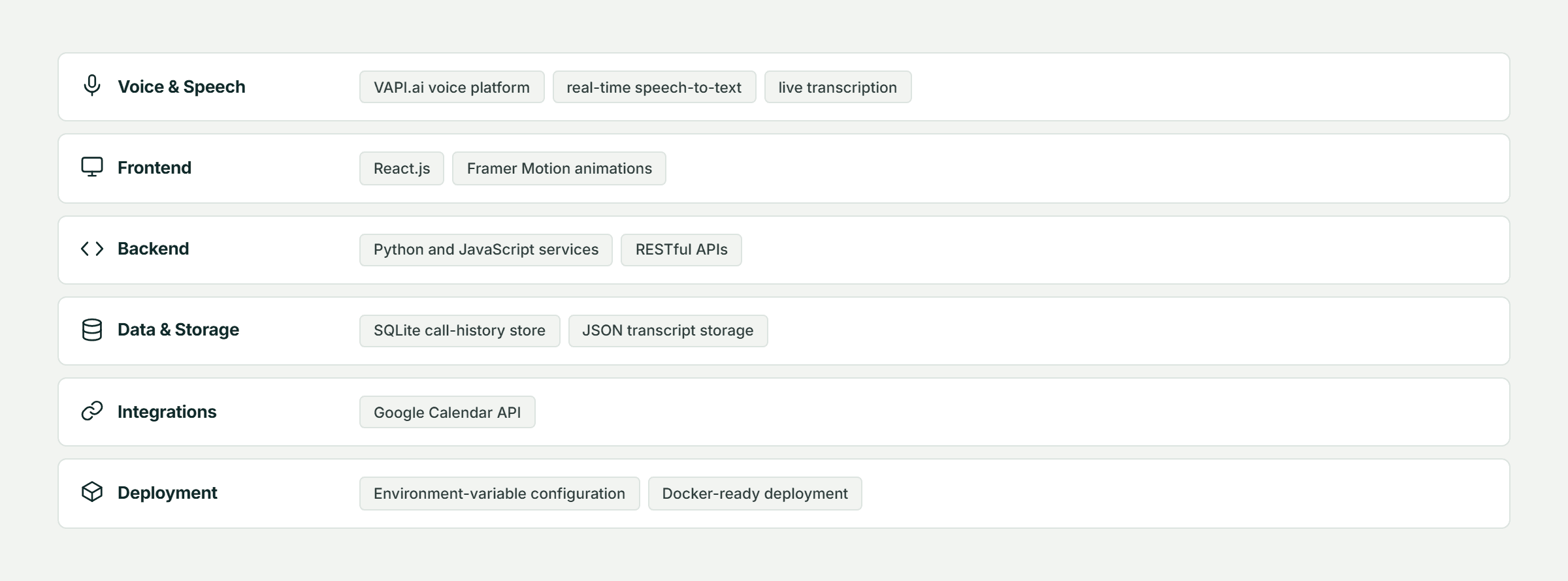
APPENDIX A - TECHNOLOGY STACK
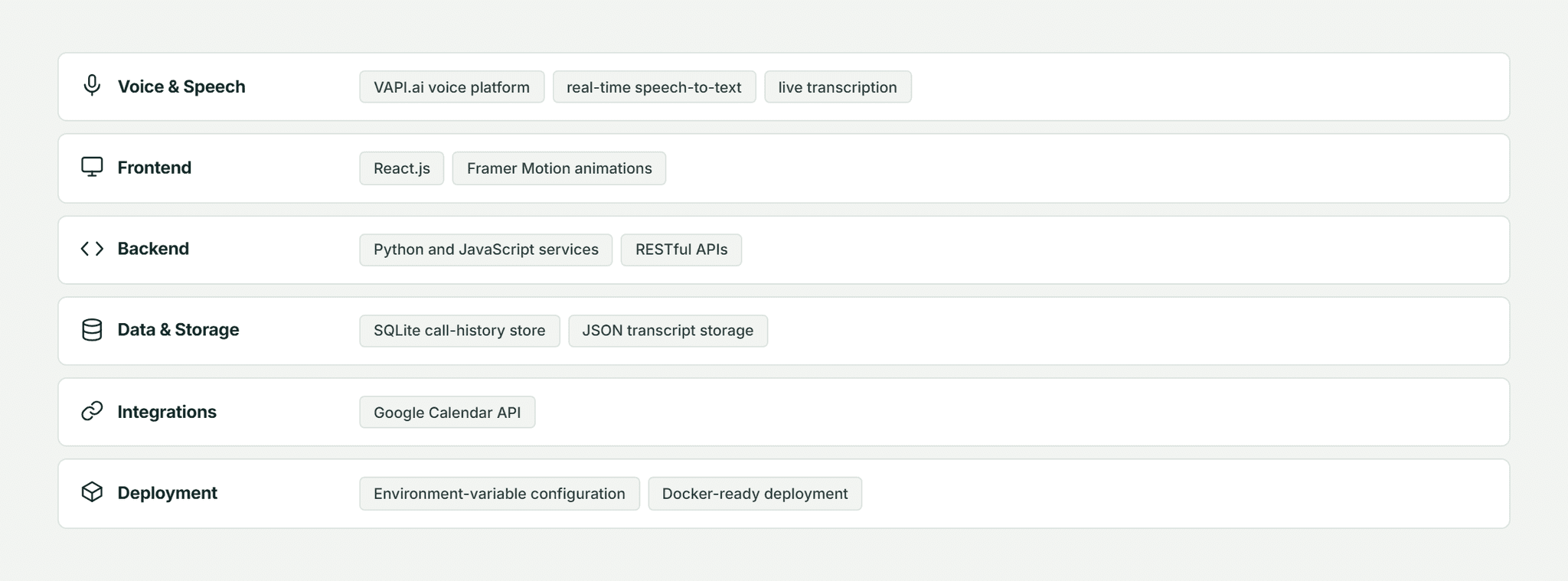
The technology stack underpinning the system, grouped by the layer it serves.
Pfactorial_Case_Study_Clinical_Assistant_James image 6
© 2026 Pfactorial Technologies. Client identity and product-specific implementation detail are withheld or generalized; no client data, credentials, source code, or infrastructure detail is included in this document.

Result and Analysis

ENGAGEMENT SNAPSHOT

How Pfactorial Technologies built James, a 24/7 voice and chat clinical receptionist that never double-books a patient because every action is checked against the clinic's live calendar.

Pfactorial_Case_Study_Clinical_Assistant_James image 1
Pfactorial_Case_Study_Clinical_Assistant_James image 2
Pfactorial_Case_Study_Clinical_Assistant_James image 3
Pfactorial_Case_Study_Clinical_Assistant_James image 4
Pfactorial_Case_Study_Clinical_Assistant_James image 5
Pfactorial_Case_Study_Clinical_Assistant_James image 6