Back
Legal & Contract Analysis
A Multi-Practice AI Voice Intake Platform for Law Firms
How Pfactorial Technologies built a modular AI voice intake system that answers every call instantly, adapts its questions to the legal practice area, and closes every call with a clear outcome.

August 21, 2026
Share
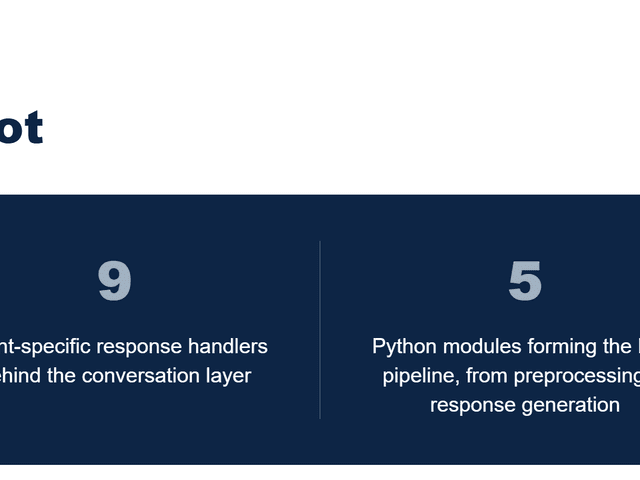
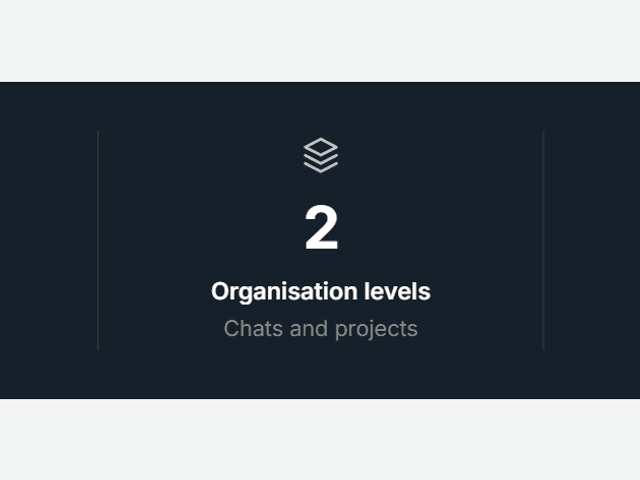
ENGAGEMENT SNAPSHOT

Figure 1 - Key figures from this engagement, at a glance.
EXECUTIVE SUMMARY
Law firms lose potential clients not because they don't want the business, but because they can't answer every call - after hours, during busy periods, or when staff are simply unavailable. Even answered calls can suffer from an inconsistent intake process.
The client wanted an AI voice system that could pick up instantly, sound genuinely human and empathetic, and guide a caller through a complete intake - understanding their situation, capturing the right details, and booking a consultation - without turning the call into a rigid interrogation.
Pfactorial built a proof-of-concept voice platform with a structured conversation engine, a layered prompt and agent architecture, and dedicated handling for the messiness of real calls - interruptions, distress, unclear answers - so the experience holds up outside a scripted demo.
Why this engagement is representative This engagement demonstrates Pfactorial's ability to design conversational systems for a domain - legal intake - where getting the structure and edge-case handling right matters more than voice quality alone, and where a wrong answer (like appearing to give legal advice) carries real professional risk.
THE CHALLENGE
The client's vision - never miss a call, always complete a proper intake - required solving for how real callers actually behave, not just how a demo script behaves.
1. Missed calls are missed clients
Every unanswered call, whether after hours or during a busy stretch, is a potential client lost to a competitor or simply given up on. Availability gaps translate directly into lost revenue.
2. Intake needs structure without feeling like an interrogation
The system has to reliably collect the same key details - name, case type, urgency - every time, while still feeling like a natural conversation rather than a checklist being read aloud.
3. Real callers don't behave predictably
Callers interrupt, go quiet with emotion, or give vague answers. A system that breaks or stalls the moment a conversation deviates from the happy path fails exactly when it matters most.
4. One system, many practice areas
Immigration, personal injury and family law intake each need different questions and a different tone, without becoming three separate systems that have to be built and maintained independently.
The real brief Not “build a phone bot” but “build a structured intake specialist that happens to talk” - the conversation design and escalation rules matter as much as the voice quality.
THE SOLUTION
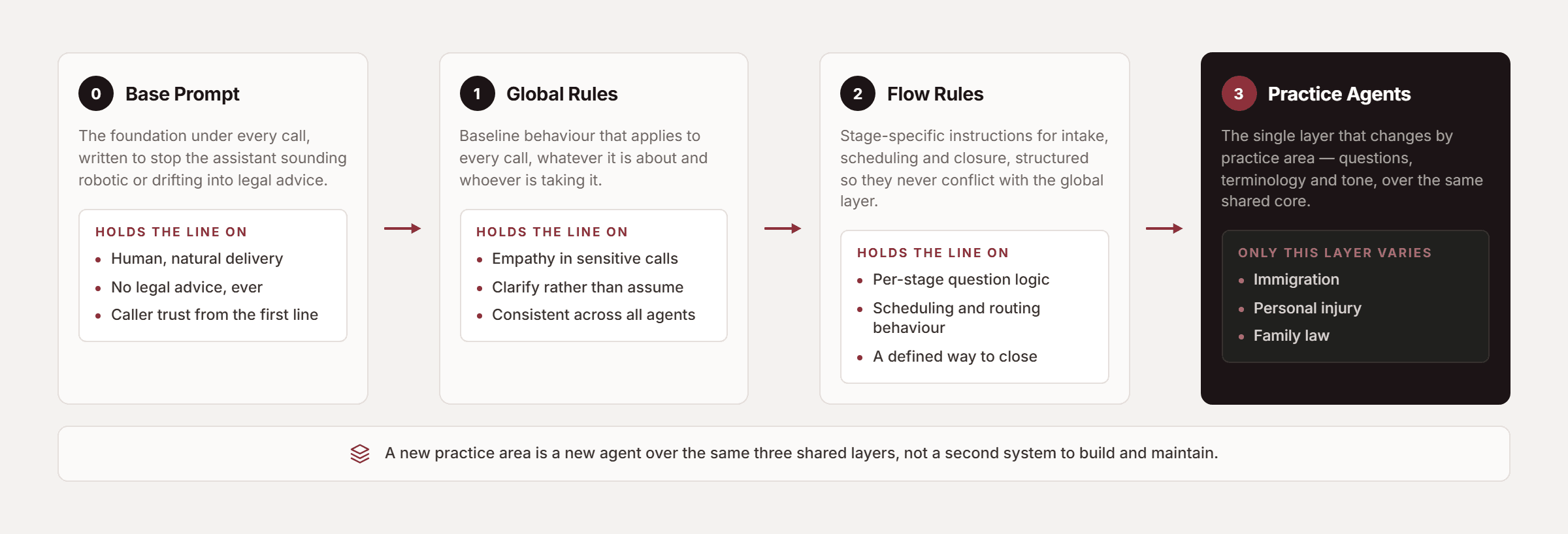
Pfactorial built the platform around a layered instruction model: global rules define baseline behavior across every call, and modular, practice-area-specific agents adapt the intake questions and tone on top of that shared foundation.

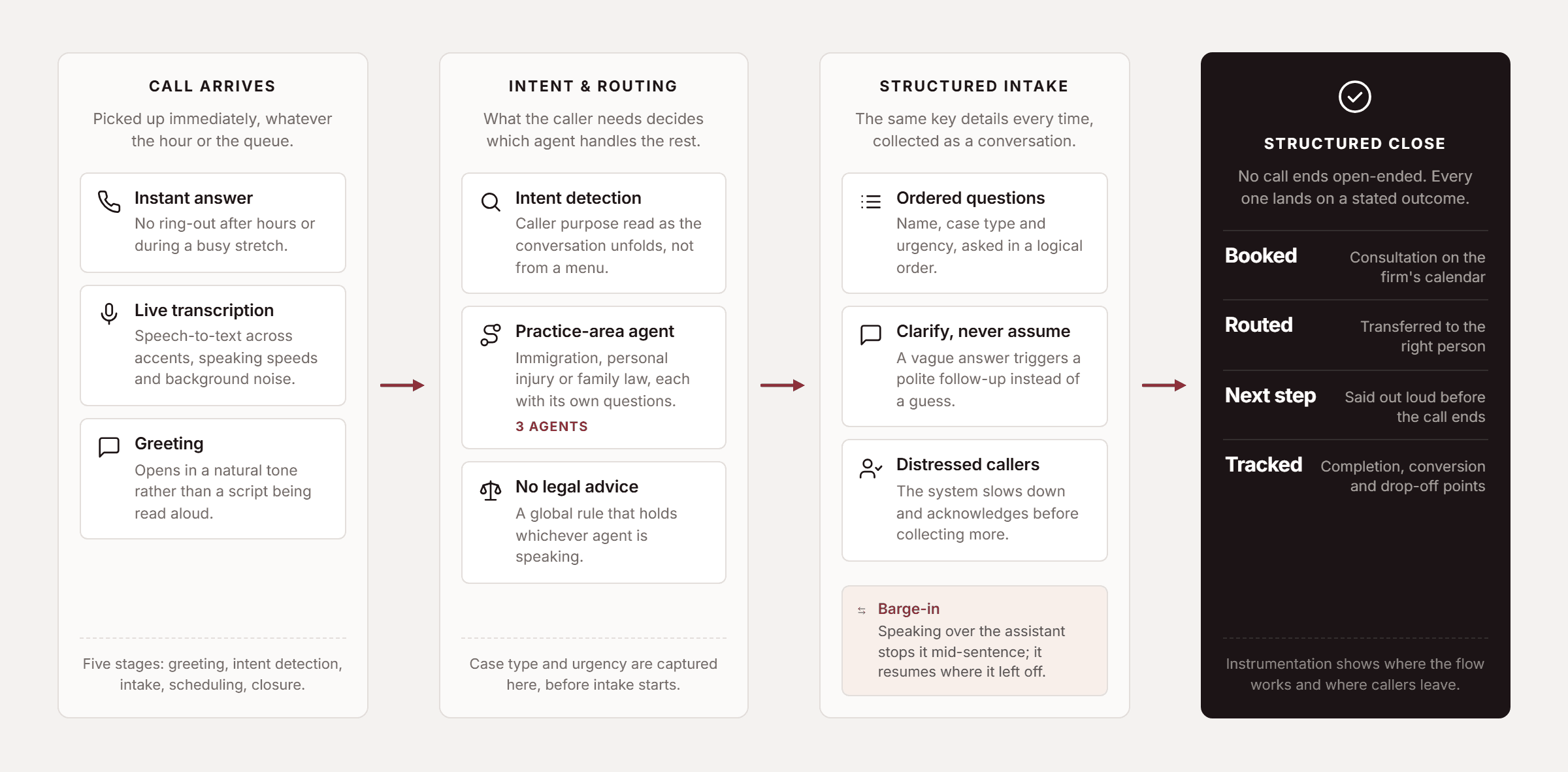
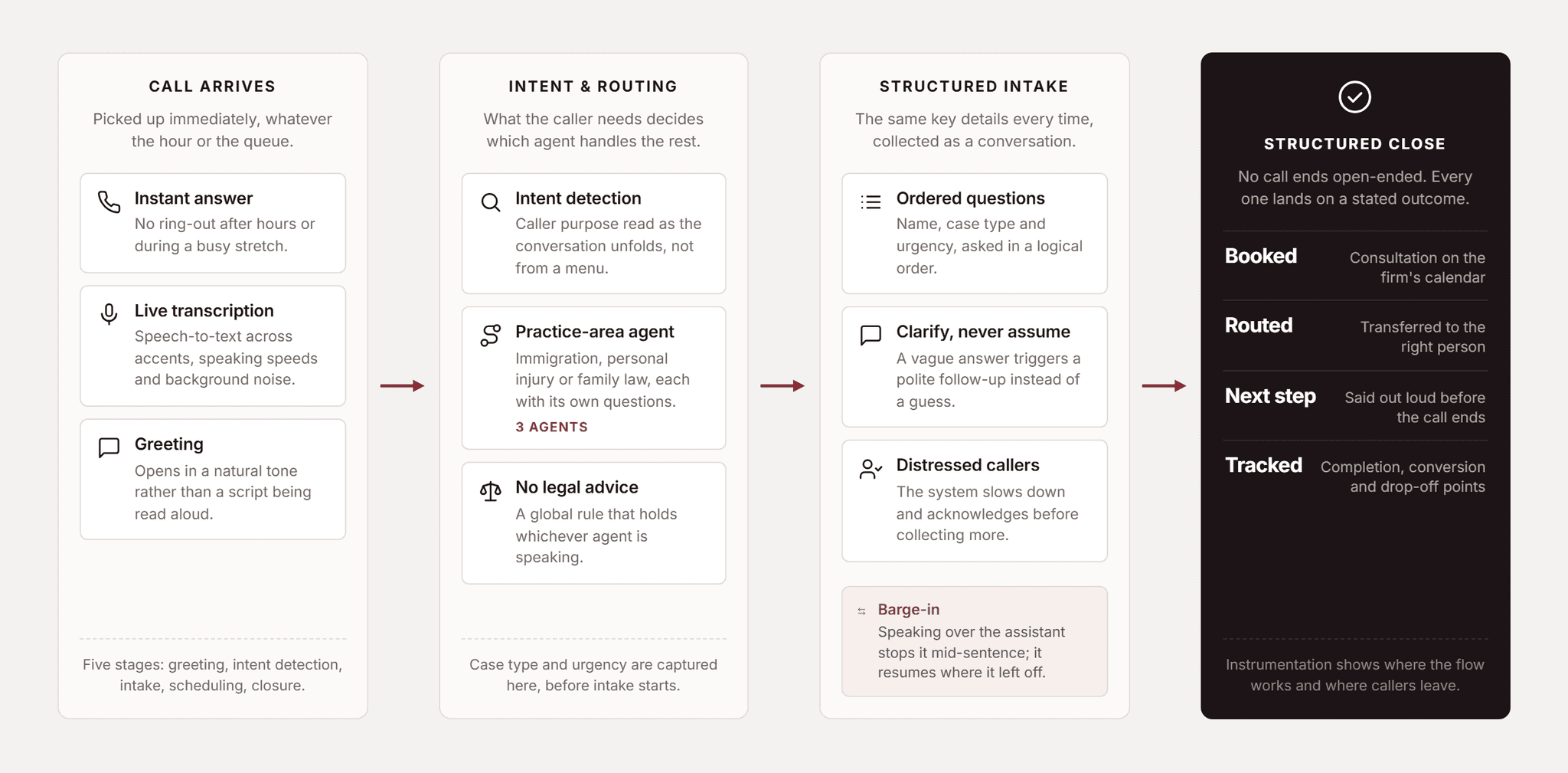
Figure 2 - The voice pipeline from call initiation to a resolved outcome.
Architectural principles
- Layered instruction design - Global rules - natural tone, no legal advice, empathy in sensitive situations - apply to every call. Flow-specific rules govern each conversation stage, like intake or scheduling, without conflicting with the global layer.
- Modular practice-area agents - Immigration, personal injury and family law each get a specialized agent sharing the same core behavior but differing in intake questions, terminology and tone - new practice areas extend the pattern rather than rebuilding the system.
- Interrupt-safe by design - The system detects barge-ins, stops speaking immediately, and resumes from the right point in the conversation rather than restarting or repeating information already given.
- A structured close, every time - Every call ends in a defined outcome - a booked consultation, a routed transfer, or a clear next step - rather than an open-ended hang-up that leaves the caller unsure what happens next.
CAPABILITIES DELIVERED
Each capability maps to a specific point in the caller's journey, from the first ring to a booked outcome.
CAPABILITY | WHAT IT DOES |
|---|---|
Instant call answering | Every incoming call is picked up immediately, regardless of time of day or staff availability. |
Real-time speech-to-text | Accurate transcription across accents, speaking speeds and background noise. |
Intent & context detection | Identifies caller purpose and extracts key details like case type and urgency as the conversation unfolds. |
Structured multi-step intake | Collects required information in a logical order without feeling like a checklist. |
Practice-area specialization | Immigration, personal injury and family law agents, each with tailored questions and tone. |
Scheduling & routing | Books available time slots or transfers the call, integrated with calendar and CRM systems. |
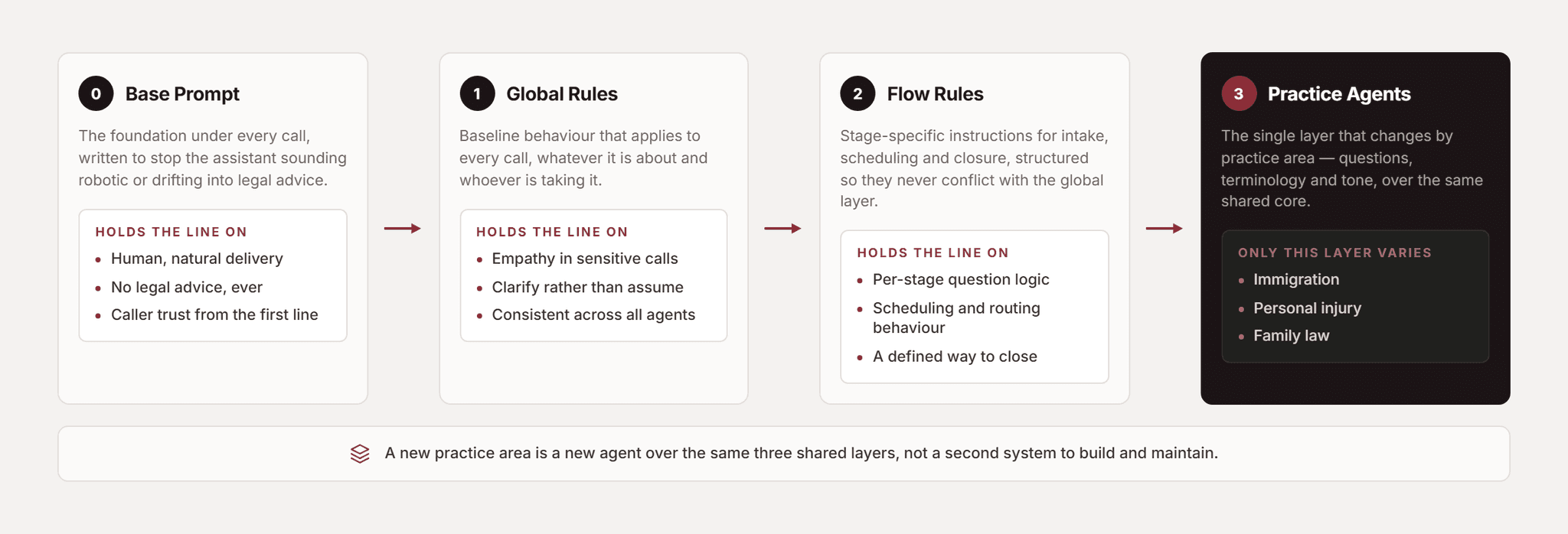
Figure 3 - One shared core, specialized per legal practice area.
Design note The base system prompt exists specifically to keep the assistant from sounding robotic or offering legal advice - both of which erode caller trust faster than a slow response would.
ENGINEERING FOR SCALE AND RELIABILITY
A voice system that only works on a clean script isn't a product. Five decisions carry it through the calls that don't go as planned.
Barge-in / interruption handling
The system detects when a caller speaks over it, stops immediately, processes the new input, and resumes without losing conversational context or repeating already-shared information.
Empathetic handling of distressed callers
For emotionally difficult calls - common in personal injury and family law - the system slows down, acknowledges the situation, and prioritizes comfort before continuing data collection.
Clarification over assumption
Vague or incomplete answers trigger simple, polite follow-up questions rather than the system guessing or proceeding on an unconfirmed assumption.
Instruction layering
Global rules and flow-specific rules are structured as separate layers, so behavior stays consistent across practice areas while flow details vary.
Low-latency streaming pipeline
Speech-to-text, intent detection, response generation and text-to-speech run as a streaming pipeline tuned for low-latency inference, keeping the conversation responsive.
Outcome-focused instrumentation
Call completion rate, booking/conversion rate, and drop-off points are tracked so the firm can see where the flow is working and where it isn't.
DELIVERY APPROACH
The engagement built the shared conversational core first, then layered practice-area specialization and edge-case hardening on top.
1. Conversation design - mapping the five-stage call structure - greeting, intent detection, intake, scheduling, closure - against real intake requirements.
2. Voice pipeline build - speech-to-text, intent and context understanding, the conversation flow engine, LLM response generation, and text-to-speech, connected end to end.
3. Prompt & agent architecture - the base system prompt, global and flow-specific instruction layers, and the three practice-area agents.
4. Edge-case hardening - handling for distressed callers, interruptions, and unclear or incomplete answers.
5. Integration - Google Calendar scheduling and CRM handoff for booked and routed calls.
6. Success-metric instrumentation - call completion rate, conversion rate and drop-off point tracking to measure real-world performance.
RESULTS AND IMPACT

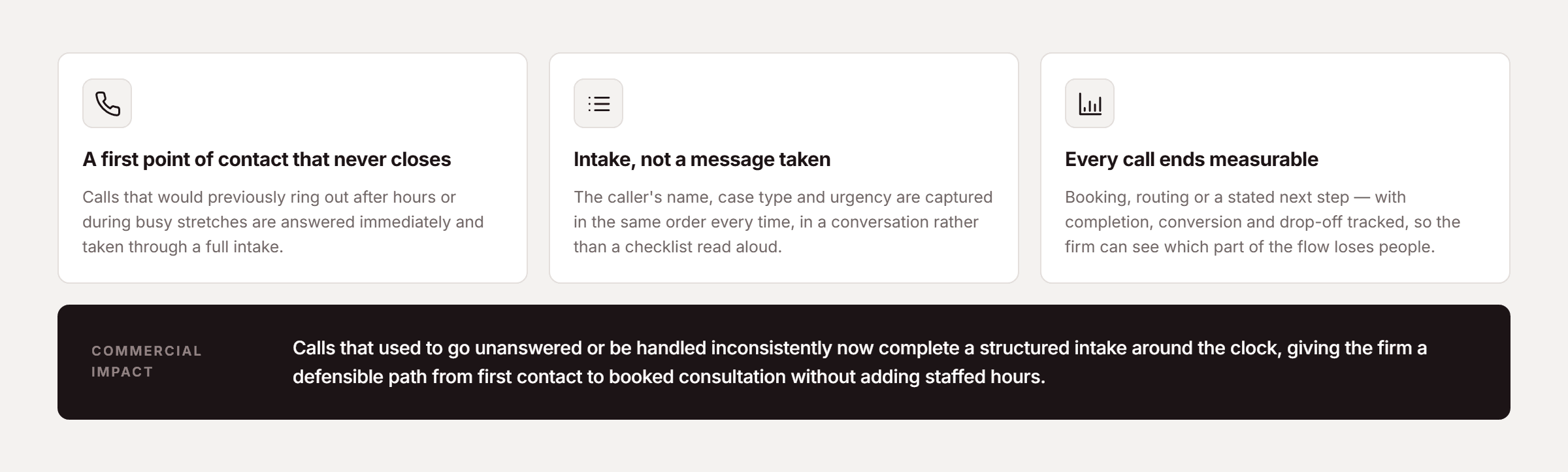
Figure 4 - Key outcomes from this engagement.
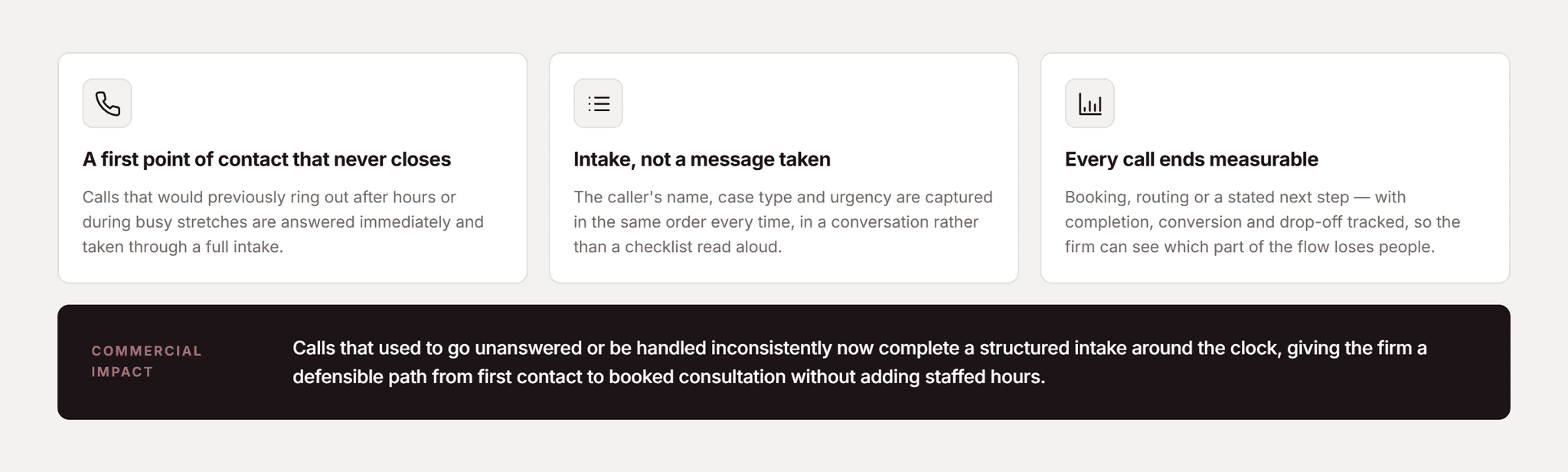
The firm gains a consistent, always-available first point of contact that completes structured intake rather than just taking a message.
Every call resolves to a measurable outcome - booking, routing, or a clear next step - with completion and conversion metrics giving the firm visibility into what's working.
What it enabled commercially
Calls that would previously go unanswered or receive inconsistent handling now complete a structured intake around the clock, giving the firm a defensible path from first contact to booked consultation without adding staffed hours.
WHY PFACTORIAL
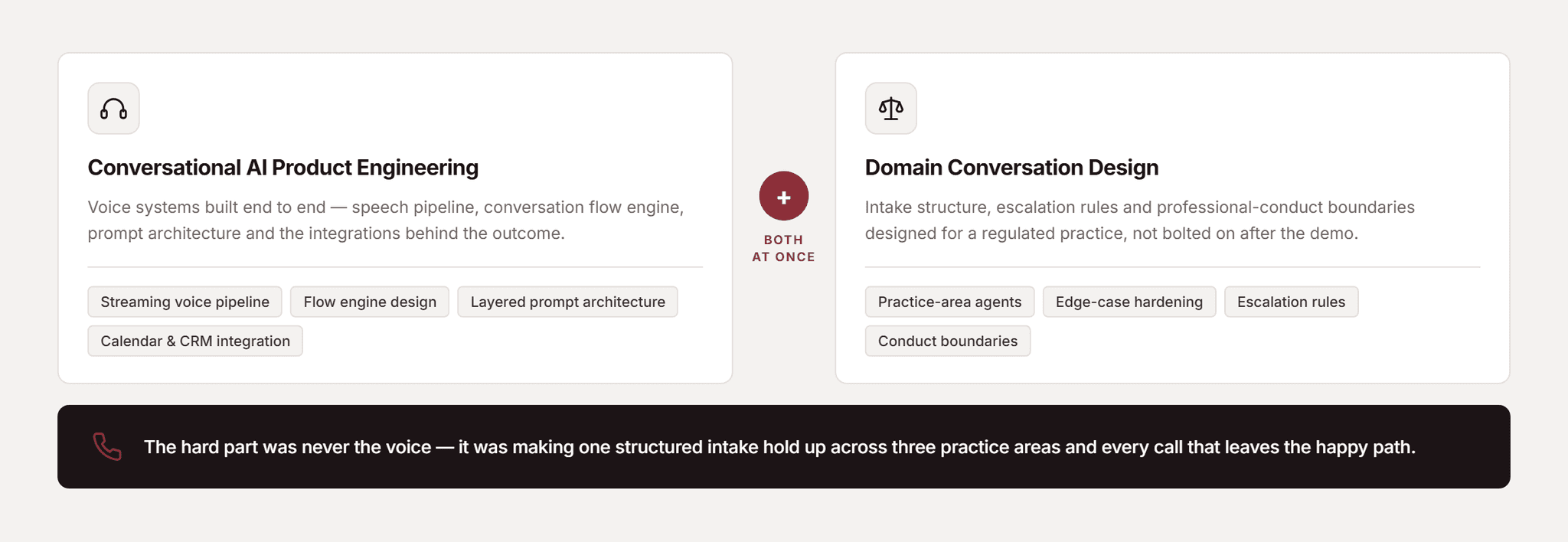
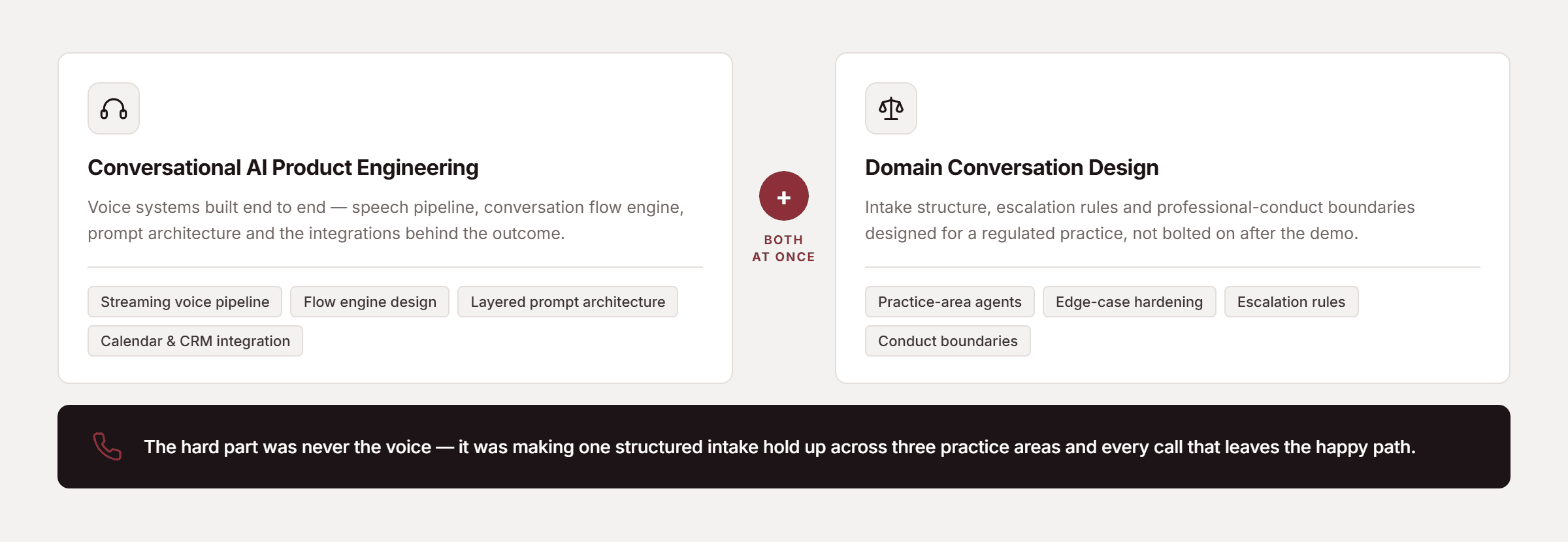
This engagement reflects Pfactorial's conversational AI product engineering service line, applied to a domain where conversation design, escalation rules and professional-conduct boundaries matter as much as the underlying voice technology.

Figure 5 - Service lines this engagement draws on.
Engagement enquiries Pfactorial Technologies works with firms and service businesses that lose business to missed or inconsistent calls. If you're evaluating what an AI-driven intake system would take to bring to production, we're happy to give you an honest read on scope and risk before anyone commits to anything. · pfactorial.ai
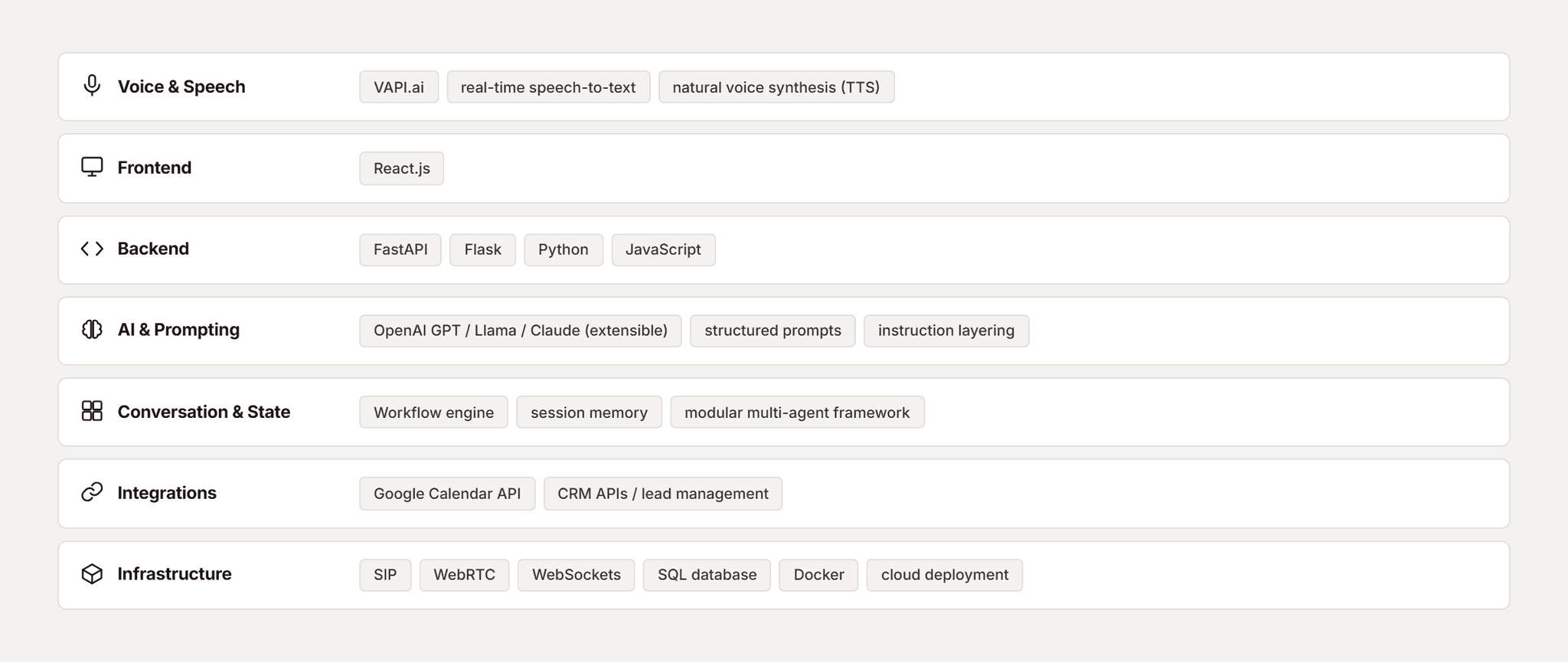
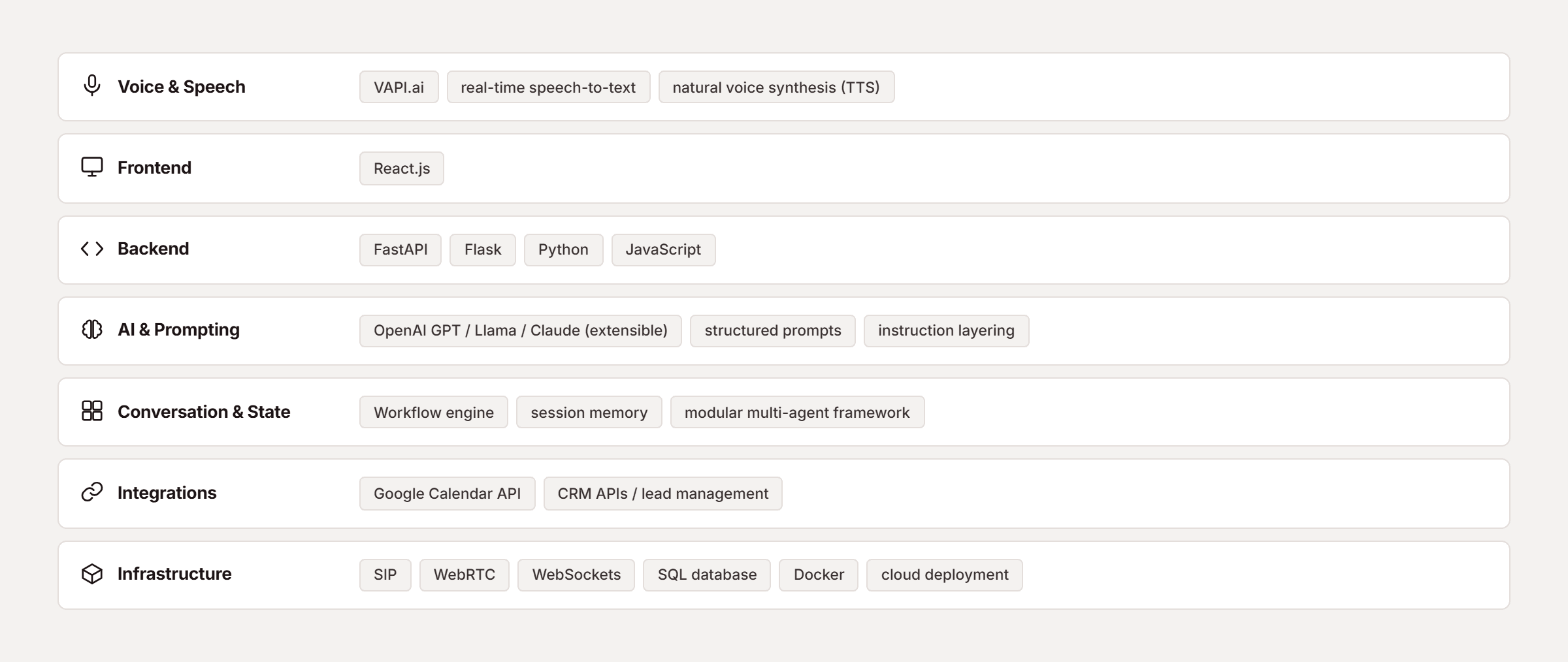
APPENDIX A - TECHNOLOGY STACK
The technology stack underpinning the system, grouped by the layer it serves.

© 2026 Pfactorial Technologies. Client identity and product-specific implementation detail are withheld or generalized; no client data, credentials, source code, or infrastructure detail is included in this document.
Result and Analysis
ENGAGEMENT SNAPSHOT
How Pfactorial Technologies built a modular AI voice intake system that answers every call instantly, adapts its questions to the legal practice area, and closes every call with a clear outcome.

CASE STUDIES
You might also like...

Conversational AI & Chatbots
Aug 21, 20267 min readRead

Voice AI & TelephonyConversational AI & Chatbots
An AI Receptionist That Keeps a Clinic's Calendar as the Single Source of Truth
Aug 21, 20267 min readRead

ML Infra, Classifiers & RL
A BERT-Driven Restaurant Chatbot That Classifies Guest Intent, Not Keywords
Aug 21, 20266 min readRead

RAG & Semantic SearchAutomotive & Vehicle
A Botpress-Built AI Sales & Service Assistant That Qualifies Automotive Leads 24/7
Aug 21, 20267 min readRead

A File-Aware AI Chat Platform With Project-Based Conversation Organization
Aug 21, 20267 min readRead

Legal & Contract Analysis
A HIPAA-Compliant De-Identification Pipeline for Multi-Format Clinical Data
Aug 21, 20266 min readRead