Back
Legal & Contract Analysis

A Five-Specialist AI Intake System for Law Firms, Built Around Attorney-Client Privilege

How Pfactorial Technologies built Law.ai, a legal intake and case management assistant that routes clients to the right specialist, checks for conflicts before matching an attorney, and treats privilege as a first-class system requirement.

August 21, 2026
Share
ENGAGEMENT SNAPSHOT

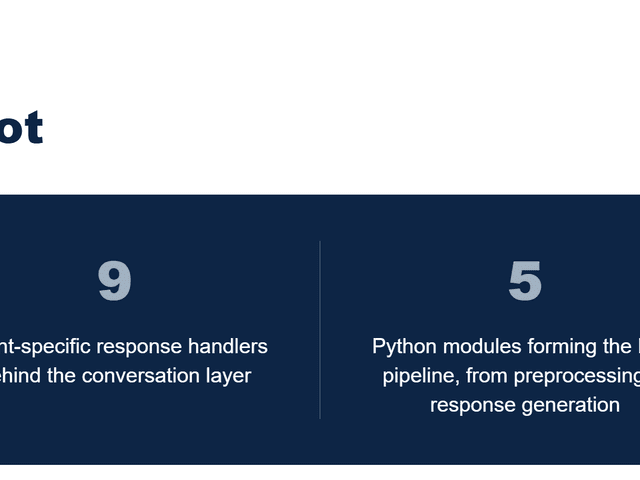
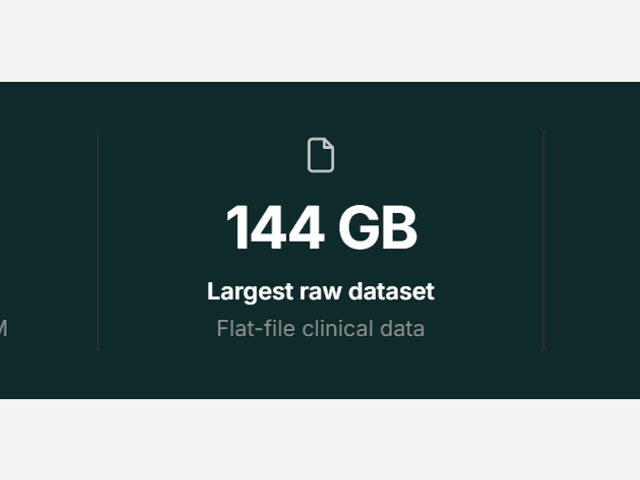
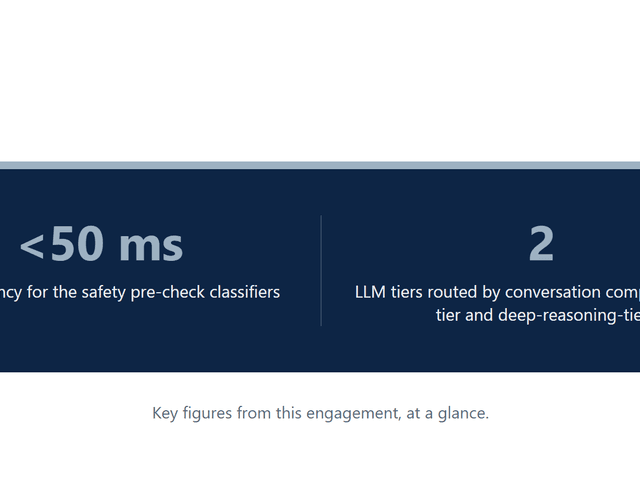
Pfactorial_Case_Study_LawAI_Legal_Intake image 1
Figure 1 - Key figures from this engagement, at a glance.
EXECUTIVE SUMMARY
Our client wanted an AI system that could handle legal intake - screening, triage, attorney matching, document collection and case follow-up - across voice and chat, without treating every client's issue as the same generic case type.
Legal intake isn't one workflow: a property dispute, a fraud case, and a document-heavy filing each need different questions, different document checklists, and different urgency assessment. And because every interaction touches attorney-client privilege, the system's compliance posture had to be structural, not an added disclaimer.
Pfactorial built Law.ai around five specialized sub-assistants sharing one backend, one privilege model, and one conflict-of-interest check - so every client is routed to the most relevant expertise while every session, regardless of specialist, is handled with the same privilege and compliance guarantees.
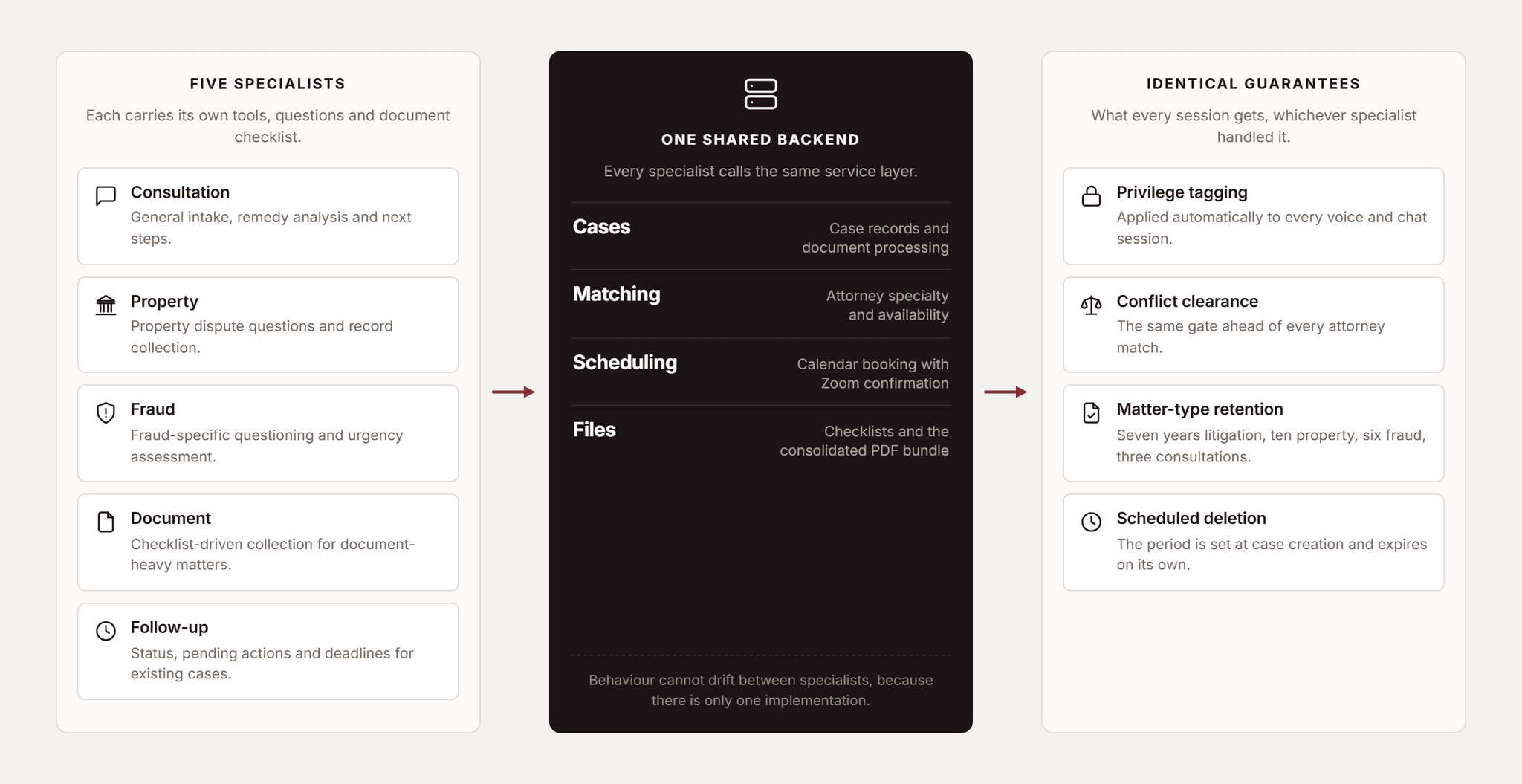
Why this engagement is representative This engagement demonstrates Pfactorial's ability to build a multi-specialist conversational AI system where compliance - privilege, conflict checks, retention - isn't a policy layered on top, but a structural property of every session regardless of which specialist handles it.
THE CHALLENGE
Serving every kind of legal matter through one intake experience, without genericizing the client's actual need, required solving four problems.

1. Legal matters aren't interchangeable

A property dispute, a fraud case and a document-collection need each require different questions, different remedy analysis, and a different document checklist - a single generic intake flow serves none of them well.

2. Every interaction is privileged from the first word

Attorney-client privilege has to be established, acknowledged and recorded before substantive conversation begins, and consistently across both voice and chat - not applied retroactively.

3. Conflicts of interest have to be caught before an attorney is matched

Matching a client to an attorney who has a conflict with an opposing party creates a serious professional liability issue if not caught before the match happens.

4. Retention rules differ by matter type and jurisdiction

Litigation matters, property records, fraud cases and general consultations each carry different minimum retention periods, and getting this wrong in either direction creates compliance risk.
The real brief Not “build a legal chatbot” but “build an intake system where privilege, conflict-checking and retention are structural guarantees of every session, regardless of which of five specialists handles it.”
THE SOLUTION
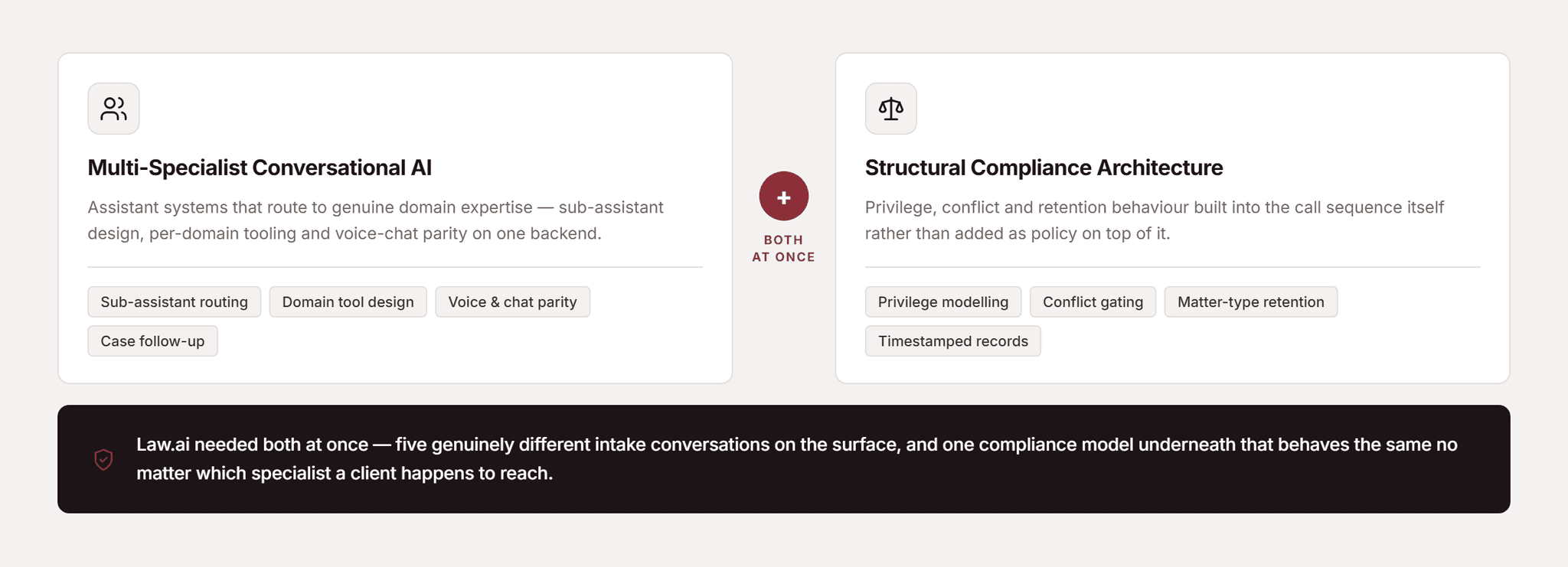
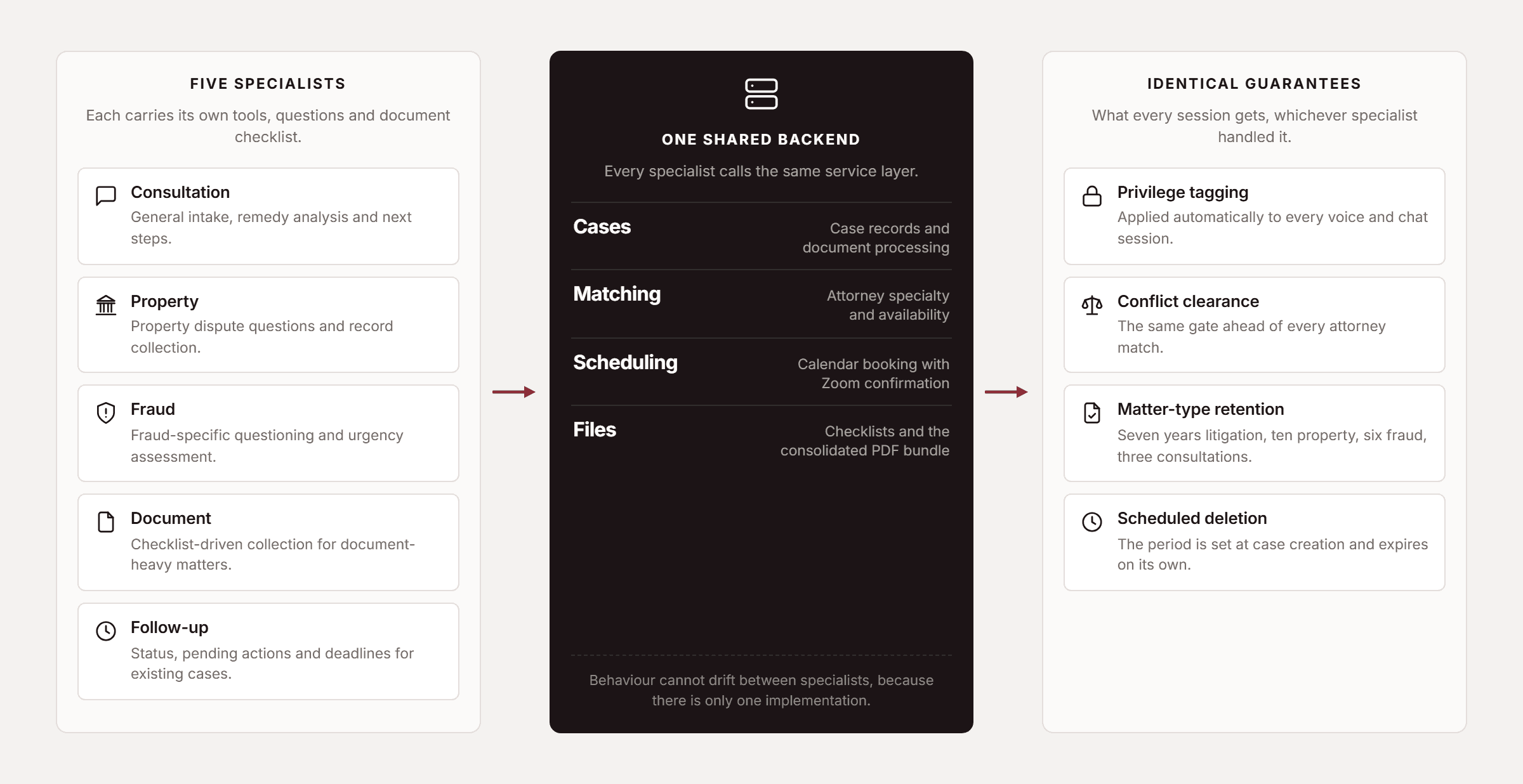
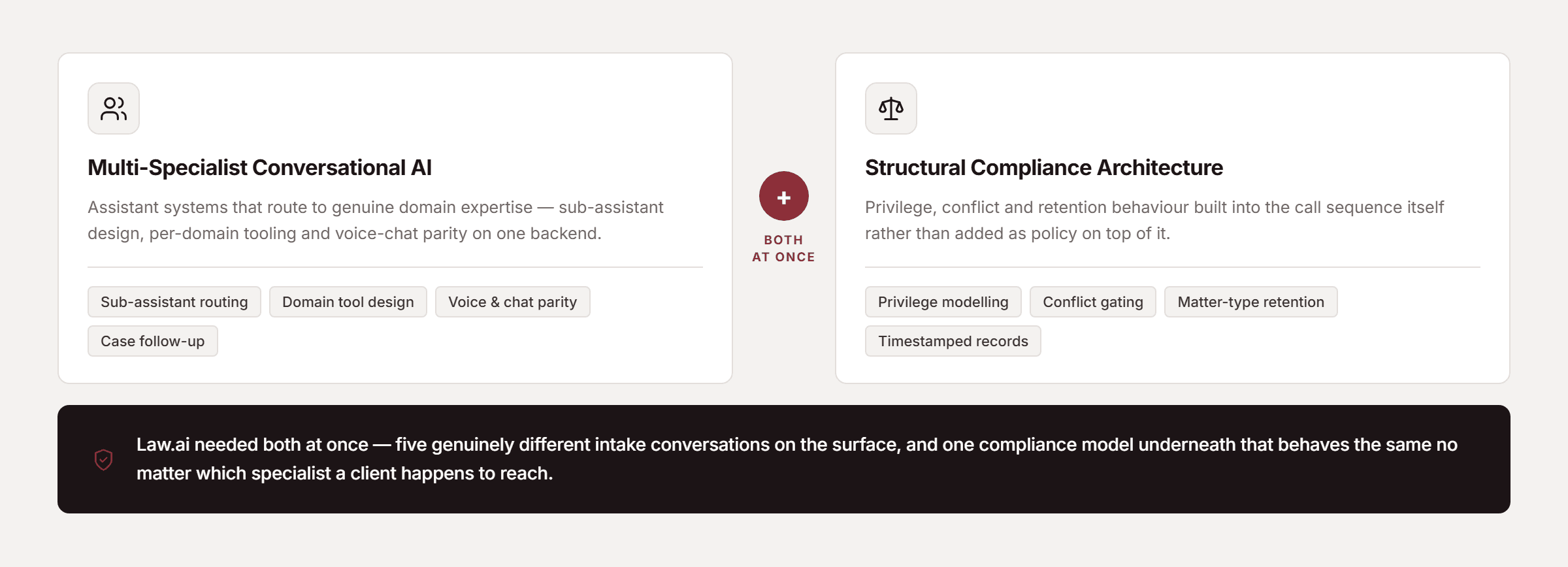
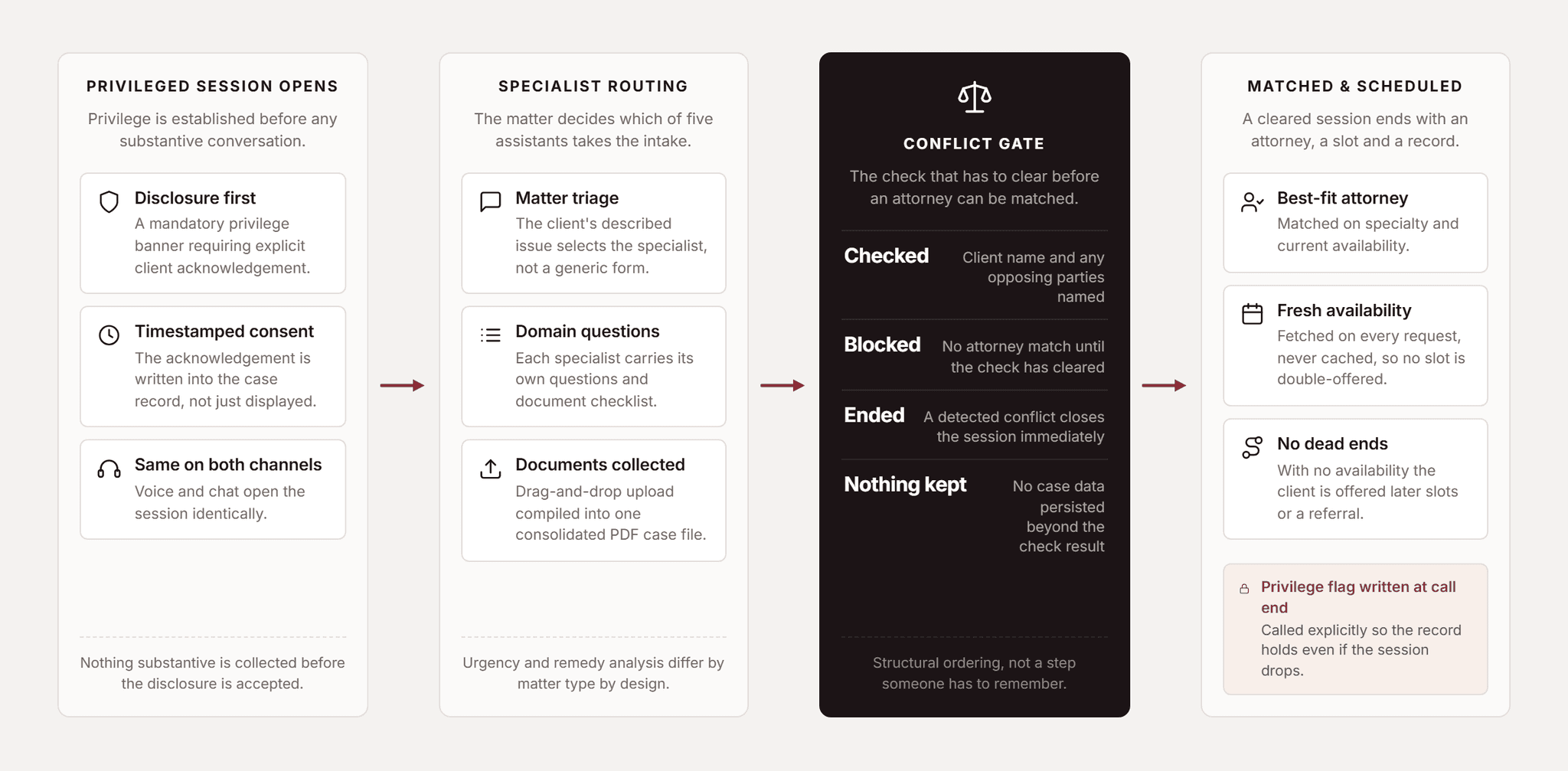
Pfactorial built Law.ai around five domain-specific sub-assistants, each invoking its own specialized tools, but all sharing one backend, one privilege-disclosure flow, and one conflict-check gate before any attorney is matched.
Pfactorial_Case_Study_LawAI_Legal_Intake image 2
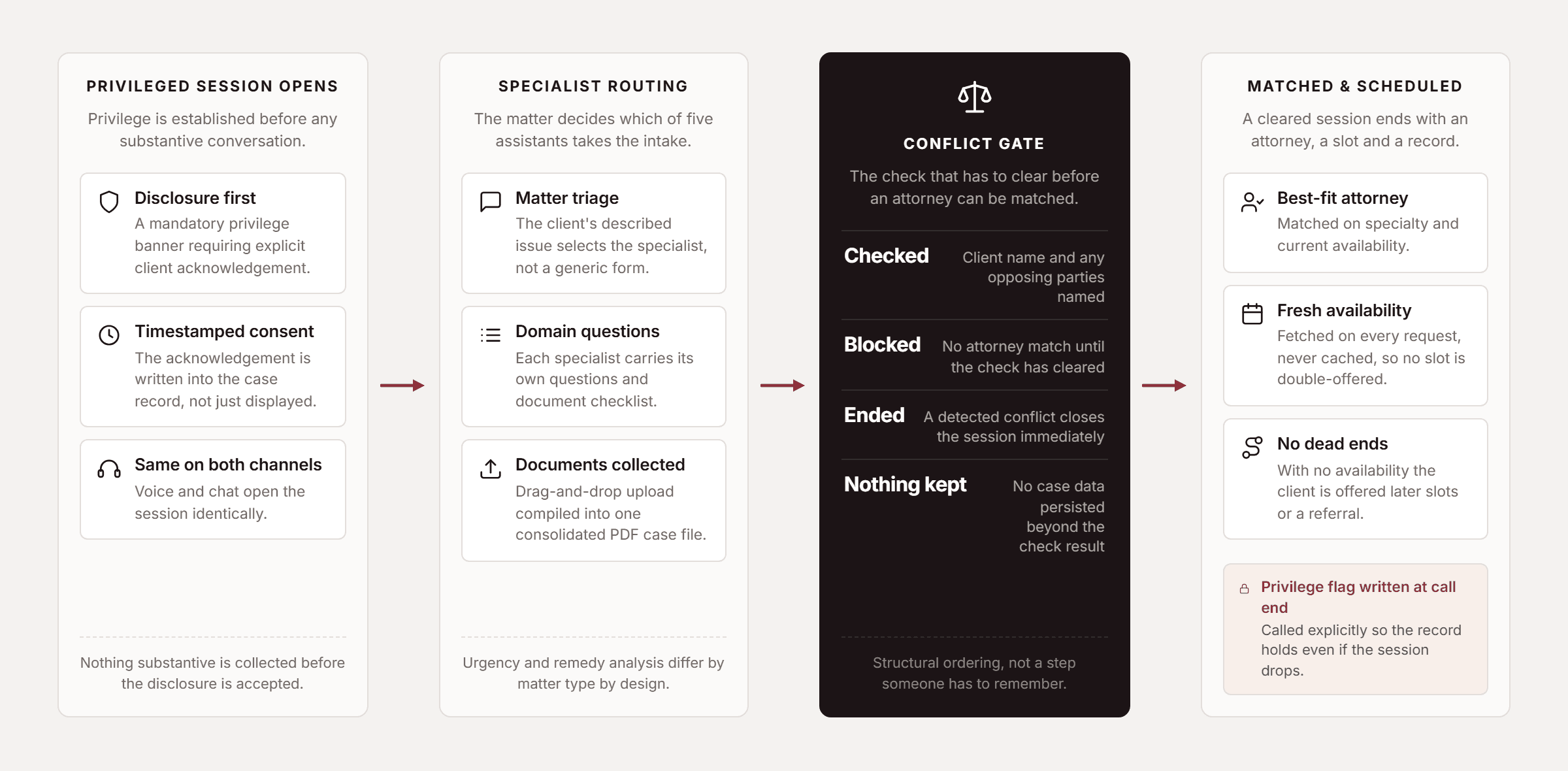
Figure 2 - Every session starts with privilege disclosure and ends with a conflict-checked attorney match.

Architectural principles

  • Route to genuine specialization - Consultation, Property, Fraud, Document and Follow-up sub-assistants each carry their own tools and questions, so a client describing a property dispute gets property-specific analysis, not generic intake.
  • Privilege disclosure before substance - Every session opens with a mandatory privilege banner requiring explicit client acknowledgement, timestamped and recorded in the case record before the conversation proceeds.
  • Conflict check gates attorney matching - Before any attorney is matched, a conflict-of-interest check runs against the client name and any opposing parties identified during intake - a detected conflict ends the session immediately with no attorney assigned.
  • Shared backend, consistent guarantees - Case management, document processing and scheduling all live on one backend all five sub-assistants call into, so privilege, retention and compliance behavior is identical regardless of which specialist a client reaches.
CAPABILITIES DELIVERED
Each capability moves a client from first contact to a matched, scheduled attorney with proper documentation in place.
CAPABILITY
WHAT IT DOES
Five-specialist routing
Consultation, Property, Fraud, Document and Follow-up sub-assistants, each with domain-specific tools.
Attorney matching & scheduling
Best-fit attorney identified by specialty and availability, with direct booking and a Zoom confirmation.
Document collection & checklists
Case-type-specific document checklists, drag-and-drop upload, and a consolidated PDF case file.
Case follow-up
Existing clients retrieve status, pending actions and deadlines by case reference or attorney name.
Conflict-of-interest checking
Automatic check against client and opposing-party names before any attorney match.
Privilege-tagged sessions
Every voice and chat session recorded with attorney-client privilege metadata applied automatically.
Pfactorial_Case_Study_LawAI_Legal_Intake image 3
Figure 3 - Five specialists, one shared backend, one compliance model.
Design note The mark-privileged step is called explicitly at call end specifically to guarantee the privilege flag is applied even if a session ends unexpectedly - a small detail, but the kind that matters when the record needs to hold up as genuinely privileged.
ENGINEERING FOR SCALE AND RELIABILITY
Six decisions make privilege and compliance structural properties of the system rather than policy statements.

Timestamped privilege acknowledgement

The client's acceptance of the privilege disclosure is recorded with a timestamp directly in the case record, not just displayed as a one-time UI banner.

Automatic conflict-check gating

match_attorney is never called until file_conflict_check has cleared, structurally preventing an attorney match from happening before the conflict check runs.

Immediate session termination on conflict

A detected conflict ends the session immediately with a clear status message, and no case data is persisted beyond the conflict-check result.

Jurisdiction- and matter-type-aware retention

Retention periods are set per matter type at case creation - seven years for litigation, ten for property records, six for fraud, three for general consultations - with automatic deletion when the period expires.

Graceful degradation on scheduling failure

When no attorney has availability, the system offers structured alternatives - next week's slots, alternative windows, or a referral network - rather than simply declining the request.

Fresh-checked, never-cached availability

Attorney availability is fetched fresh on every match request rather than cached, so clients are never shown a slot that's already been taken.
DELIVERY APPROACH
The engagement built the shared privilege and conflict-check infrastructure first, then layered the five domain specialists on top of it.
1. Privilege & compliance architecture - the disclosure flow, timestamped acknowledgement, and privilege-tagging applied to every session.
2. Conflict-of-interest gate - the conflict-check tool and its structural position ahead of every attorney match.
3. Sub-assistant build-out - Consultation, Property, Fraud, Document and Follow-up assistants, each with domain-specific tools.
4. Case management backend - case records, document processing, attorney matching and calendar scheduling as a shared service layer.
5. Document checklist & case file generation - case-type-specific checklists and consolidated PDF bundle compilation.
6. Retention automation - jurisdiction- and matter-type-aware deletion jobs scheduled at case creation.
RESULTS AND IMPACT

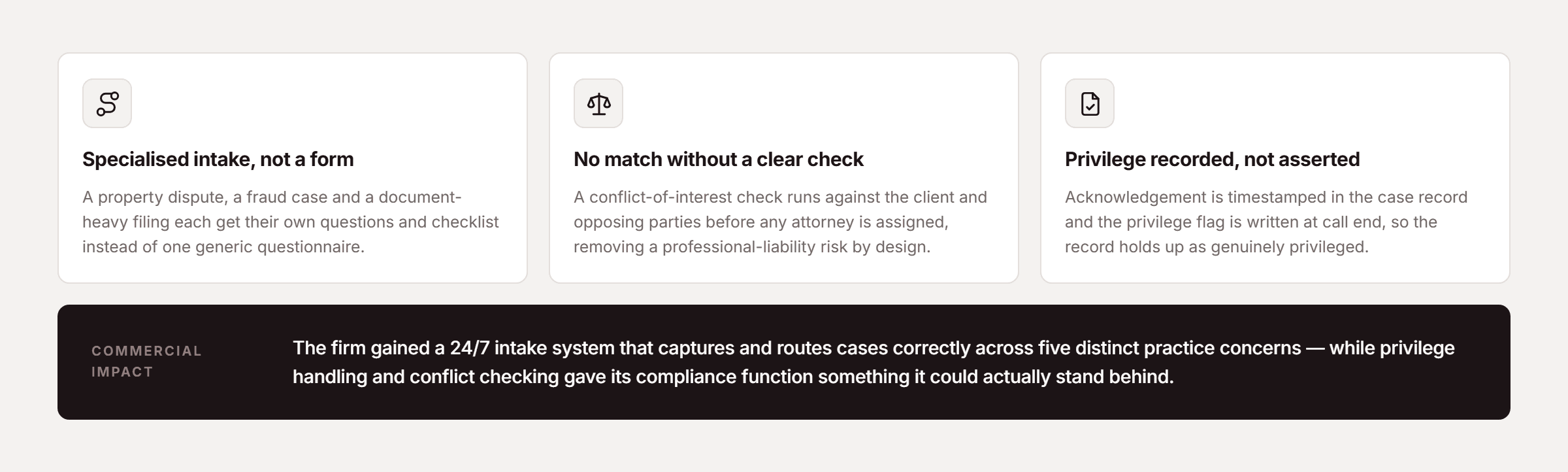
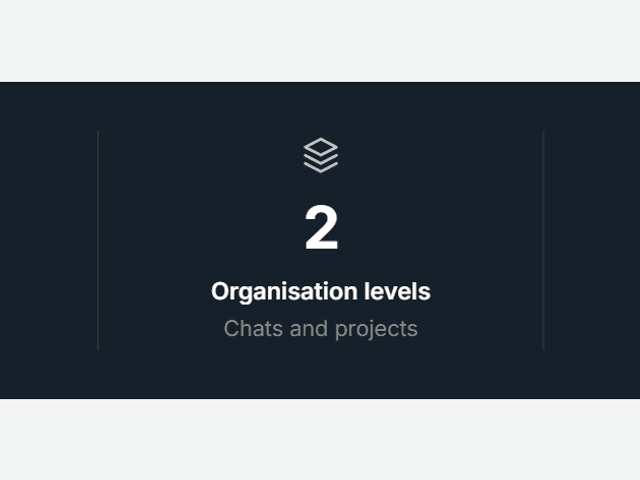
Pfactorial_Case_Study_LawAI_Legal_Intake image 4
Figure 4 - Key outcomes from this engagement.
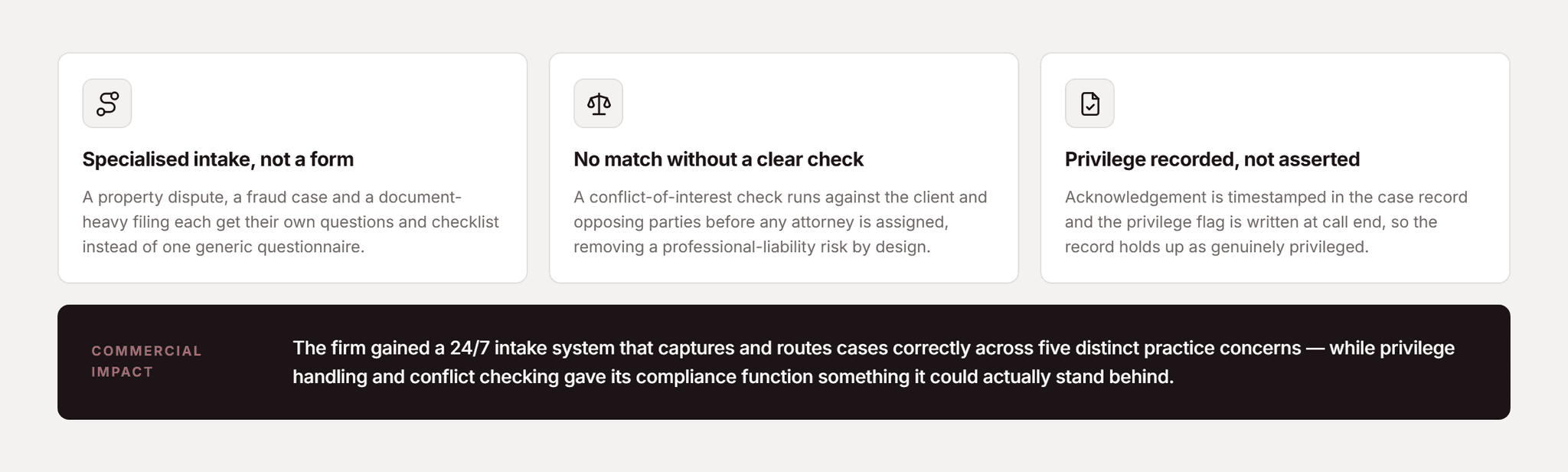
Clients are routed to genuinely specialized intake - property, fraud, document or general consultation - instead of a one-size-fits-all questionnaire, while every session carries the same privilege and compliance guarantees.
No attorney is ever matched without a cleared conflict check, removing a real professional-liability risk from the intake process by structural design rather than manual diligence.

What it enabled commercially

The firm gets a 24/7 intake system that captures and routes cases correctly across five distinct practice concerns, while privilege handling and conflict checking give the firm's compliance function a system it can actually stand behind.
WHY PFACTORIAL
This engagement reflects Pfactorial's conversational AI product engineering service line, applied to a domain where structural compliance guarantees - not just conversational quality - determine whether the system is deployable at all.
Pfactorial_Case_Study_LawAI_Legal_Intake image 5
Figure 5 - Service lines this engagement draws on.
Engagement enquiries Pfactorial Technologies works with law firms and legal service providers that need intake systems built to a compliance bar their risk function will actually approve. If you're evaluating what an AI-driven legal intake system would take to bring to production, we're happy to give you an honest read on scope and risk before anyone commits to anything. · pfactorial.ai
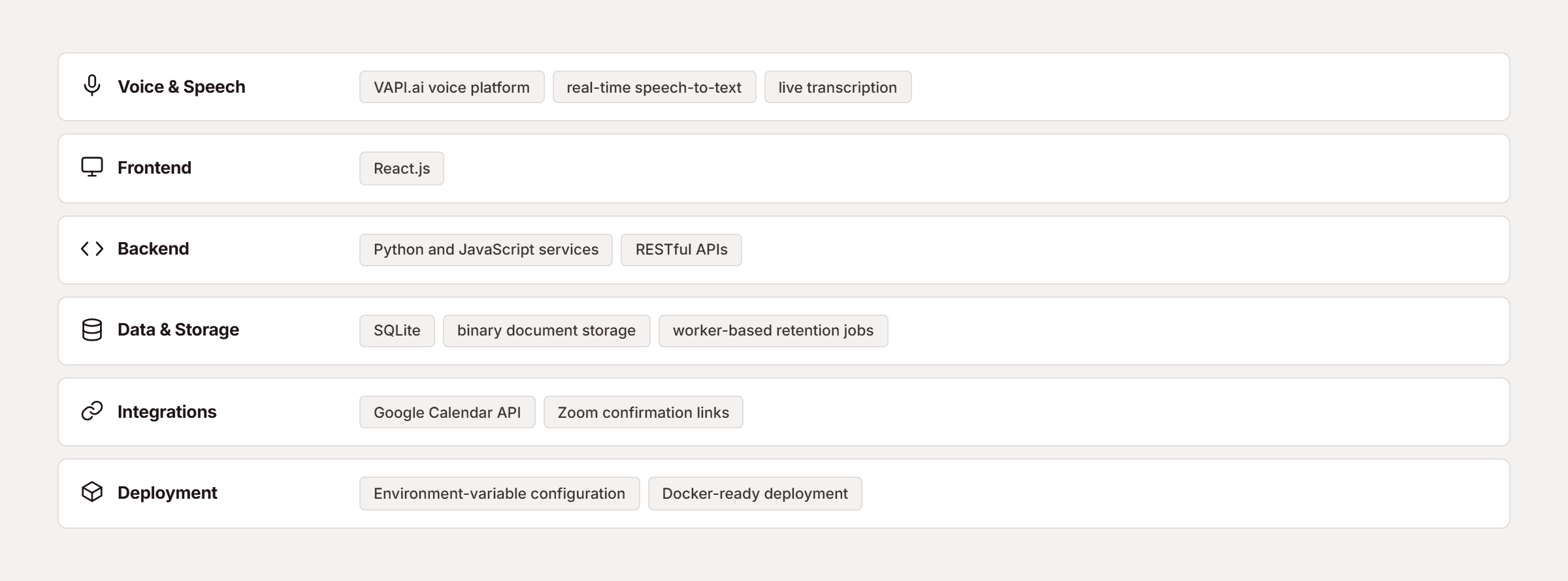
APPENDIX A - TECHNOLOGY STACK
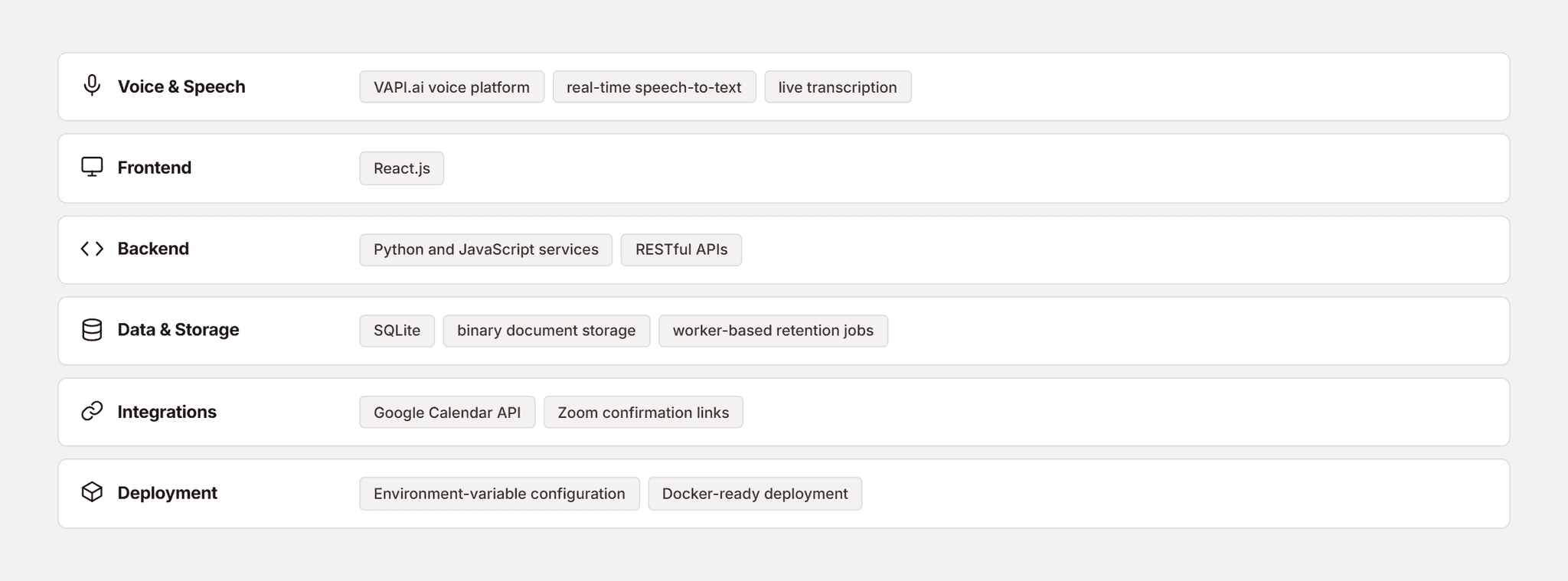
The technology stack underpinning the system, grouped by the layer it serves.
Pfactorial_Case_Study_LawAI_Legal_Intake image 6
© 2026 Pfactorial Technologies. Client identity and product-specific implementation detail are withheld or generalized; no client data, credentials, source code, or infrastructure detail is included in this document.

Result and Analysis

ENGAGEMENT SNAPSHOT

How Pfactorial Technologies built Law.ai, a legal intake and case management assistant that routes clients to the right specialist, checks for conflicts before matching an attorney, and treats privilege as a first-class system requirement.

Pfactorial_Case_Study_LawAI_Legal_Intake image 1
Pfactorial_Case_Study_LawAI_Legal_Intake image 2
Pfactorial_Case_Study_LawAI_Legal_Intake image 3
Pfactorial_Case_Study_LawAI_Legal_Intake image 4
Pfactorial_Case_Study_LawAI_Legal_Intake image 5
Pfactorial_Case_Study_LawAI_Legal_Intake image 6