Back
Healthcare & Clinical
A Reusable Prompt Architecture for Human-Sounding Voice AI Across Industries
How Pfactorial Technologies engineered a single, modular voice AI prompt template that adapts to Banking, Retail, Healthcare and IT Support without touching the underlying conversational logic.

August 21, 2026
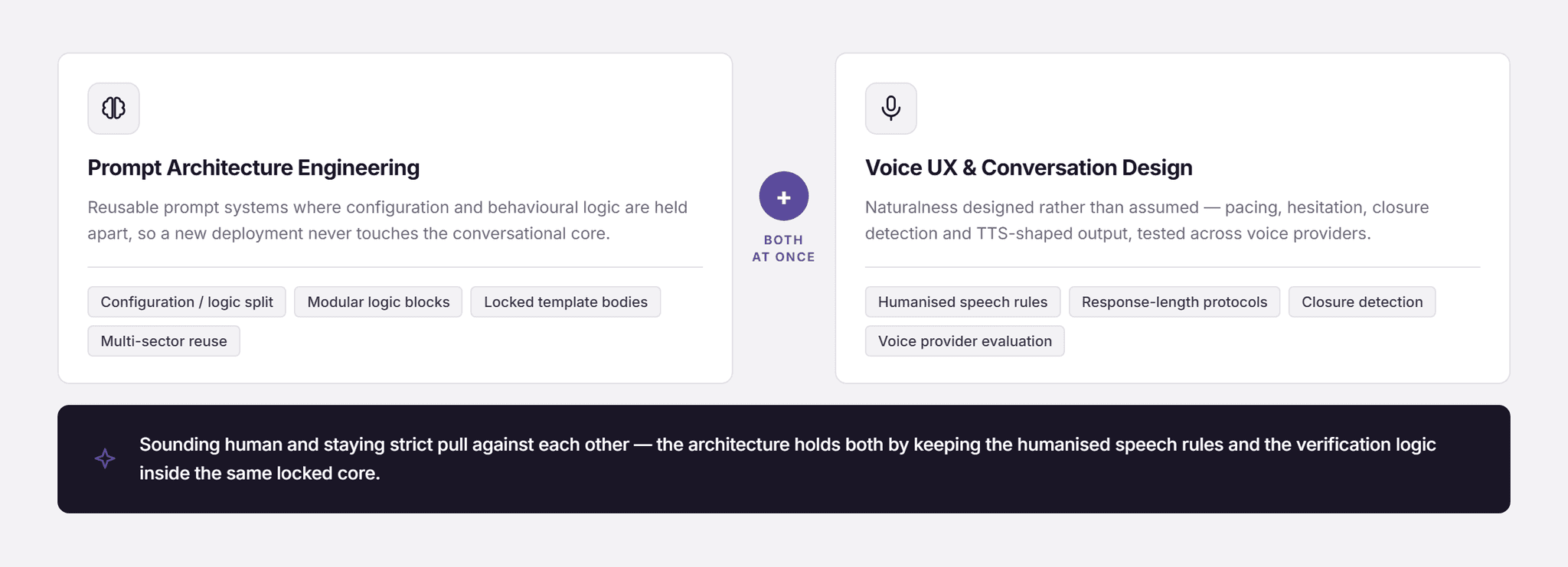
Share
ENGAGEMENT SNAPSHOT

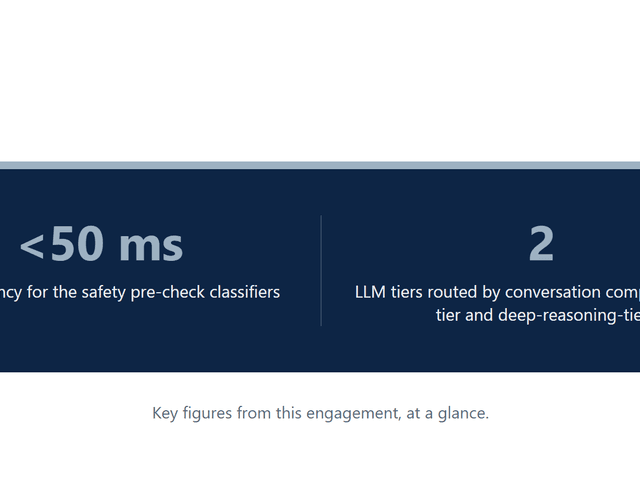
Figure 1 - Key figures from this engagement, at a glance.
EXECUTIVE SUMMARY
Voice AI deployments across different industries typically mean rebuilding conversation logic from scratch for each sector - Banking, Retail, Healthcare and IT Support each need different scope and verification requirements, but shouldn't require different underlying behavioral engineering every time.
The harder problem sits underneath: AI speech that's perfectly fluent and instant reads as obviously robotic. Real human conversation includes hesitation, self-correction, and responses scaled to how complete the other person's thought actually is - none of which a naive prompt produces on its own.
Pfactorial engineered a reusable prompt architecture that separates a user-editable configuration block (organization, credentials, scope, persona) from a locked template body containing six behavioral logic modules - so switching industries or personas is a configuration change, not a rebuild, while the humanized speech patterns and security-critical verification logic stay constant.
Why this engagement is representative This engagement demonstrates Pfactorial's prompt engineering depth: treating conversational naturalness as something to be deliberately engineered - with explicit rules for where an interruption is allowed to land grammatically - rather than left to a model's default behavior.
THE CHALLENGE
Building one prompt architecture that could genuinely serve multiple sectors, and sound human doing it, meant solving problems most conversational AI prompts don't attempt.
1. One template needs to serve genuinely different sectors
Banking, Retail, Healthcare and IT Support each need different scope definitions and credential types, but rebuilding conversational logic for each sector multiplies engineering effort with every new deployment.
2. Perfectly fluent speech reads as obviously artificial
Zero hesitation, zero self-correction, and instantaneous answers are exactly the pattern that signals "robot" to a listener, undermining the goal of feeling like a real conversation.
3. Vague or fragmented input breaks most conversational designs
A user saying "So..." or "Um..." needs a fundamentally different response than a complete request, and most prompt designs don't distinguish between the two.
4. Identity verification has to stay strict while sounding natural
A security-critical process needs to allow natural correction and varied phrasing without ever being talked around or tricked into skipping the actual check.
The real brief Not “write a good system prompt” but “build a reusable architecture where changing sector or persona never touches the conversational and security logic underneath it.”
THE SOLUTION
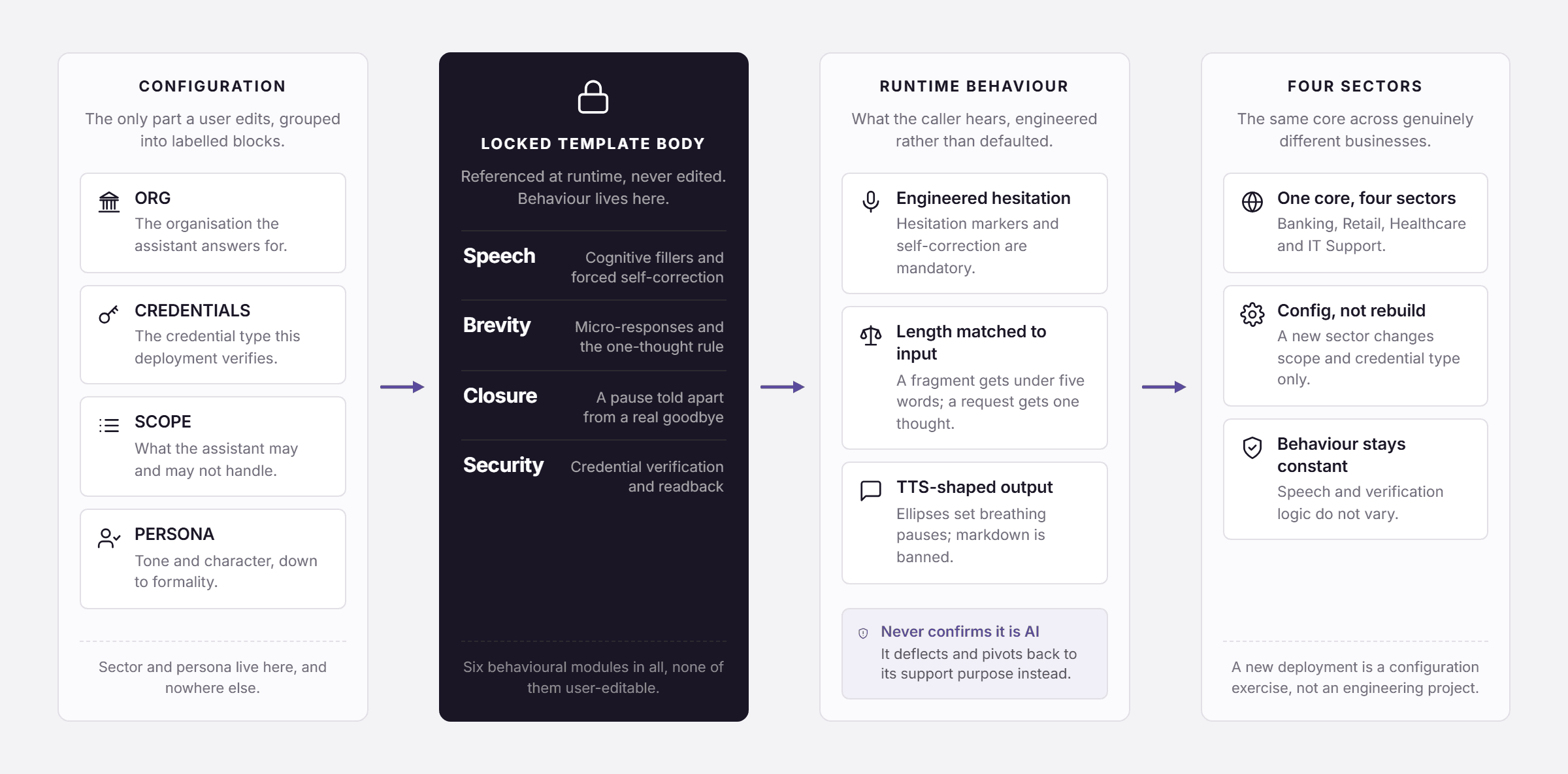
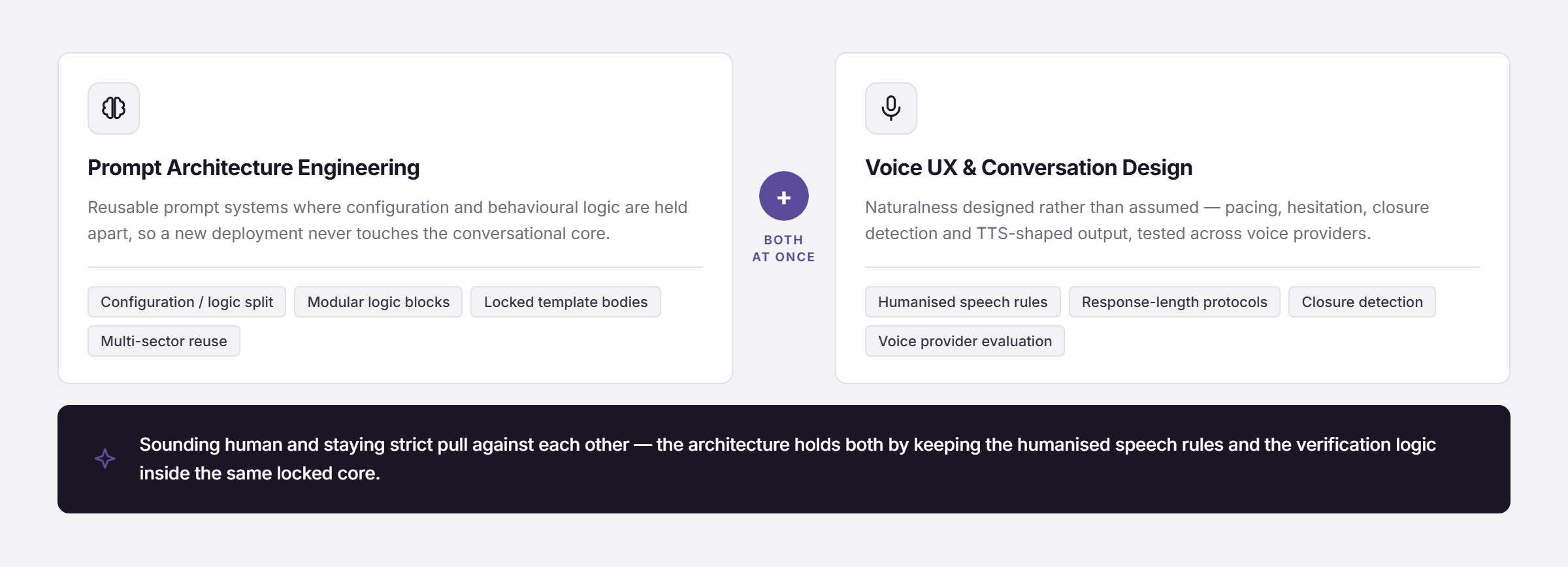
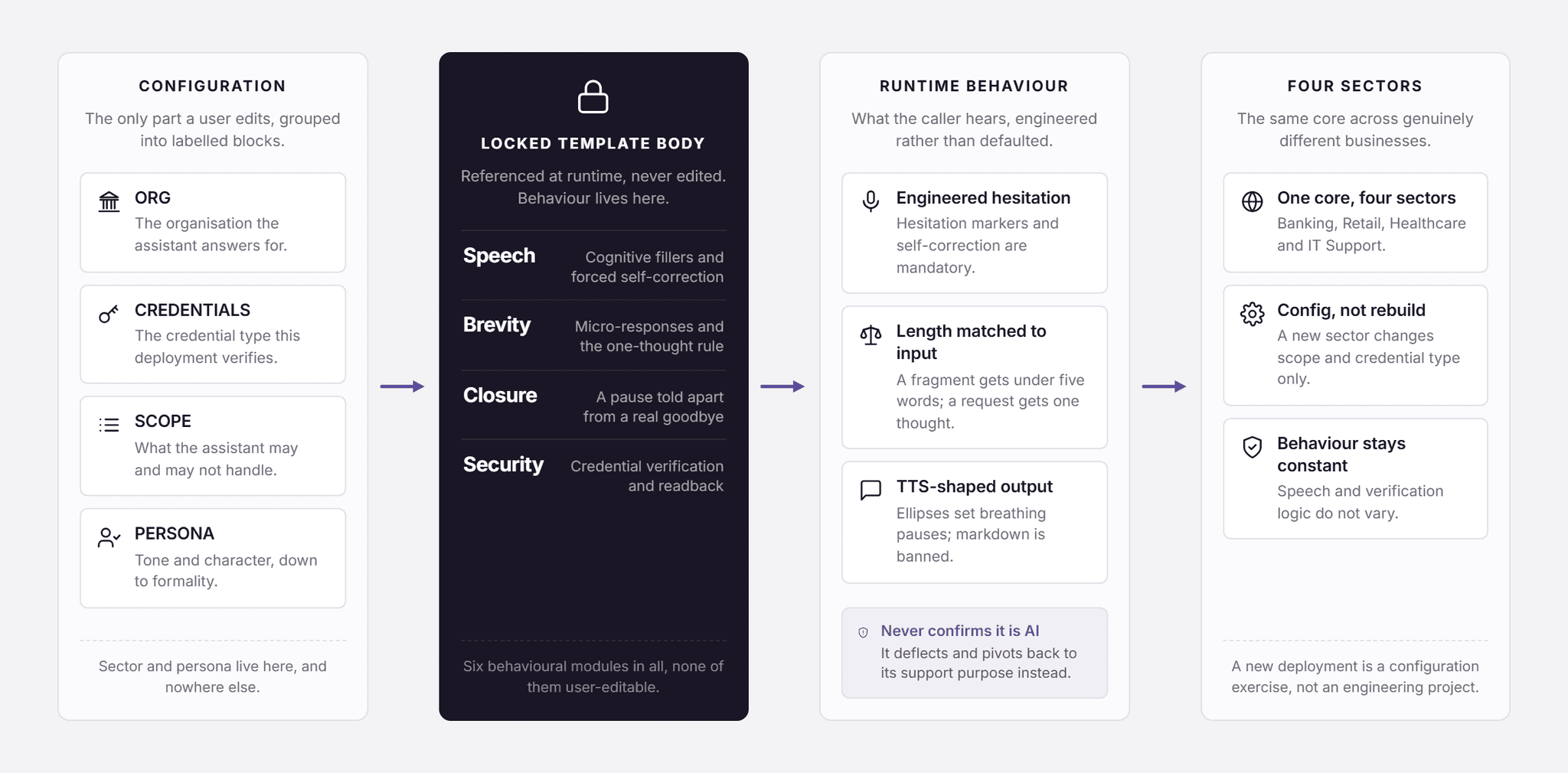
Pfactorial split the prompt into a user-editable configuration block and a locked template body containing six behavioral logic modules, so sector and persona changes never risk destabilizing the underlying conversational or security behavior.

Figure 2 - One configuration block, one locked logic core, four sectors deployed.
Architectural principles
- Separate persona from logic entirely - A user-editable configuration block - organized into ORG, CREDENTIALS, SCOPE and PERSONA groups - feeds a locked template body that the model references at runtime, so users only ever edit configuration, never behavioral logic.
- Engineer imperfection deliberately - Mandatory hesitation markers and forced mid-sentence self-correction are explicit rules, with banned cut patterns ensuring interruptions land inside genuinely incomplete grammatical units rather than at natural pause points, which would read as fake.
- Match response length to input completeness - A dedicated micro-response protocol handles vague or fragmented input with sub-5-word responses and no new questions, while a one-thought rule caps normal responses at an acknowledgment plus one question or action.
- Verification stays strict regardless of conversational tone - Up to three verification attempts are allowed with natural correction handling, but all sensitive actions remain locked until verification succeeds, with a graceful security-based exit on failure.
CAPABILITIES DELIVERED
Each capability targets a specific dimension of making a voice AI sound genuinely human while staying secure and adaptable.
CAPABILITY | WHAT IT DOES |
|---|---|
Five-group configuration template | ORG, CREDENTIALS, SCOPE and PERSONA blocks let a new deployment be configured without touching logic. |
Universal Human Speech Protocol | Mandatory cognitive fillers, forced mid-stream self-correction, and warmth-brevity balance rules. |
Micro-Response Protocol | Sub-5-word responses for vague or fragmented input, maintaining conversational momentum without rambling. |
Closure Detection Engine | Context-aware distinction between a pause and an actual goodbye, preventing premature call termination. |
Credential Verification & Readback | Secure, human-like identity verification with up to 3 attempts and graceful failure handling. |
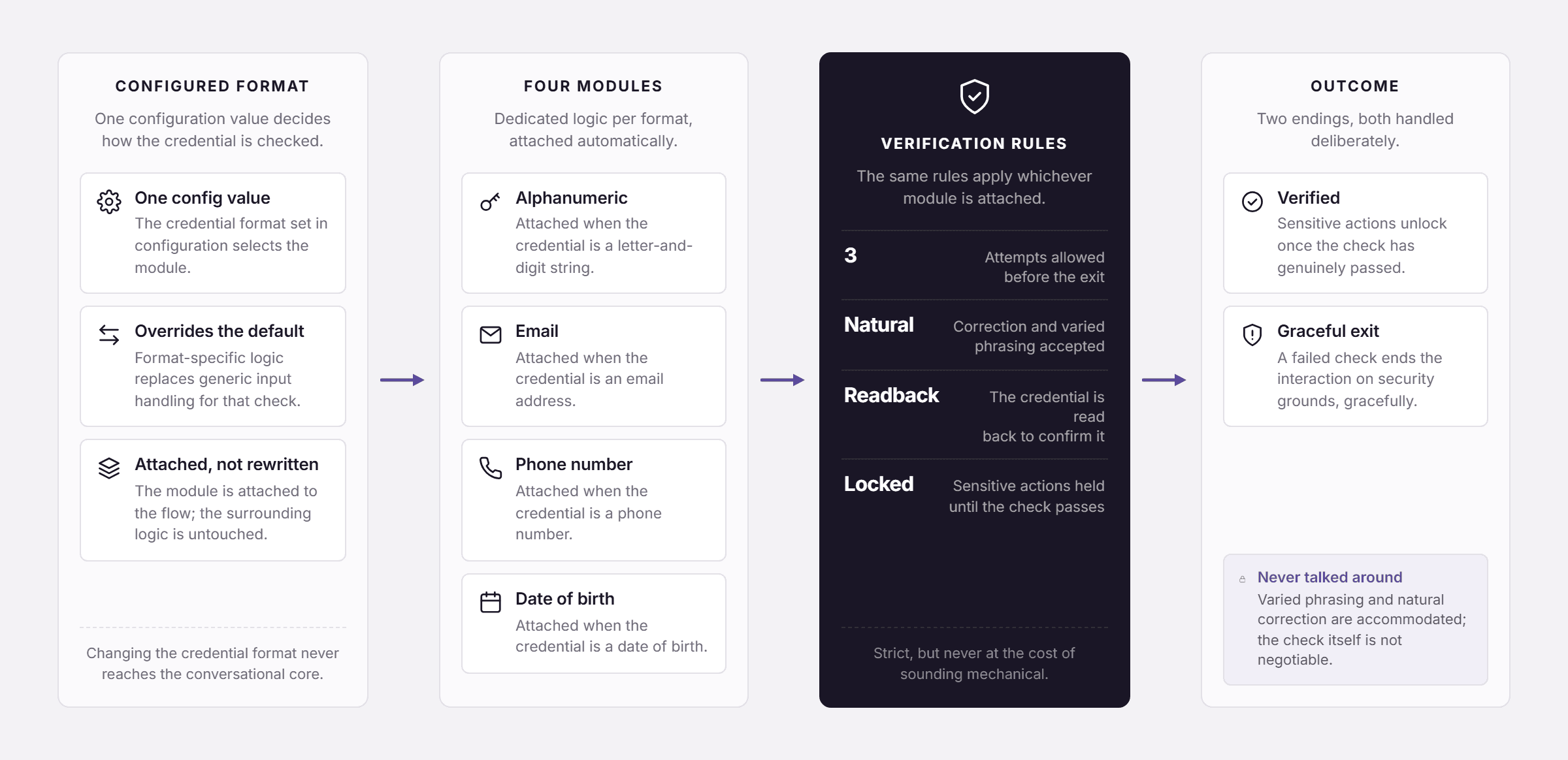
Four verification modules | Dedicated, attachable logic for alphanumeric, email, phone number, and date-of-birth credential formats. |
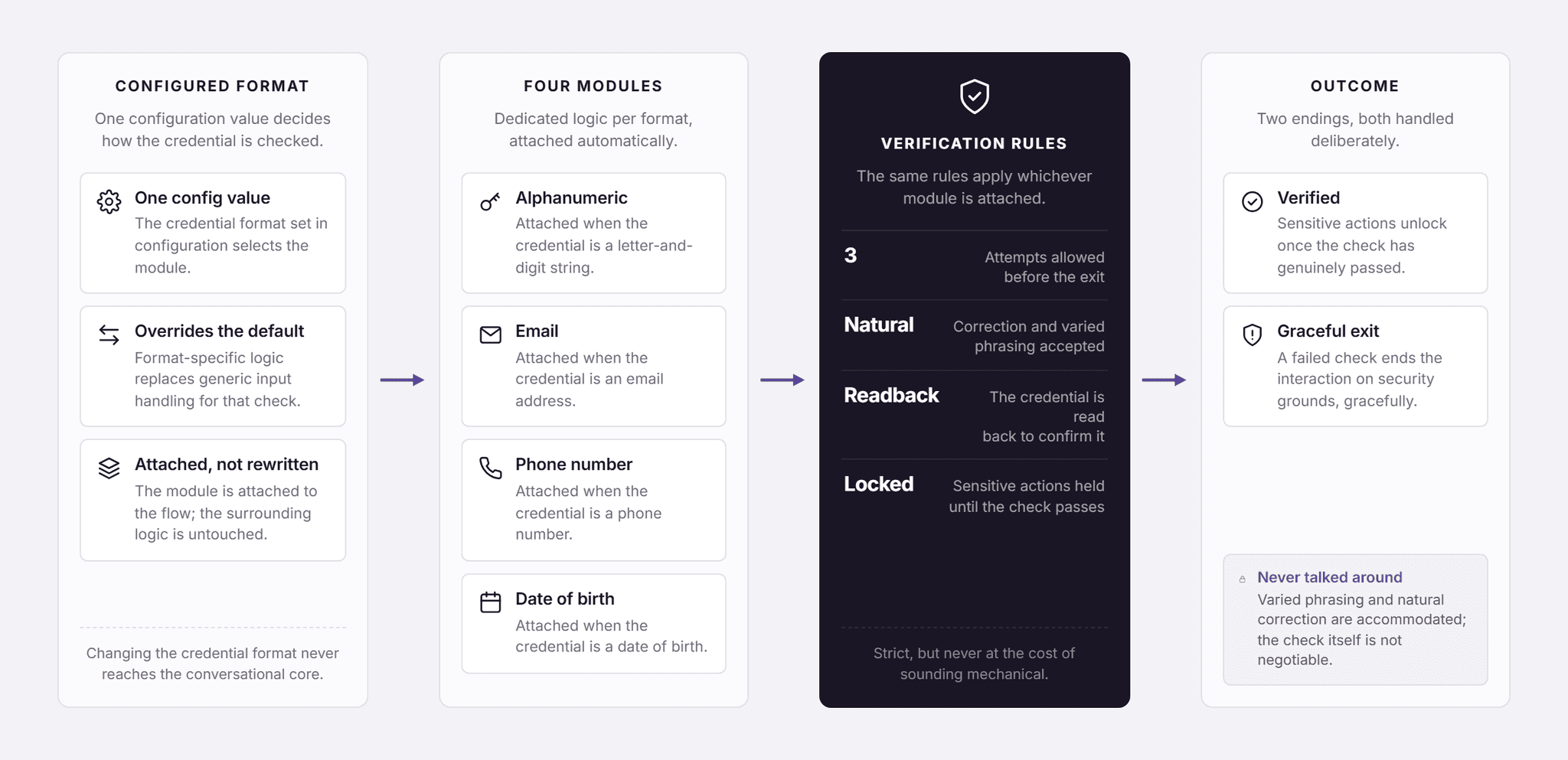
Figure 3 - Four verification modules, attached automatically based on configured credential format.
Design note The rule for where a mid-sentence cut is allowed to land is remarkably specific: never at a comma, conjunction, or after an already-complete phrase - those don't read as true interruptions. A valid cut happens mid-noun-phrase or even mid-word ("the appoin- uh, wait, the appointment time"). That level of specificity is what separates an engineered imperfection from a random one.
ENGINEERING FOR SCALE AND RELIABILITY
Six distinct logic modules work in unison to simulate human cognition, manage conversation flow, and enforce security - five engineering decisions make them work together reliably.
Format-driven verification module attachment
The credential format configuration value ({{CREDENTIAL_FORMAT}}) determines which of four dedicated verification modules gets attached, overriding generic input handling with format-specific logic.
Identity-protection as a standing rule
The assistant is instructed to never explicitly confirm or deny being an AI, deflecting naturally and pivoting back to its support purpose - a rule specifically designed to prevent persona destabilization attempts.
TTS-optimized output formatting
Ellipses dictate breathing pauses for the TTS engine, markdown is strictly prohibited in spoken output, and contractions are enforced unless the configured persona is strictly formal.
Multi-provider voice evaluation
Multiple voice profiles across ElevenLabs, Azure and Cartesia were tested for suitability across different personas, rather than committing to a single TTS provider by default.
Dual-model latency/quality testing
GPT-4.1 was evaluated for complex context retention while GPT-4.1 Mini was tested specifically for latency optimization and cost-efficiency in high-volume scenarios, rather than assuming one model fits every deployment.
DELIVERY APPROACH
The engagement built the configuration/logic separation first, then layered the humanization and verification modules on top.
1. Configuration template architecture - the five labeled groups (ORG, CREDENTIALS, SCOPE, PERSONA) and the locked template body they feed into.
2. Universal Human Speech Protocol - cognitive filler rules, forced mid-stream interruption logic, and the warmth-brevity balance constraint.
3. Micro-response & closure detection - handling for vague input and context-aware distinction between a pause and a genuine goodbye.
4. Credential verification & readback protocol - the core security-critical verification flow with attempt limits and graceful failure handling.
5. Four verification modules - alphanumeric, email, phone number, and date-of-birth format-specific validation logic.
6. Multi-provider voice testing - evaluation across ElevenLabs, Azure and Cartesia voice libraries for persona-appropriate voice selection.
RESULTS AND IMPACT

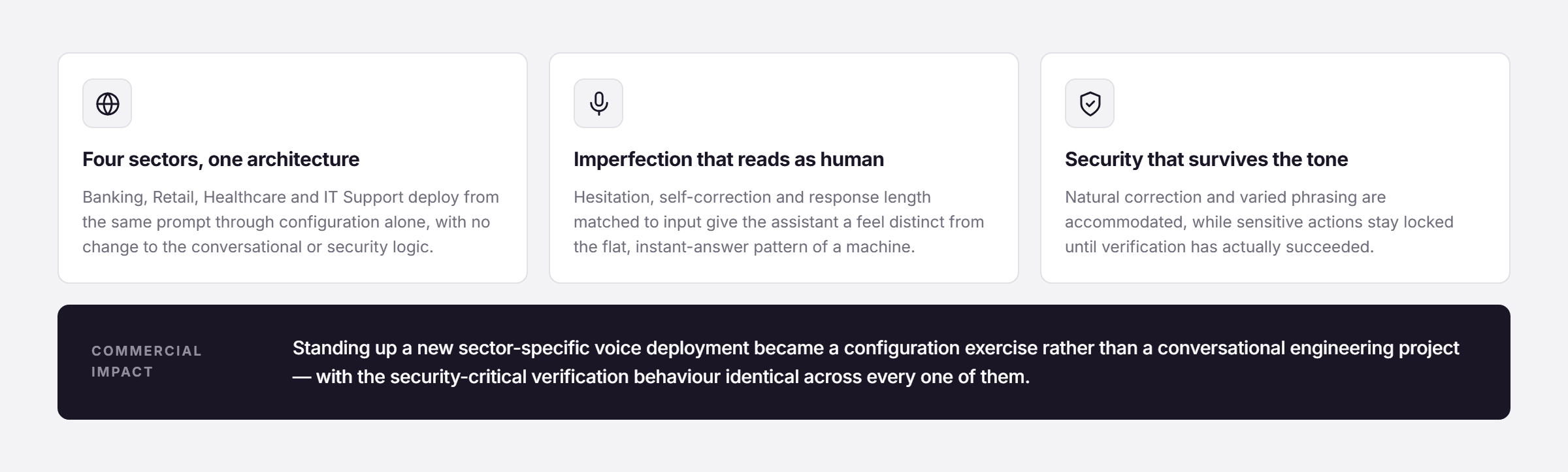
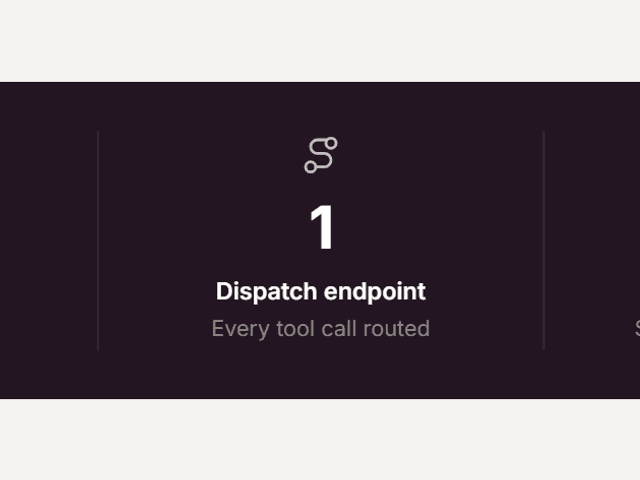
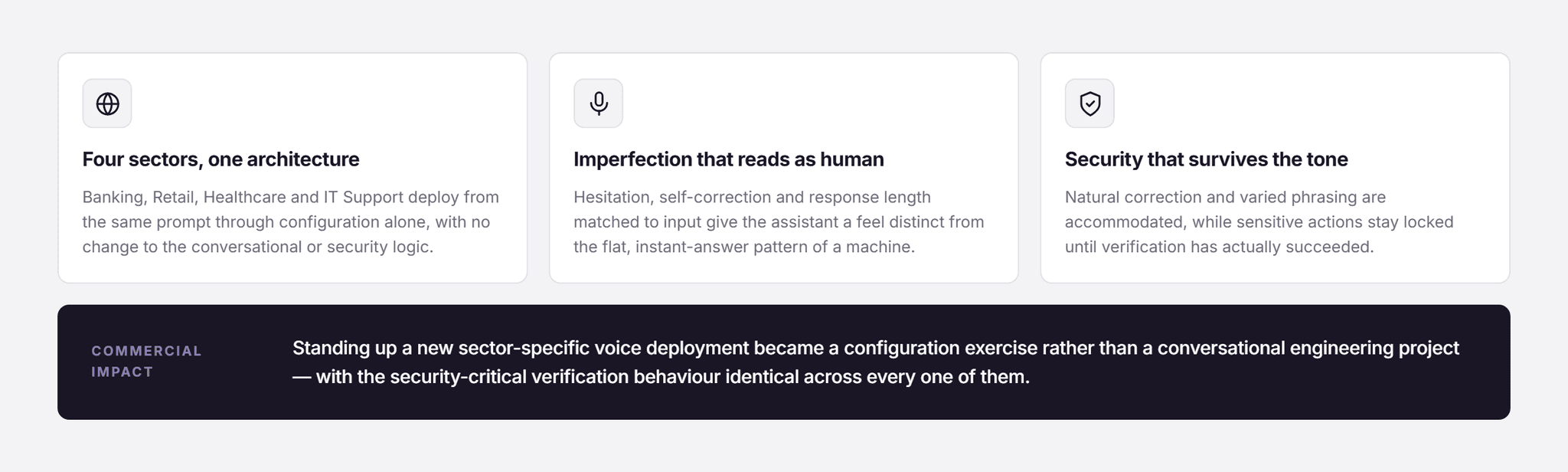
Figure 4 - Key outcomes from this engagement.
A single prompt architecture now serves Banking, Retail, Healthcare and IT Support deployments through configuration alone, with no changes to the underlying conversational or security logic.
The engineered imperfection rules - hesitation, self-correction, response-length matching - give the assistant a conversational feel distinct from the flat, instant-answer pattern that reads as obviously artificial.
What it enabled commercially
The architecture lets the client (or its clients) stand up a new sector-specific voice AI deployment as a configuration exercise rather than a conversational engineering project, while keeping the security-critical verification behavior consistent and trustworthy across every deployment.
WHY PFACTORIAL
This engagement reflects Pfactorial's prompt engineering depth: treating naturalness, response pacing, and security verification as things to be explicitly designed and tested - down to exactly where a self-correction is allowed to land - rather than left to a model's default behavior.

Figure 5 - Service lines this engagement draws on.
Engagement enquiries Pfactorial Technologies works with organizations deploying voice AI across multiple business units or industries that need one reusable, secure conversational foundation. If you're evaluating a multi-sector voice AI prompt architecture, we're happy to give you an honest read on scope and risk before anyone commits to anything. · pfactorial.ai
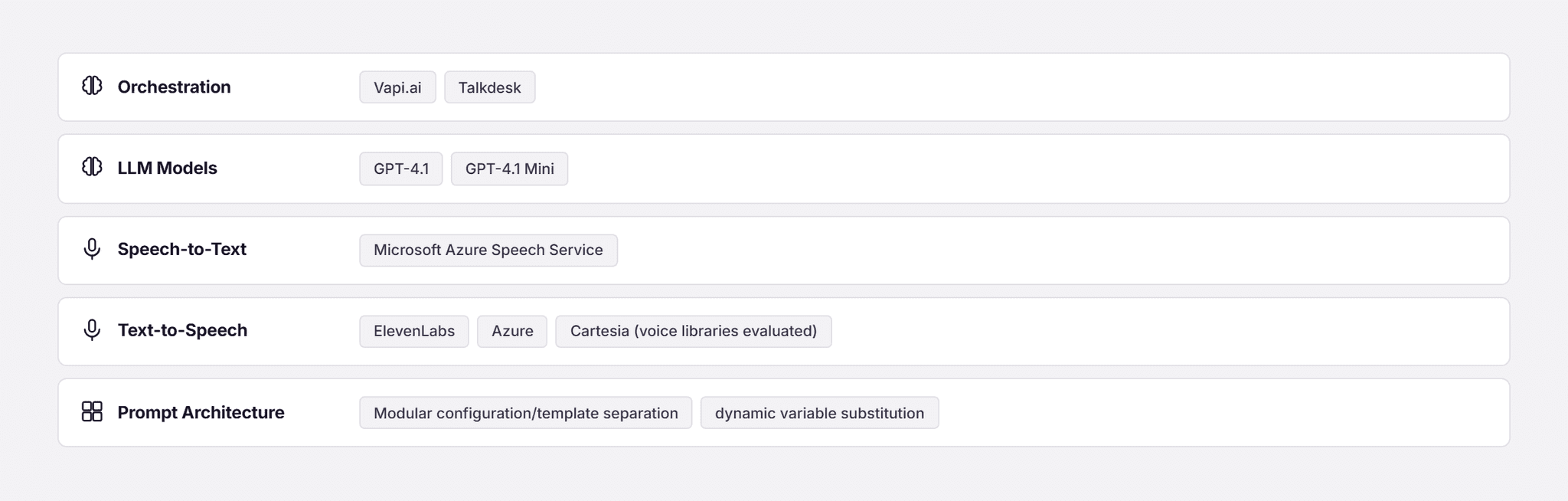
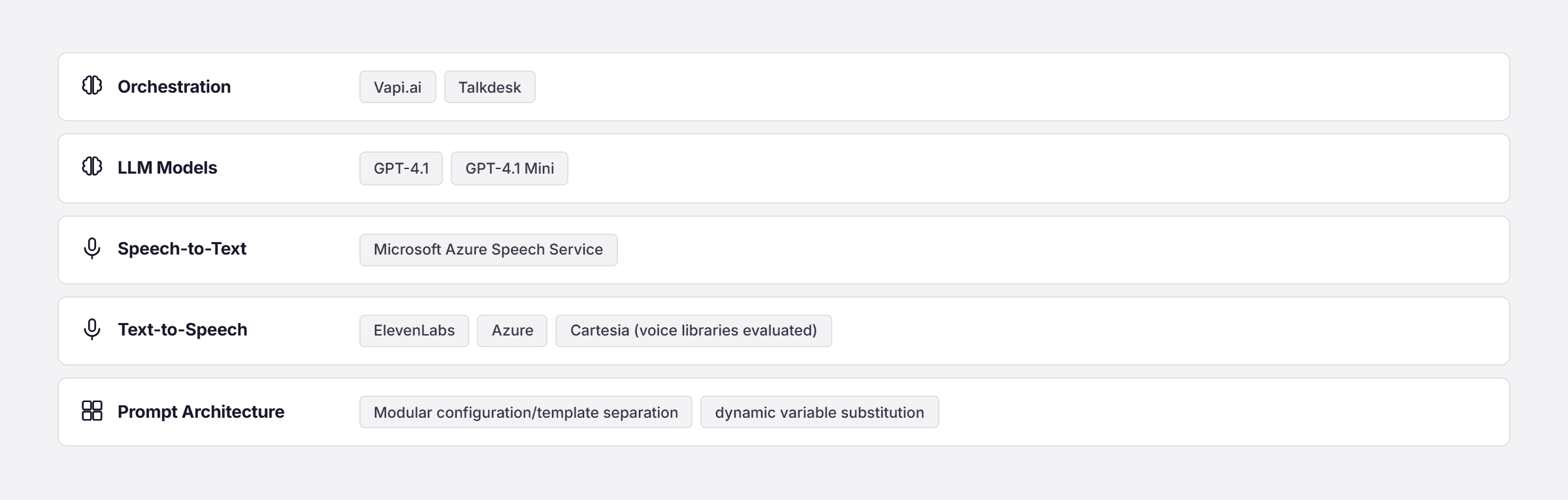
APPENDIX A - TECHNOLOGY STACK
The technology stack underpinning the system, grouped by the layer it serves.

© 2026 Pfactorial Technologies. Client identity and product-specific implementation detail are withheld or generalized; no client data, credentials, source code, or infrastructure detail is included in this document.
Result and Analysis
ENGAGEMENT SNAPSHOT
How Pfactorial Technologies engineered a single, modular voice AI prompt template that adapts to Banking, Retail, Healthcare and IT Support without touching the underlying conversational logic.

CASE STUDIES
You might also like...

Voice AI & TelephonyConversational AI & Chatbots
Aug 21, 20267 min readRead

Computer VisionML Infra, Classifiers & RL
A Deep Learning Classifier That Separates True-Negative Mammograms from Genuine BIRADS 0 Cases
Aug 21, 20266 min readRead

Legal & Contract Analysis
A HIPAA-Compliant De-Identification Pipeline for Multi-Format Clinical Data
Aug 21, 20266 min readRead

Conversational AI & ChatbotsML Infra, Classifiers & RL
A Layered Safety Pipeline for a Healthcare Patient Companion
Aug 21, 20268 min readRead

ML Infra, Classifiers & RL
A Machine-Learning Screening Model for Pulmonary Hypertension from Routine Medical Records
Aug 21, 20266 min readRead

Multi-Agent & Agentic SystemsE-commerce & Retail
A Multi-Agent Voice & Chat Shopping Assistant Built on a Coordinated Squad Architecture
Aug 21, 20267 min readRead