Back
Legal & Contract Analysis

An AI Detection Engine for Visual Intellectual Property Infringement at Scale

How Pfactorial Technologies built PixelTrace, a multi-model AI platform that detects, verifies and documents unauthorized use of copyrighted images - even after cropping, embedding, or physical photography.

August 21, 2026
Share
ENGAGEMENT SNAPSHOT

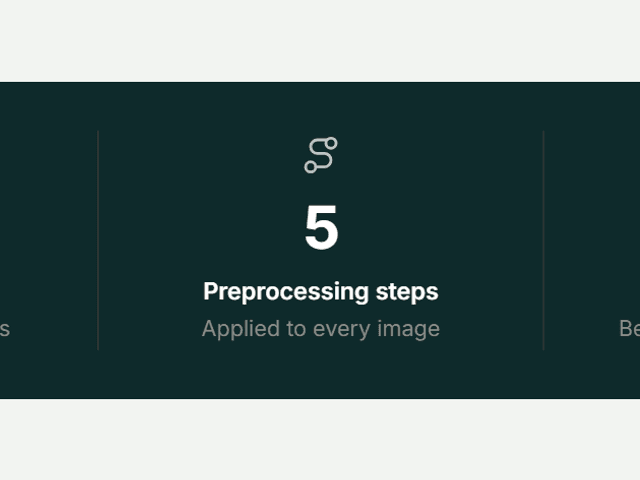
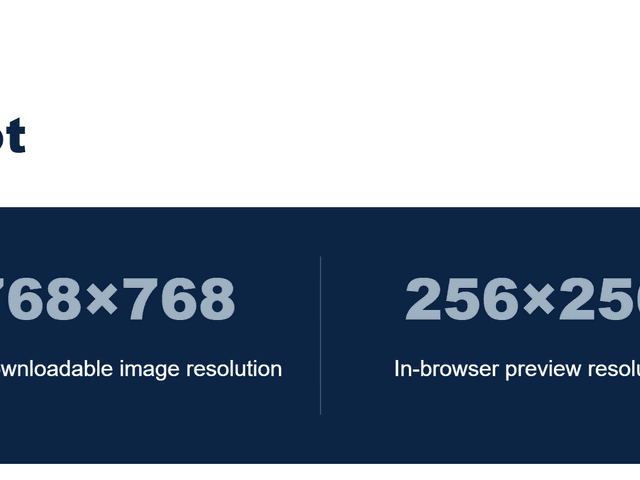
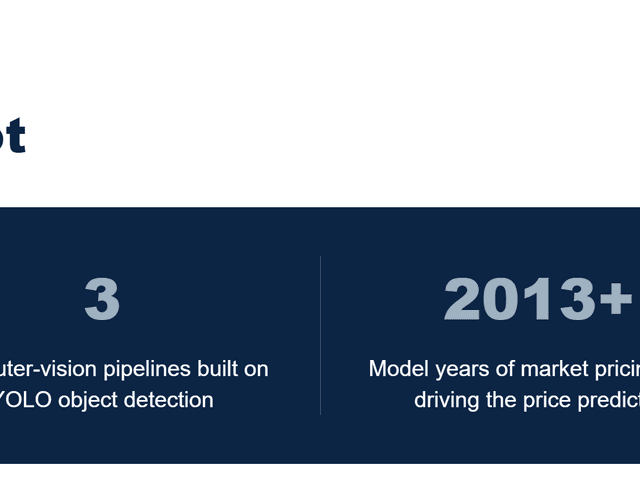
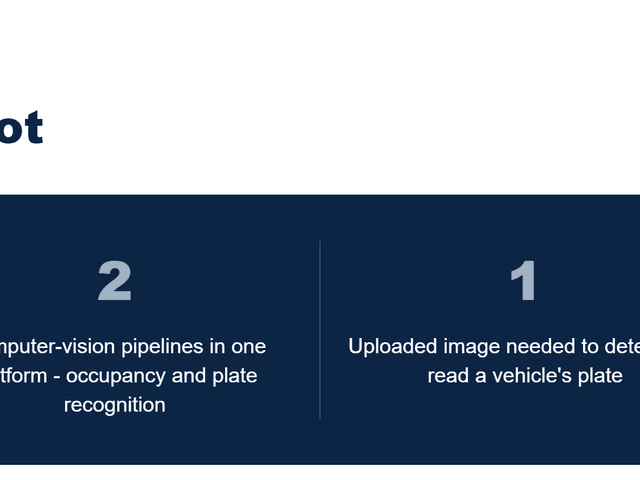
Pfactorial_Case_Study_PixelTrace_Visual_IP_Protection image 1
Figure 1 - Key figures from this engagement, at a glance.
EXECUTIVE SUMMARY
Organizations invest heavily in visual assets - product imagery, marketing materials, brand collateral - and once published, those assets get copied, modified and reused without permission across websites, social media, presentations and even physical media, with no scalable way to find and document it.
Traditional reverse image search only catches exact or near-exact duplicates. Real-world infringement is rarely that clean: images get cropped, recolored, embedded in slide decks, screenshotted, or photographed off a printed display - all of which defeat simple pixel or hash-based matching.
Pfactorial built PixelTrace: a multi-stage AI pipeline combining visual embedding similarity, region-level partial-match detection, geometric verification, contextual OCR analysis, and multimodal AI reasoning - converging on a confidence score that routes each case to automatic confirmation, analyst review, or rejection, with full audit-ready evidence reporting.
Why this engagement is representative This engagement demonstrates Pfactorial's approach to a genuinely hard computer vision problem - proving that a modified, embedded, or physically-photographed image originated from a specific asset - by combining multiple specialized AI models rather than relying on any single similarity score.
THE CHALLENGE
Detecting infringement that survives real-world modification required solving problems traditional reverse image search was never built for.

1. Modified images defeat exact-match search

Cropping, recoloring, compression, watermarking, and compositing all break traditional reverse image search, which is built to find exact or near-exact duplicates.

2. Infringement often involves only part of an image

Original assets frequently appear embedded within a larger design, presentation slide, or composite graphic, requiring detection at the region level rather than the whole-image level.

3. A similarity score alone isn't proof

High visual similarity between two images doesn't by itself prove one originated from the other - legally defensible evidence needs geometric and contextual confirmation, not just a similarity number.

4. Manual investigation doesn't scale

Manually searching for infringements across websites, social media, presentations and physical media, then documenting evidence for each one, becomes prohibitively expensive as digital content volume grows.
The real brief Not “build a reverse image search tool” but “build a system that can prove an image was reused after modification, well enough to stand up as legal evidence.”
THE SOLUTION
Pfactorial built a multi-stage pipeline where each AI model contributes independent evidence - visual similarity, regional matching, geometric verification, contextual analysis - fused into a single, explainable confidence score.
Pfactorial_Case_Study_PixelTrace_Visual_IP_Protection image 2
Figure 2 - Upload to court-ready evidence, with human review at the confidence boundary.

Architectural principles

  • Compare visual characteristics, not pixels - Every image is converted into a visual embedding first, so the platform recognizes the same asset even after significant modification, rather than comparing raw pixel values.
  • Region-level analysis for partial reuse - Multi-scale sliding window analysis and region-based embeddings detect cropped, embedded, or composited partial matches that whole-image comparison would miss.
  • Geometry as supporting proof, not just similarity - Detector-free local feature matching validates that matching regions share genuine geometric structure - rotation, scaling, perspective - before a match is treated as confirmed.
  • Multiple independent signals fused into one decision - Copy-detection similarity, structural similarity, region confidence, geometric verification, OCR context and AI reasoning confidence are all combined into a single score, rather than trusting any one model's output alone.
CAPABILITIES DELIVERED
Each capability targets a specific way infringing content actually appears in the real world.
CAPABILITY
WHAT IT DOES
Image similarity detection
Exact, near-duplicate, and modified-version matching even after significant visual changes.
Partial match detection
Identifies reuse where only a portion of an image appears within another design or document.
Document & presentation analysis
Detects embedded images within PDFs, PowerPoint presentations, and marketing collateral.
Physical media recognition
Detects original images appearing in photographs of exhibitions, printed materials and displays.
AI-powered match verification
Reasoning models validate detected matches to reduce false positives.
Evidence & reporting
Structured reports with visual comparisons, match explanations, and full audit history.
Pfactorial_Case_Study_PixelTrace_Visual_IP_Protection image 3
Figure 3 - Seven independent signals, fused into one explainable confidence score.
Design note The multi-model confidence score routes cases into three tiers - automatic confirmation, analyst review, or rejection - rather than a single automated yes/no. That routing is what makes the platform trustworthy enough for legal use: high-confidence cases move fast, ambiguous ones get a human, and weak candidates are filtered out before ever reaching an analyst.
ENGINEERING FOR SCALE AND RELIABILITY
Seven specialized models, each covering a different failure mode of naive reverse image search, combine into the platform's core detection capability.

SSCD for robust copy detection

A self-supervised copy detection model handles crops, color changes and watermarking, reporting a 48% improvement over SimCLR on the DISC21 benchmark.

DINOv2 for structural and physical-gap matching

A vision transformer captures structural and semantic detail, specifically enabling matches against exhibition photography and perspective-distorted, physically-photographed assets.

FAISS IVF-PQ for billion-scale retrieval

Approximate nearest neighbor search across 1,536-dimensional embeddings enables sub-second candidate retrieval across the full indexed corpus without meaningful recall loss.

LoFTR for court-admissible geometric proof

Detector-free local feature matching requires 30+ inlier correspondences before a match is promoted, producing correspondence maps that visually demonstrate image alignment for legal documentation.

SAM for region isolation in composite images

Zero-shot segmentation isolates original assets within complex, multi-asset collages and slide embeds, preventing background content from diluting the match signal.

OCR-driven contextual analysis

Surrounding text - company names, product names, copyright notices - is extracted to strengthen evidence by showing where, why, and how an image is being used.

GPT-4o Vision for auditable reasoning

A multimodal LLM reviews all collected evidence and produces a natural-language forensic verdict, converting raw model scores into evidence a legal team can actually read and act on.
DELIVERY APPROACH
The engagement built the core detection models first, then the verification and human-review layers that make the platform's output legally usable.
1. Visual embedding pipeline - SSCD and DINOv2 model integration for robust, modification-tolerant image representation.
2. Similarity search infrastructure - FAISS IVF-PQ indexing for billion-scale approximate nearest neighbor retrieval.
3. Region-level detection - multi-scale sliding window and SAM-based segmentation for partial and embedded-image matches.
4. Geometric verification - LoFTR-based correspondence mapping to confirm genuine spatial alignment before promoting a match.
5. Contextual analysis & AI reasoning - OCR-based context extraction and GPT-4o Vision-based evidence reasoning and verdict generation.
6. Confidence scoring & review workflow - the tiered decision routing and analyst review interface for evidence approval.
RESULTS AND IMPACT

Pfactorial_Case_Study_PixelTrace_Visual_IP_Protection image 4
Figure 4 - Key outcomes from this engagement.
Organizations can now detect infringement that traditional reverse image search would miss entirely - cropped, embedded, screenshotted, or physically photographed reuse of their visual assets.
The confidence-tiered routing keeps human review focused on genuinely ambiguous cases, while high-confidence matches and clear non-matches are handled automatically.

What it enabled commercially

The platform turns visual IP protection from a manual, largely reactive investigation process into a scalable, evidence-driven workflow - letting brand and legal teams identify and act on infringement they previously had no realistic way of finding.
WHY PFACTORIAL
This engagement reflects Pfactorial's ability to combine multiple specialized AI and computer vision models into one coherent, explainable detection system - the kind of multi-signal engineering that a single similarity score can never replace for a use case that has to hold up as legal evidence.
Pfactorial_Case_Study_PixelTrace_Visual_IP_Protection image 5
Figure 5 - Service lines this engagement draws on.
Engagement enquiries Pfactorial Technologies works with organizations that need to protect visual intellectual property at a scale manual monitoring can't match. If you're evaluating a visual IP protection or brand monitoring initiative, we're happy to give you an honest read on scope and risk before anyone commits to anything. · pfactorial.ai
APPENDIX A - TECHNOLOGY STACK
The technology stack underpinning the system, grouped by the layer it serves.
Pfactorial_Case_Study_PixelTrace_Visual_IP_Protection image 6
© 2026 Pfactorial Technologies. Client identity and product-specific implementation detail are withheld or generalized; no client data, credentials, source code, or infrastructure detail is included in this document.

Result and Analysis

ENGAGEMENT SNAPSHOT

How Pfactorial Technologies built PixelTrace, a multi-model AI platform that detects, verifies and documents unauthorized use of copyrighted images - even after cropping, embedding, or physical photography.

Pfactorial_Case_Study_PixelTrace_Visual_IP_Protection image 1
Pfactorial_Case_Study_PixelTrace_Visual_IP_Protection image 2
Pfactorial_Case_Study_PixelTrace_Visual_IP_Protection image 3
Pfactorial_Case_Study_PixelTrace_Visual_IP_Protection image 4
Pfactorial_Case_Study_PixelTrace_Visual_IP_Protection image 5
Pfactorial_Case_Study_PixelTrace_Visual_IP_Protection image 6