Back
Computer Vision

A Five-Capability Computer Vision Platform for Vehicle Identity, Traffic, and Parking Intelligence

How Pfactorial Technologies built a vehicle-analytics platform combining computer vision and machine learning to count traffic, decode vehicle identity, detect parking availability, and estimate fair market car prices.
August 21, 2026
Share
ENGAGEMENT SNAPSHOT

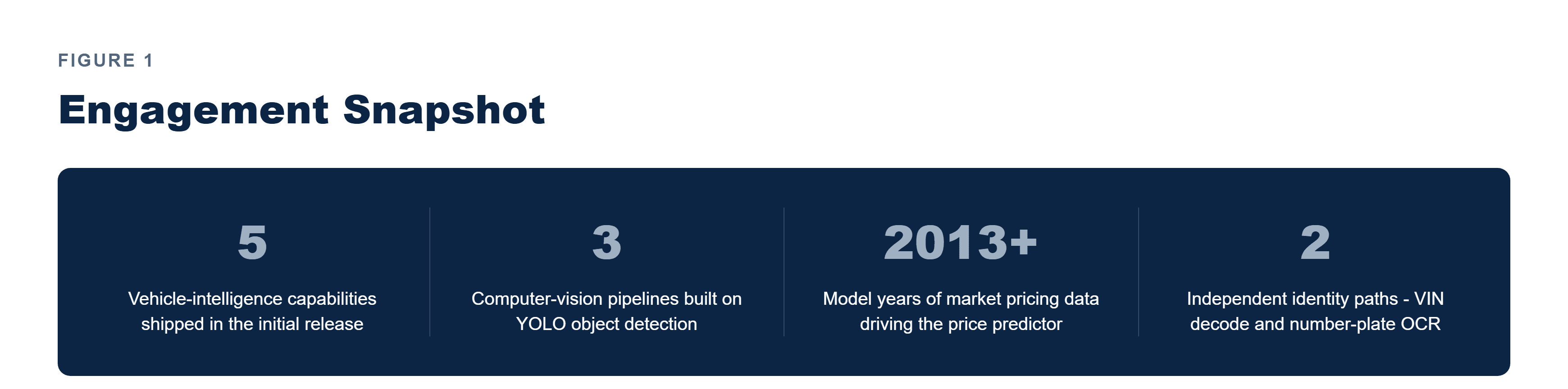
Pfactorial_Case_Study_Ride_Ease image 1
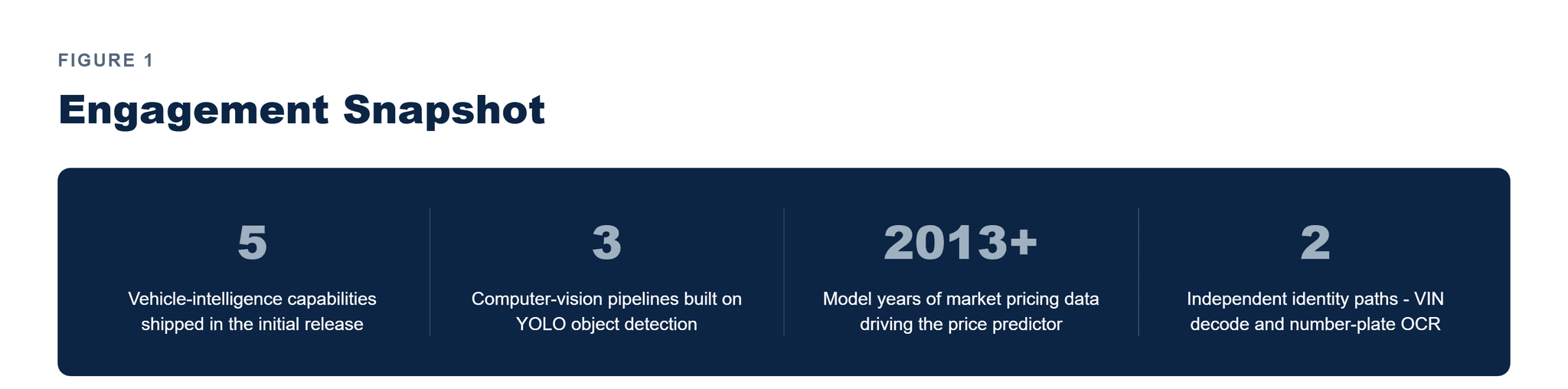
Figure 1 - Key figures from this engagement, at a glance.
EXECUTIVE SUMMARY
Our client wanted to support the growing automated-vehicle ecosystem - and the everyday drivers and authorities operating alongside it - with practical tools for understanding traffic flow, verifying vehicle identity, finding available parking, and pricing a used car fairly, all from one platform rather than five disconnected tools.
Each of these is a distinct, non-trivial problem in its own right: counting vehicles reliably from video requires object detection that holds up across a moving frame; decoding a VIN requires correctly structured reference data; recognizing an open parking space or a legible plate requires a trained vision model, not a lookup table; and pricing a used car requires enough real market data to be trustworthy rather than a guess dressed up as a number. Bolting these together as one naive tool would have meant getting all of them shallow rather than any of them right.
Pfactorial built Ride-Ease as five purpose-built capabilities sharing one platform - a YOLOv8 vehicle-count system, a rule-based VIN decoder, a YOLOv8 parking-lot occupancy detector, a YOLOv5-and-OCR number-plate reader, and a Lasso-regression car price predictor trained on multi-year market data.
Why this engagement is representative This engagement demonstrates Pfactorial's ability to deliver several distinct computer-vision and ML capabilities as one coherent platform, each built with the model and technique actually suited to its problem rather than a single generic approach stretched across all of them.
THE CHALLENGE
Building a platform that spans traffic monitoring, vehicle identity, parking, and pricing meant solving problems that don't share a single common technique.

1. Vehicle counting has to hold up on real video, not a still frame

Distinguishing vehicles moving in and out of a monitored lane requires object detection and directional tracking across frames, not a single-image classifier.

2. VIN decoding needs correct, structured reference data

A VIN encodes make, model, year, engine type, and country of origin in a fixed structure, and decoding it correctly depends on mapping that structure accurately rather than approximating it.

3. Parking and plate detection both depend on a trained vision model, not a rule

Recognizing whether a parking space is occupied, or reading a number plate from a video frame, requires models trained specifically for those visual tasks - a generic detector doesn't transfer well to either.

4. A price estimate is only as trustworthy as the market data behind it

Used-car pricing varies by brand, kilometers driven, ownership history, and more, and an incomplete feature set has to degrade gracefully to a sensible price range rather than a falsely precise number.
The real brief Not "build one vehicle app" but "build several purpose-fit vehicle-intelligence capabilities - each using the model and data actually suited to its problem - under one coherent platform."
THE SOLUTION
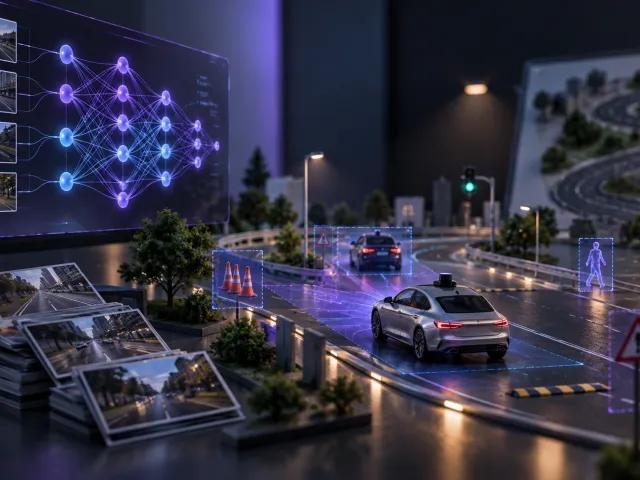
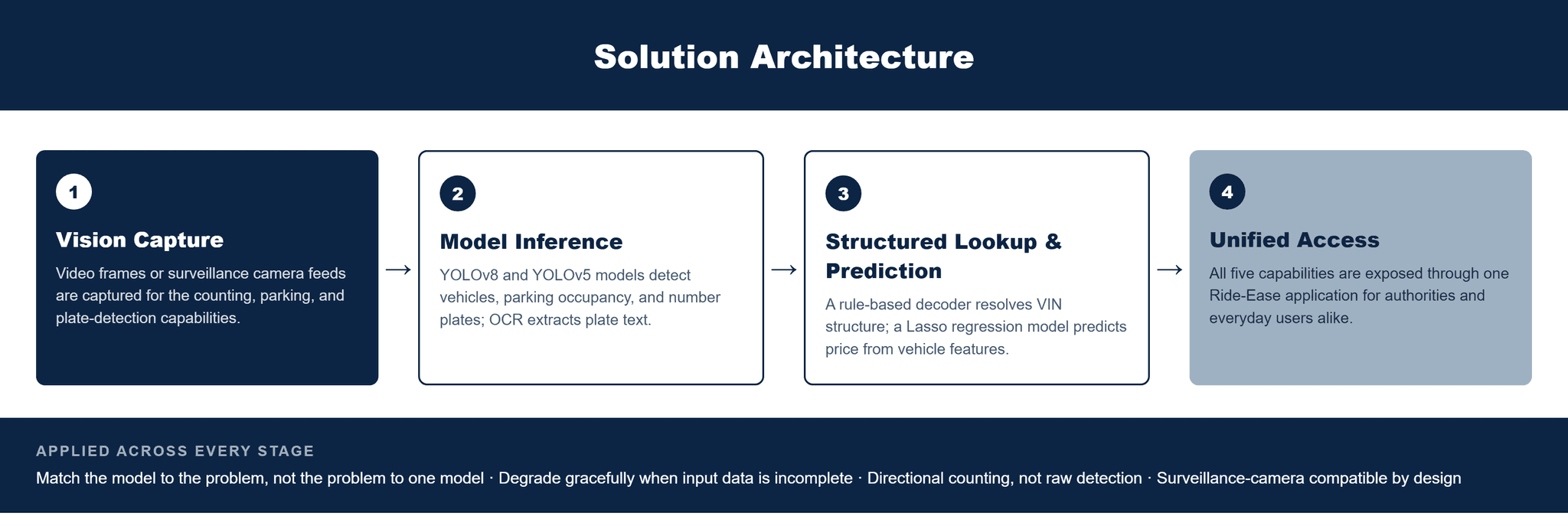
Pfactorial built Ride-Ease as five independently engineered capabilities - vehicle counting, VIN decoding, parking detection, number-plate recognition, and price prediction - unified under one platform.
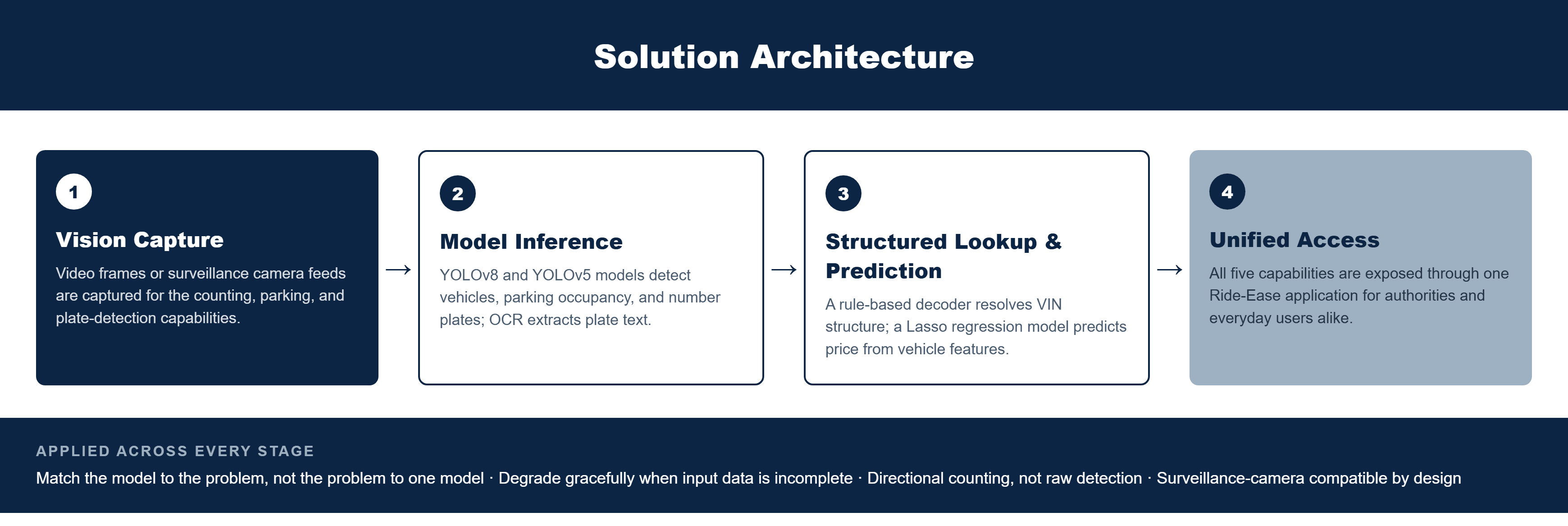
Pfactorial_Case_Study_Ride_Ease image 2
Figure 1 - Each capability runs its own purpose-built pipeline, unified behind one application surface.

Architectural principles

  • Match the model to the problem, not the problem to one model - YOLOv8 handles vehicle counting and parking occupancy, YOLOv5 with OCR handles plate recognition, and a rule-based decoder handles VIN structure - each capability uses the technique actually suited to it.
  • Degrade gracefully when input data is incomplete - the price predictor returns a sensible range rather than a false point estimate when a user's search is missing key features like brand, mileage, or ownership type.
  • Directional counting, not raw detection - the vehicle count system distinguishes traffic entering versus leaving a monitored lane by tracking motion relative to a user-marked line, turning raw detections into a usable traffic metric.
  • Surveillance-camera compatible by design - the parking and plate-detection capabilities are built to run against existing camera feeds, so authorities and facility operators can adopt them without new hardware.
CAPABILITIES DELIVERED
Each capability replaces a manual or fragmented process with a purpose-built model doing that one job well.
CAPABILITY
WHAT IT DOES
Vehicle count system
Tracks vehicles entering and leaving a monitored lane from video, giving authorities a real traffic-flow metric for that route.
VIN decoder
Resolves a vehicle's make, model, year, engine type, and country of origin from its Vehicle Identification Number.
Parking lot detection
Classifies and indexes parking spaces as occupied or available from surveillance camera feeds.
Number plate detection
Extracts number plate text from video frames using OCR, supporting traffic enforcement and stolen-vehicle recovery use cases.
Car price prediction
Estimates a fair used-car market price from features like brand, kilometers driven, and ownership type, returning a range when inputs are incomplete.
Pfactorial_Case_Study_Ride_Ease image 3
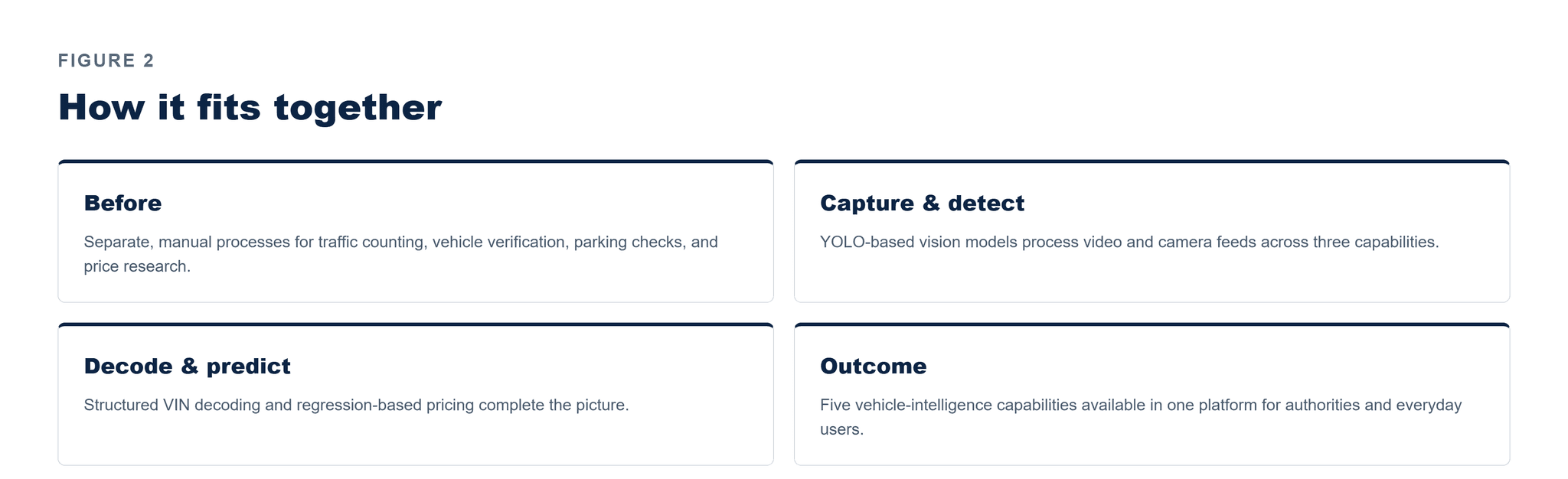
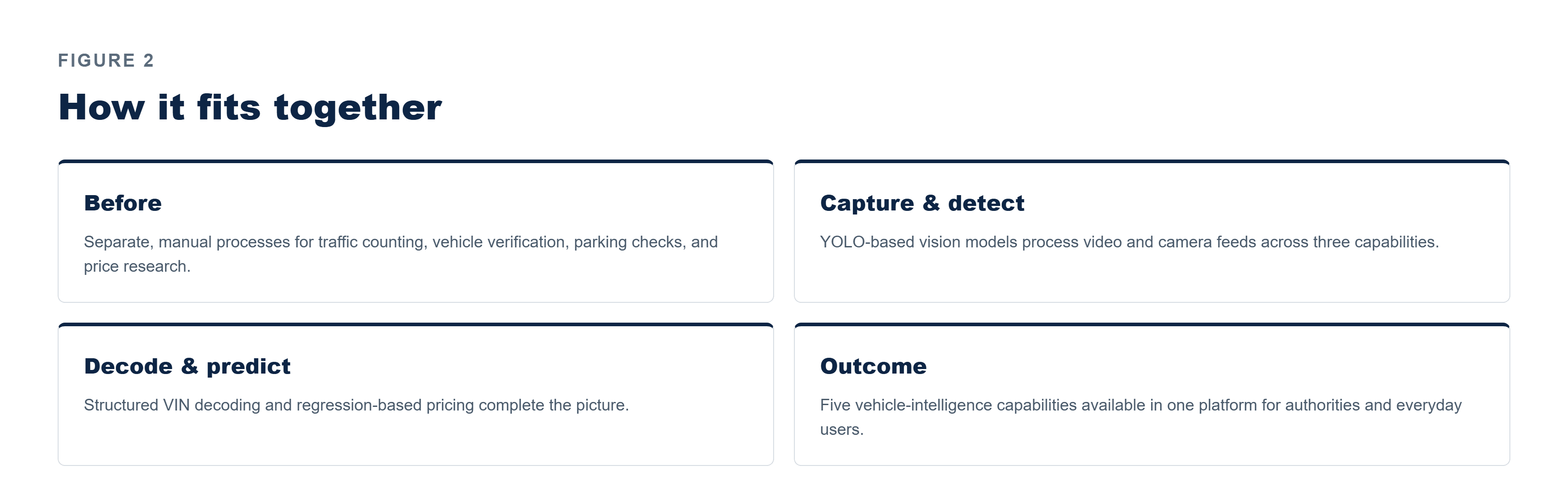
Figure 2 - Five distinct pipelines feed one unified vehicle-intelligence platform.
Design note The car price predictor deliberately returns a range rather than a single number when a search is missing key features - a design choice that trades false precision for a result the user can actually trust, since brand, mileage, and ownership history each materially move a used car's fair price.
ENGINEERING FOR SCALE AND RELIABILITY
Four decisions kept five distinct capabilities coherent as one platform rather than five disconnected tools.

Different YOLO generations matched to different detection tasks

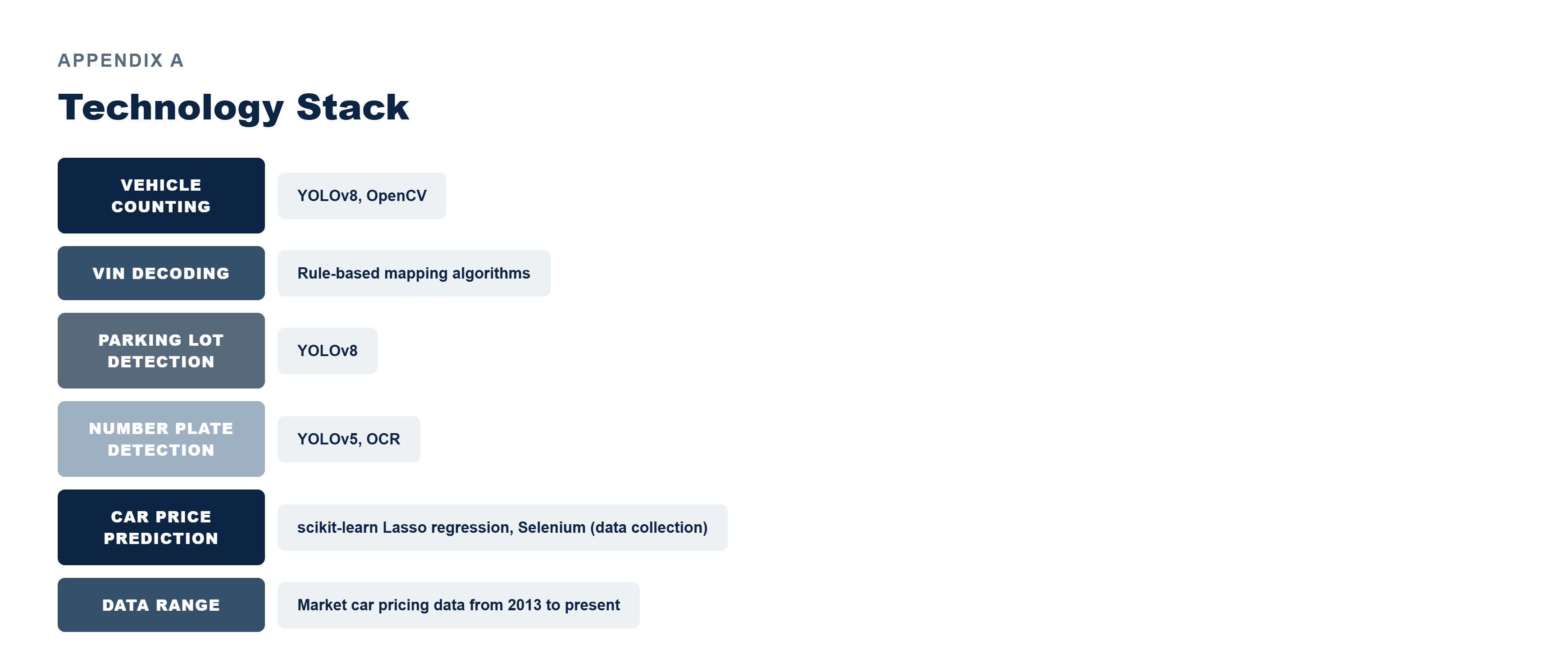
Vehicle counting and parking-lot occupancy run on YOLOv8, while number-plate detection runs on YOLOv5 paired with OCR - each pairing reflects what performed best for that specific detection problem rather than standardizing on one model version across the board.

Rule-based decoding for VIN, not a learned model

VIN structure is a fixed, publicly documented standard, so a rule-based decoder resolves it reliably without the overhead or unpredictability of a trained model for a problem that doesn't need one.

Regression, not deep learning, for price prediction

A Lasso regression model over structured features (brand, kilometers driven, ownership type, year) gives interpretable, tunable price predictions appropriate to the size and structure of the underlying market dataset.

Camera-feed compatibility as a design constraint from the start

Parking and plate detection were built against standard surveillance camera input specifically so they integrate with infrastructure authorities and facility operators already have, rather than requiring new hardware.
DELIVERY APPROACH
The engagement built each capability as its own pipeline, unified under one platform as they matured.
1. Vehicle count system - built directional vehicle counting on YOLOv8 and OpenCV against user-marked lane lines.
2. VIN decoder - built the rule-based decoding logic mapping VIN structure to make, model, year, and engine details.
3. Parking lot detection - trained and integrated a YOLOv8 occupancy classifier against surveillance camera feeds.
4. Number plate detection - built plate localization on YOLOv5 paired with OCR text extraction.
5. Car price prediction - trained a Lasso regression model on multi-year car market data, including graceful range-based output for incomplete searches.
6. Platform integration - unified all five capabilities behind one Ride-Ease application interface.
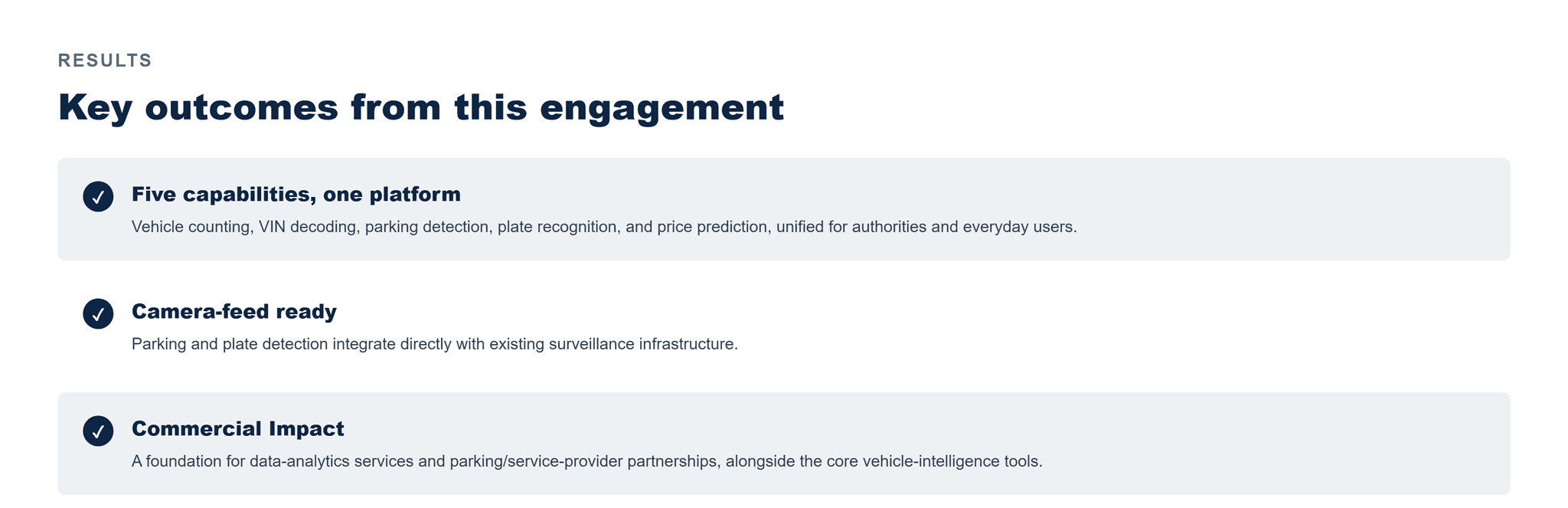
RESULTS AND IMPACT

Pfactorial_Case_Study_Ride_Ease image 4
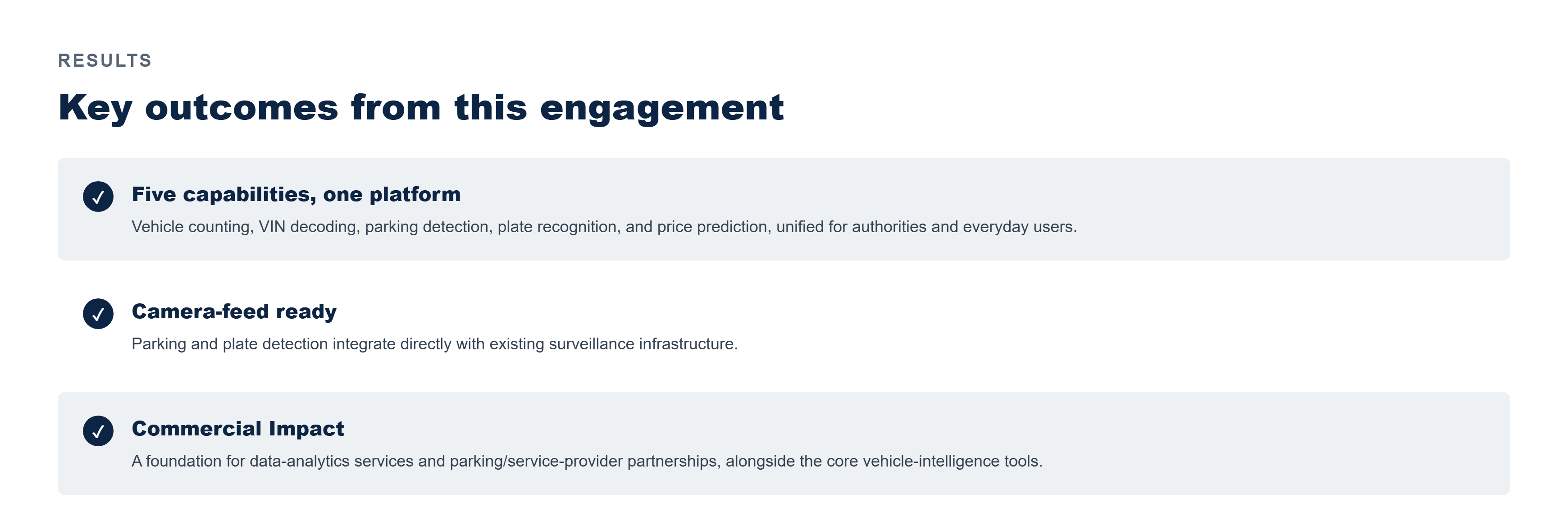
- Key outcomes from this engagement.
All five capabilities are built and functioning: directional vehicle counting from video, VIN-based vehicle identification, YOLOv8-based parking occupancy detection, YOLOv5-and-OCR number plate recognition, and Lasso-regression car price prediction trained on market data from 2013 onward.
Because each capability is built with the model and technique specifically suited to its problem - rule-based VIN decoding, regression for pricing, YOLO variants tuned to counting versus plate reading - the platform holds together as five reliable tools rather than one generalized tool stretched thin.

What it enabled commercially

The client now has a platform positioned to serve both automated-vehicle infrastructure and everyday drivers and authorities, with a stated path toward traffic-data analytics services and partnerships with parking and vehicle-service providers as additional revenue lines built on the same underlying capabilities.
WHY PFACTORIAL
This engagement reflects Pfactorial's computer vision and applied ML practice - building multiple purpose-fit models under one coherent platform, each matched to its specific detection or prediction problem rather than forced through a single generic pipeline.
Pfactorial_Case_Study_Ride_Ease image 5
- Service lines this engagement draws on.
Engagement enquiries Pfactorial Technologies works with mobility, automotive, and civic-infrastructure organizations that need computer vision and machine learning turned into practical, camera- and data-ready tools. If you're evaluating a vehicle-intelligence or computer-vision project, we're happy to give you an honest read on scope and risk before anyone commits to anything. · pfactorial.ai
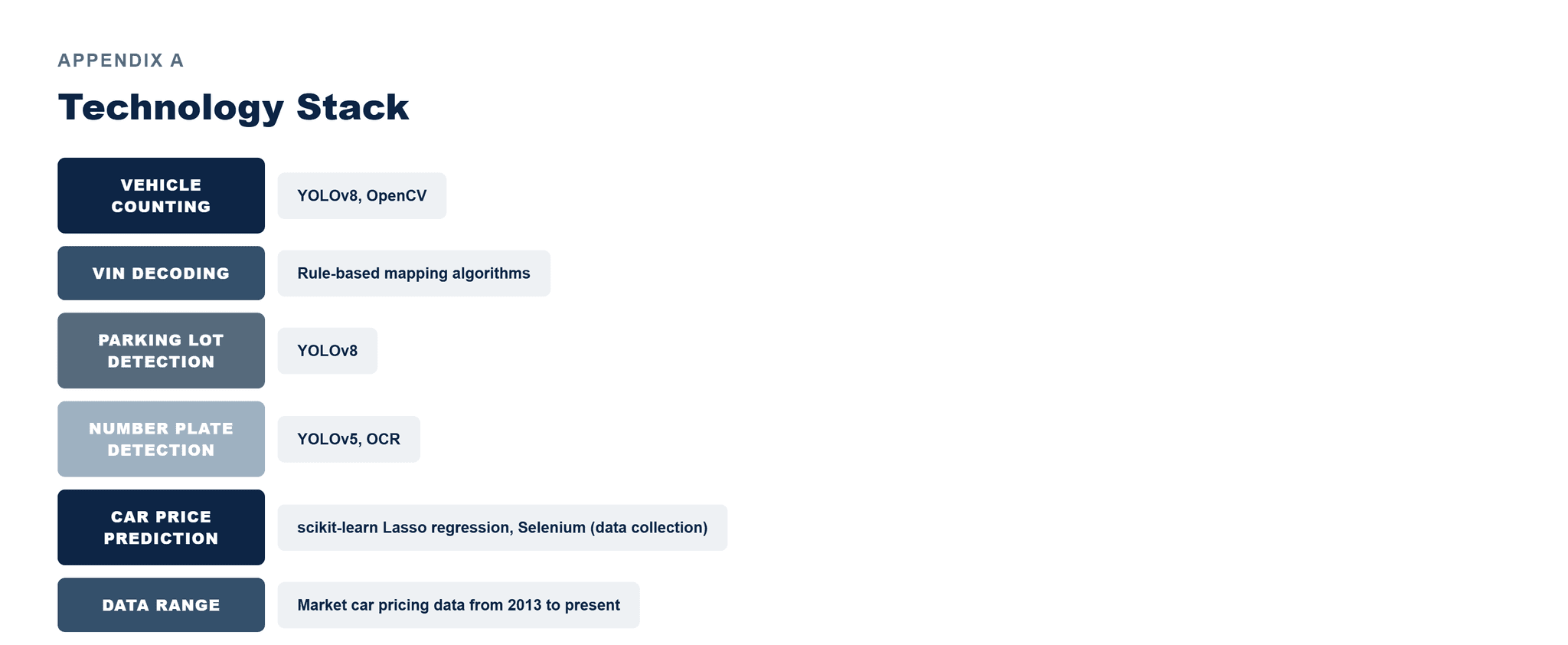
APPENDIX A - TECHNOLOGY STACK
The technology stack underpinning the system, grouped by the layer it serves.
Pfactorial_Case_Study_Ride_Ease image 6

Result and Analysis

ENGAGEMENT SNAPSHOT

How Pfactorial Technologies built a vehicle-analytics platform combining computer vision and machine learning to count traffic, decode vehicle identity, detect parking availability, and estimate fair market car prices.
Pfactorial_Case_Study_Ride_Ease image 1
Pfactorial_Case_Study_Ride_Ease image 2
Pfactorial_Case_Study_Ride_Ease image 3
Pfactorial_Case_Study_Ride_Ease image 4
Pfactorial_Case_Study_Ride_Ease image 5
Pfactorial_Case_Study_Ride_Ease image 6