Back
RAG & Semantic Search

Architecting a Continuously Updated Legal Intelligence Platform

A proposed RAG-and-knowledge-graph platform for legal research and judgment enforcement, designed to replace static legal databases with a living knowledge repository that ingests court judgments, regulations, and debtor intelligence as they change.
August 21, 2026
Share
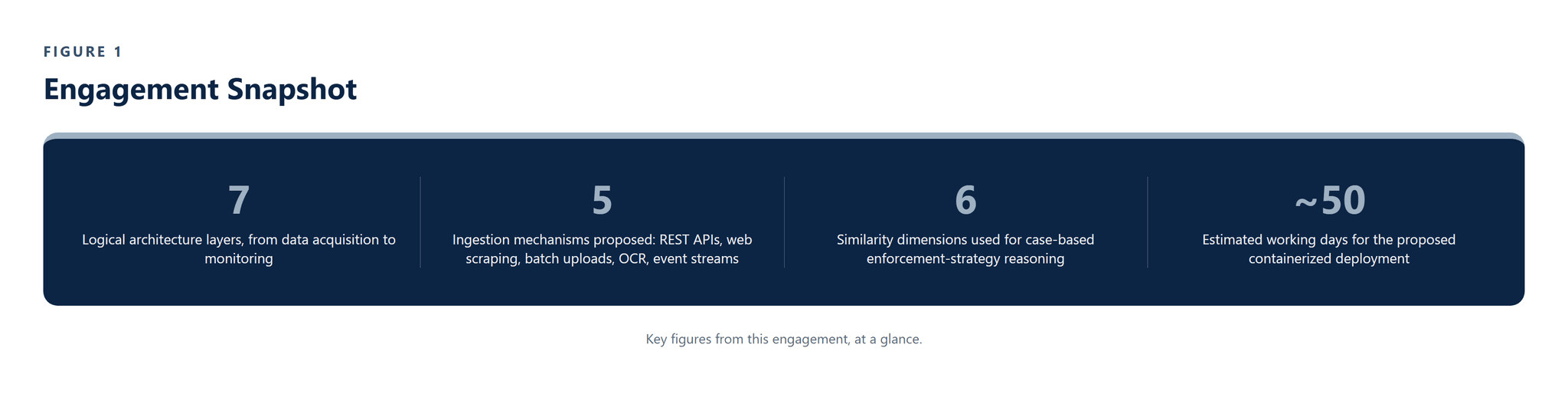
ENGAGEMENT SNAPSHOT

CS-033_Legal_Research_Judgment_Enforcement_Assistant image 1
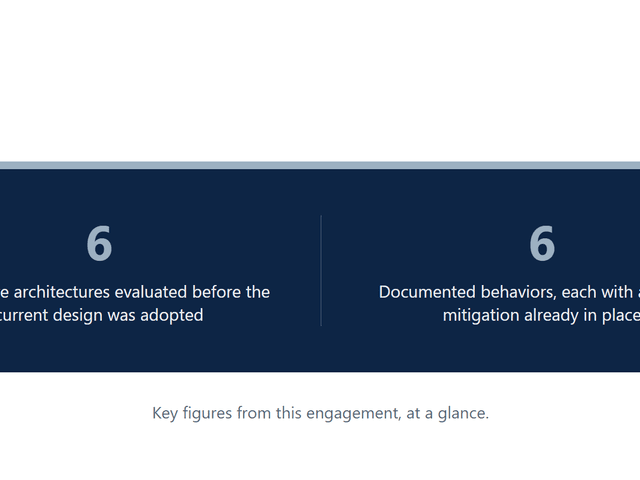
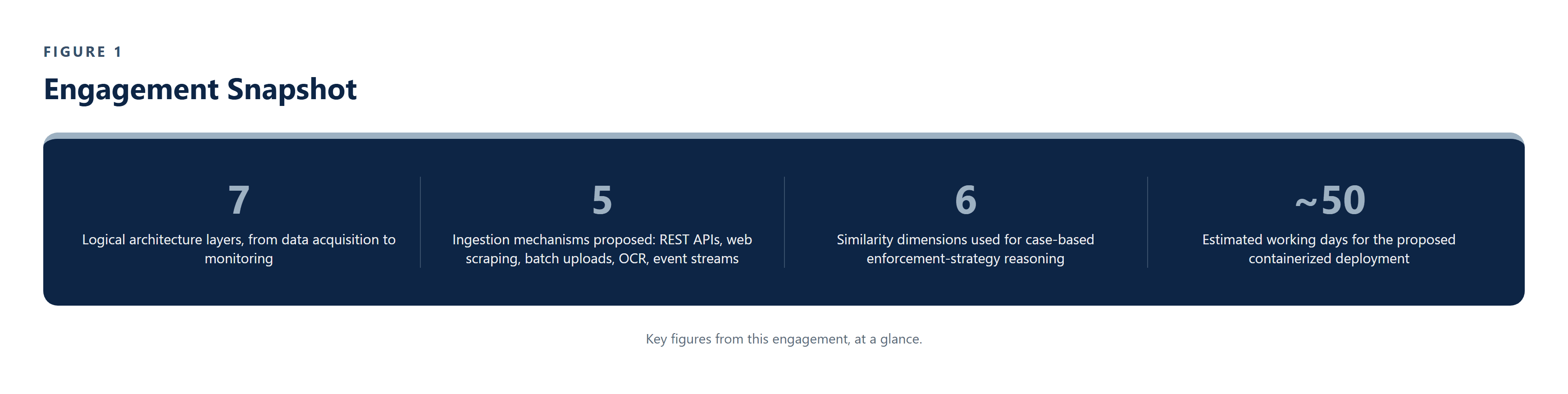
Figure 1 - Key figures from this engagement, at a glance.
EXECUTIVE SUMMARY
Our client's legal research and judgment enforcement work depended on static databases and manually maintained references that go stale as court judgments, regulations, and debtor records change. Legal professionals needed source-backed research and enforcement recommendations grounded in current information, not last quarter's snapshot.
Pfactorial Technologies proposed a modular, cloud-native legal intelligence platform combining Retrieval-Augmented Generation, large language models, vector search, and legal knowledge graphs to deliver trustworthy recommendations backed by verifiable evidence. Rather than a static database with manual updates, the platform is designed around an event-driven ingestion architecture that continuously pulls in new court judgments, regulatory changes, financial updates, and debtor status changes.
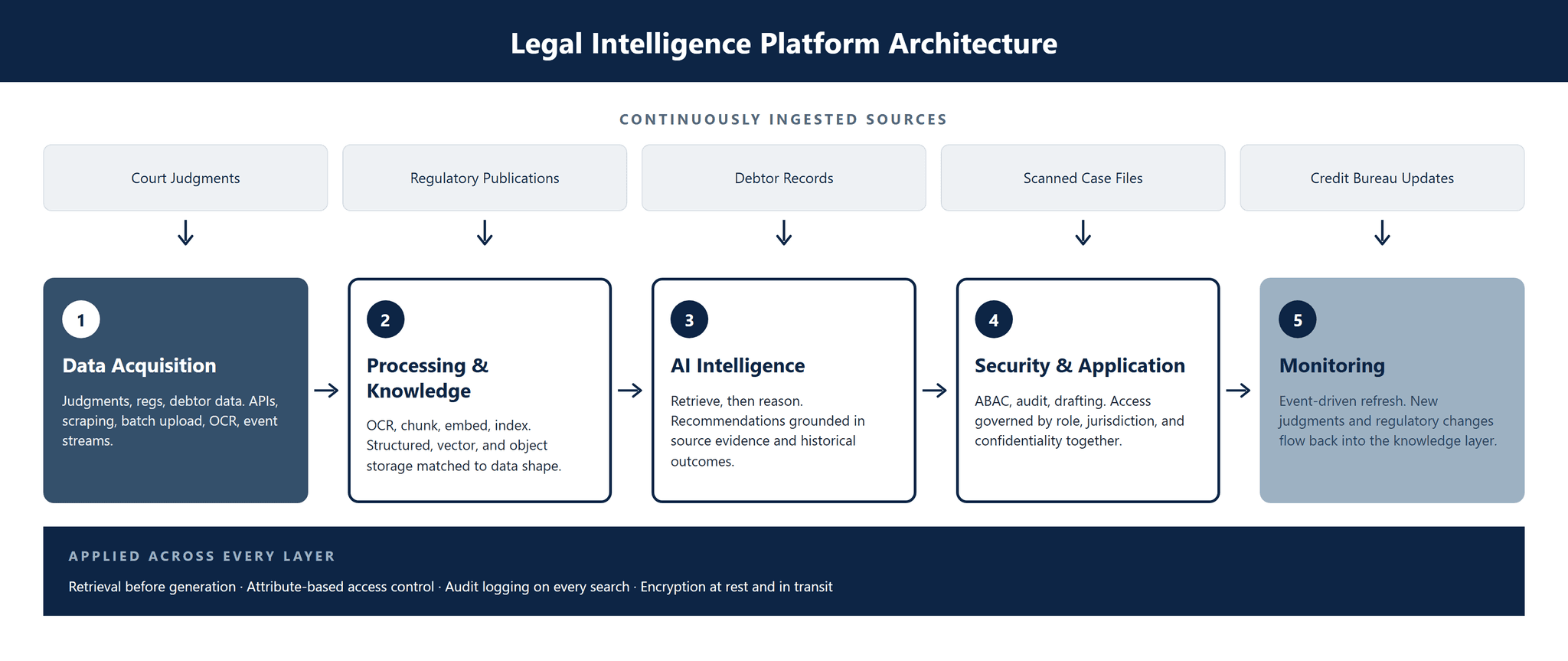
The proposed system spans seven logical layers - data acquisition, processing, knowledge storage, AI intelligence, security, application, and monitoring - each independently scalable, with case-based reasoning comparing current cases against historical enforcement outcomes to recommend strategies that have actually worked before.
Why this engagement is representative This engagement demonstrates Pfactorial's approach to legal and regulated-domain AI architecture: grounding every recommendation in retrievable source evidence and historical case outcomes, with enterprise-grade access control and audit logging designed in from the first layer rather than added later.
THE CHALLENGE
Static legal research tools cannot keep pace with a domain where judgments, regulations, and debtor circumstances change continuously, and four requirements shaped the proposed architecture.

1. Legal knowledge goes stale without continuous ingestion

Traditional legal research systems rely on static databases and manual updates, so court judgments, regulatory changes, and debtor status changes are not reflected until someone manually refreshes the underlying data.

2. Recommendations need verifiable evidence, not just plausible text

A legal recommendation that cannot be traced back to a specific judgment, regulation, or precedent is not usable in professional legal work, regardless of how fluent the generated text sounds.

3. Enforcement strategy needs historical grounding

Recommending a judgment-enforcement approach requires comparing the current case against historical enforcement cases across jurisdiction, debt type, asset profile, and outcome - not a generic strategy applied uniformly.

4. Sensitive legal and financial data needs fine-grained access control

Debtor financial information, case records, and confidential legal material require authorization decisions based on more than a simple role - jurisdiction, case classification, and confidentiality level all need to factor into who can see what.
The real brief Not "a search engine over legal documents" but "a continuously updated, source-backed legal intelligence platform that recommends enforcement strategies from real historical outcomes."
THE SOLUTION
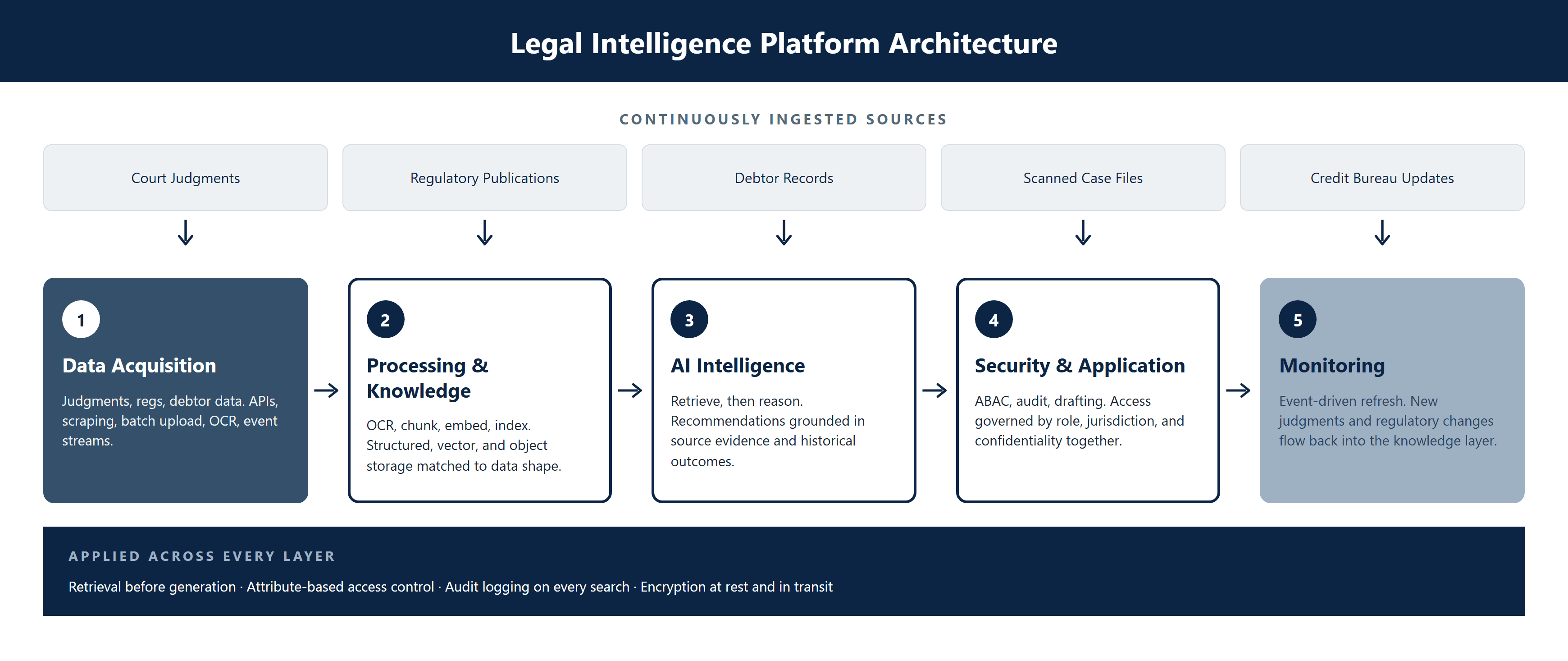
Pfactorial proposed a modular, cloud-native architecture organized into seven logical layers, each independently scalable, so that data acquisition, processing, knowledge storage, AI reasoning, security, application, and monitoring can each evolve without the others needing to change in lockstep.
CS-033_Legal_Research_Judgment_Enforcement_Assistant image 2
Figure 1 - The proposed seven-layer architecture, from continuous data acquisition to AI-driven legal recommendations.

Architectural principles

  • Retrieval before generation, always - the platform retrieves the most relevant legal documents before LLM inference runs, so responses are grounded in retrievable source material rather than generated from the model's parametric knowledge alone.
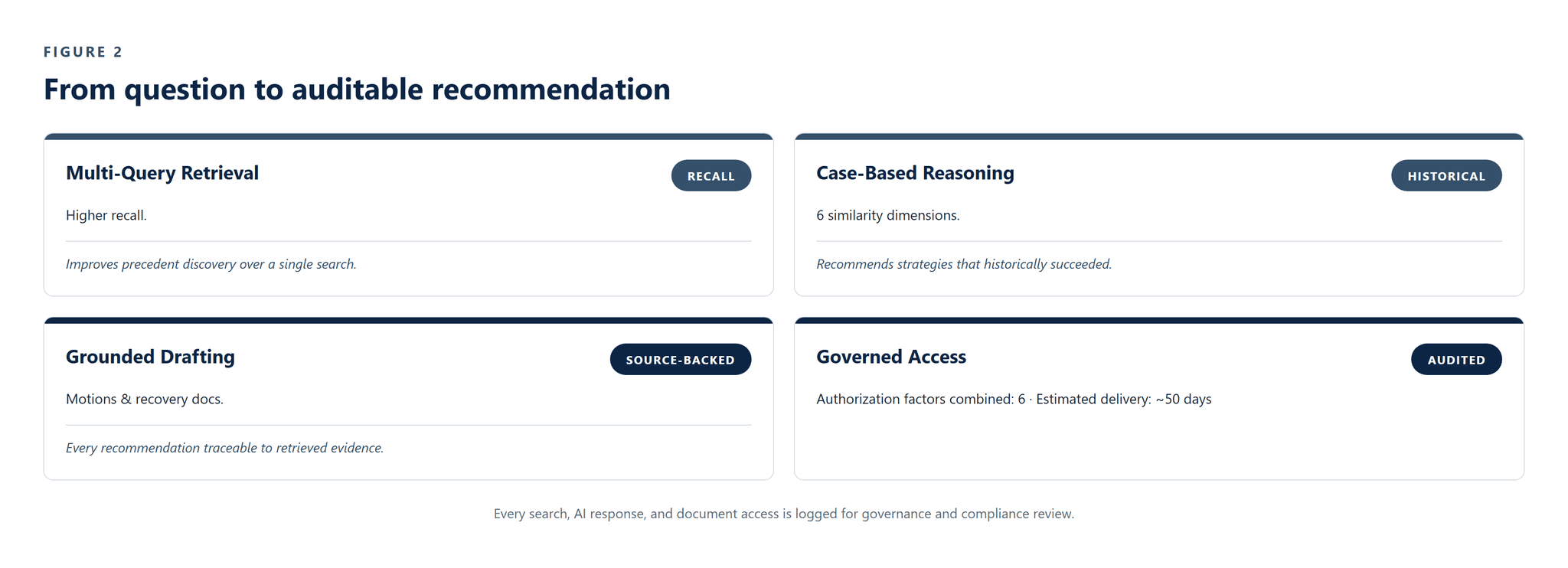
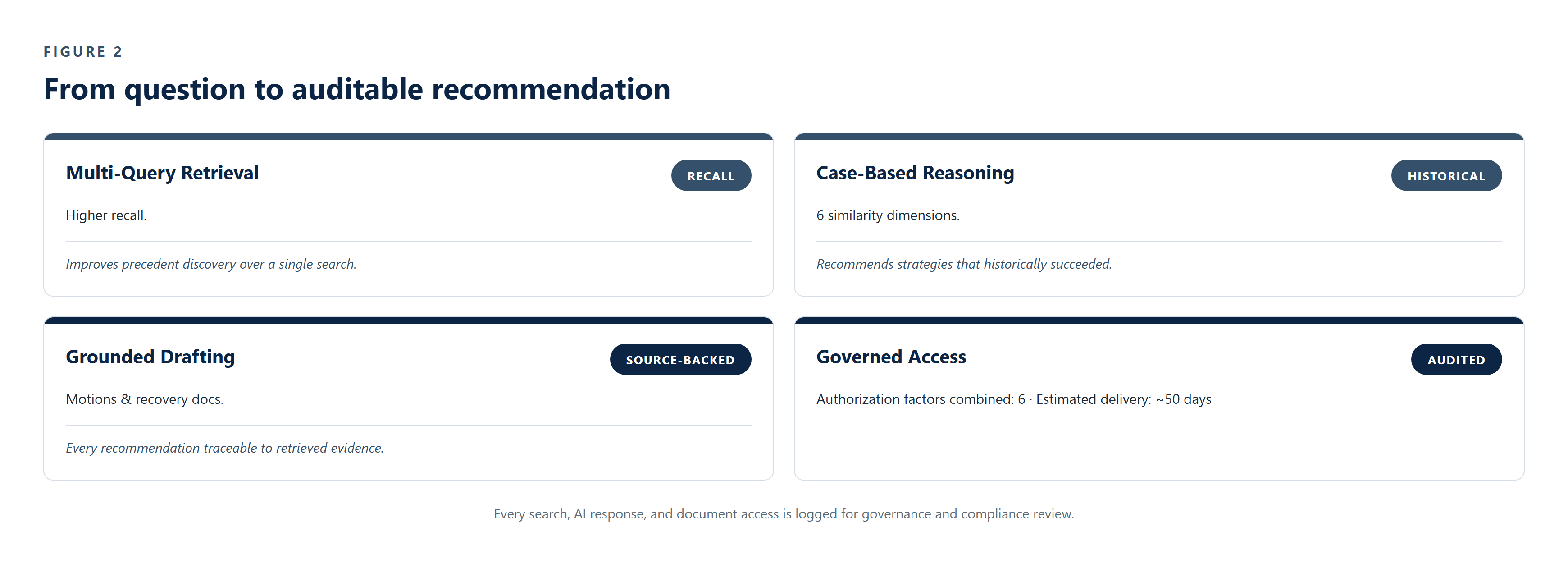
  • Multiple queries, not one, for better recall - the system is designed to automatically generate multiple semantically equivalent queries per request rather than relying on a single search, specifically to improve legal precedent discovery and contextual understanding.
  • Case-based reasoning grounds recommendations in outcomes - historical enforcement cases are compared against the current case across jurisdiction, debt type, asset profile, enforcement strategy, outcome, and recovery rate, so recommendations reflect what has actually worked rather than a generic playbook.
  • Access is attribute-based, not role-only - authorization decisions weigh user role, legal jurisdiction, case classification, confidentiality level, organization, and department together, rather than a single role flag deciding what a user can see.
CAPABILITIES DELIVERED
The proposed platform's capabilities span continuous knowledge ingestion, grounded legal reasoning, and enterprise-grade security.
CAPABILITY
WHAT IT DOES
Continuously Updated Knowledge Repository
Ingests court judgments, case law, regulatory publications, and debtor records on an ongoing basis rather than as a periodic static refresh.
Source-Backed Legal Research
Retrieval-Augmented Generation with semantic and hybrid search returns answers traceable to their originating documents.
Judgment Enforcement Recommendations
Case-Based Reasoning compares current cases against historical enforcement outcomes across six similarity dimensions to recommend strategies.
Automated Legal Document Generation
Drafts legal motions and judgment-recovery documents from the platform's grounded knowledge base.
Federated Model Improvement
Allows organizations to collaboratively improve AI models without exchanging raw debtor information, preserving privacy across organizational boundaries.
Enterprise-Grade Access Control & Audit
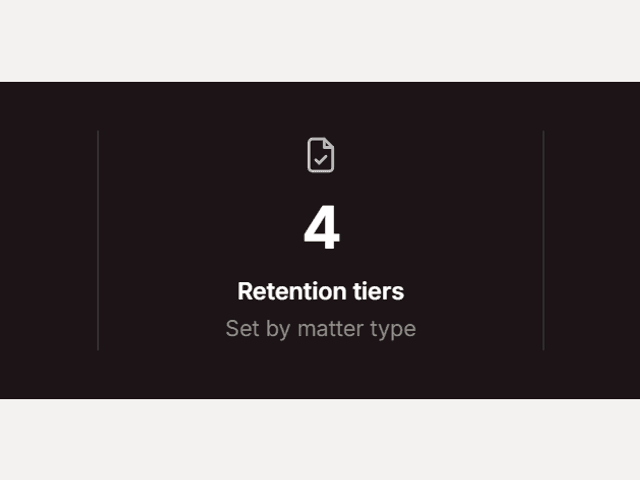
Attribute-Based Access Control combined with comprehensive audit logging of searches, AI responses, and document access supports governance and compliance.
CS-033_Legal_Research_Judgment_Enforcement_Assistant image 3
Figure 2 - How a legal question moves from retrieval through case-based reasoning to a source-backed, auditable recommendation.
Design note This is a proposed architecture, not a delivered platform: the source material specifies a recommended deployment model and an estimated ~50 working-day delivery timeline, but does not include performance results, accuracy figures, or a production deployment history.
ENGINEERING FOR SCALE AND RELIABILITY
Several architectural decisions in the proposal are aimed specifically at keeping legal recommendations traceable and current rather than static or unverifiable.

Event-driven updates keep the knowledge base current

the platform continuously monitors external event sources - new court judgments, regulatory changes, financial updates, debtor status changes, public records, and credit bureau updates - rather than depending on scheduled batch refreshes.

A hybrid storage architecture matched to data shape

structured storage holds users, cases, debtors, and audit logs; vector storage holds legal and case-law embeddings and precedents; object storage holds PDFs, images, and OCR documents - each store used for what it is actually good at.

RLHF refines recommendations from expert legal review

legal experts review AI outputs, and that feedback is used for model refinement, ranking optimization, and legal-compliance improvements, rather than the system's recommendation quality being fixed at deployment.

Federated learning preserves privacy across organizations

organizations can collaboratively improve the platform's models without exchanging raw debtor information, supporting cross-organization intelligence while keeping regulatory compliance intact.

Security spans authentication, authorization, and encryption together

OAuth 2.0, JWT, SSO, and multi-factor authentication are combined with Attribute-Based Access Control and AES-256 encryption at rest plus TLS in transit, rather than any single control layer being relied on alone.

Containerized microservices for independent scaling

the recommended deployment model uses Kubernetes with independent microservices for ingestion, retrieval, AI inference, document generation, and monitoring, so any one component can scale without the others.
DELIVERY APPROACH
The proposed platform is scoped for containerized deployment with an estimated delivery of approximately 50 working days.
1. Data acquisition and processing - stand up ingestion across REST APIs, web scraping, batch uploads, OCR pipelines, and event streams, feeding a standardized preprocessing pipeline of OCR, cleaning, entity recognition, and semantic chunking.
2. Knowledge repository build-out - implement the hybrid structured, vector, and object storage layers, with embedding generation and vector indexing for case law, regulations, and precedents.
3. AI intelligence pipeline - implement Retrieval-Augmented Generation, multi-query retrieval, the LLM reasoning layer, and case-based reasoning for enforcement recommendations.
4. Security architecture - implement authentication, Attribute-Based Access Control, encryption at rest and in transit, and comprehensive audit logging across every tracked event type.
5. Event-driven update and monitoring layer - wire continuous external event monitoring into the knowledge repository, with observability and model-retraining triggers in the monitoring layer.
6. Containerized deployment - deploy the platform's independent microservices on Kubernetes, targeting the estimated ~50 working-day delivery timeline.
RESULTS AND IMPACT

CS-033_Legal_Research_Judgment_Enforcement_Assistant image 4
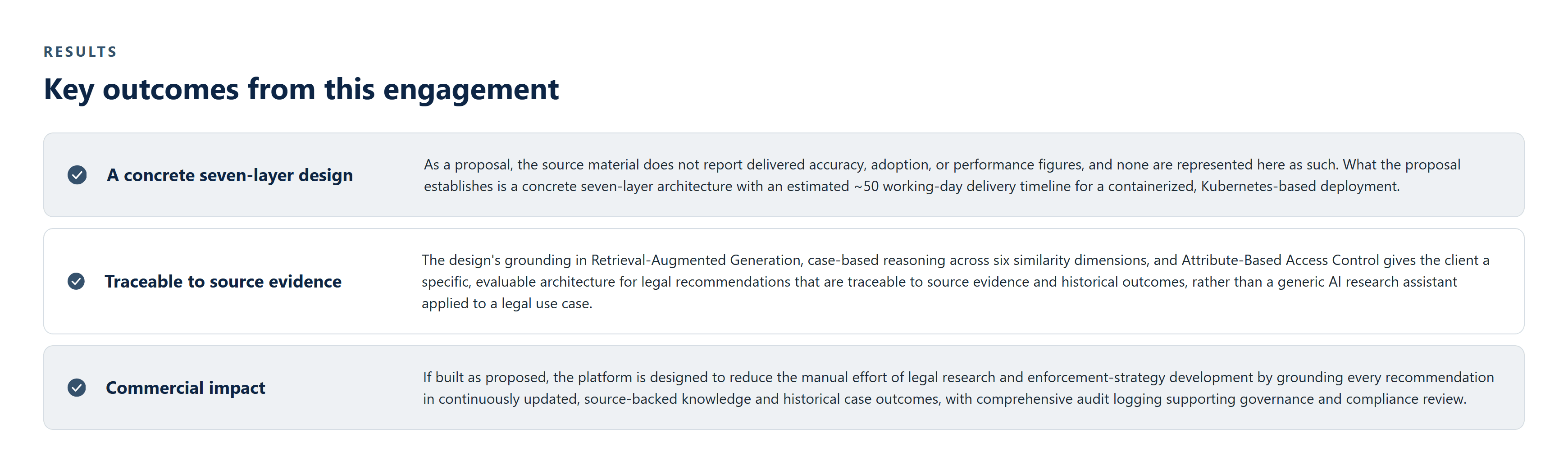
Figure - Key outcomes from this engagement.
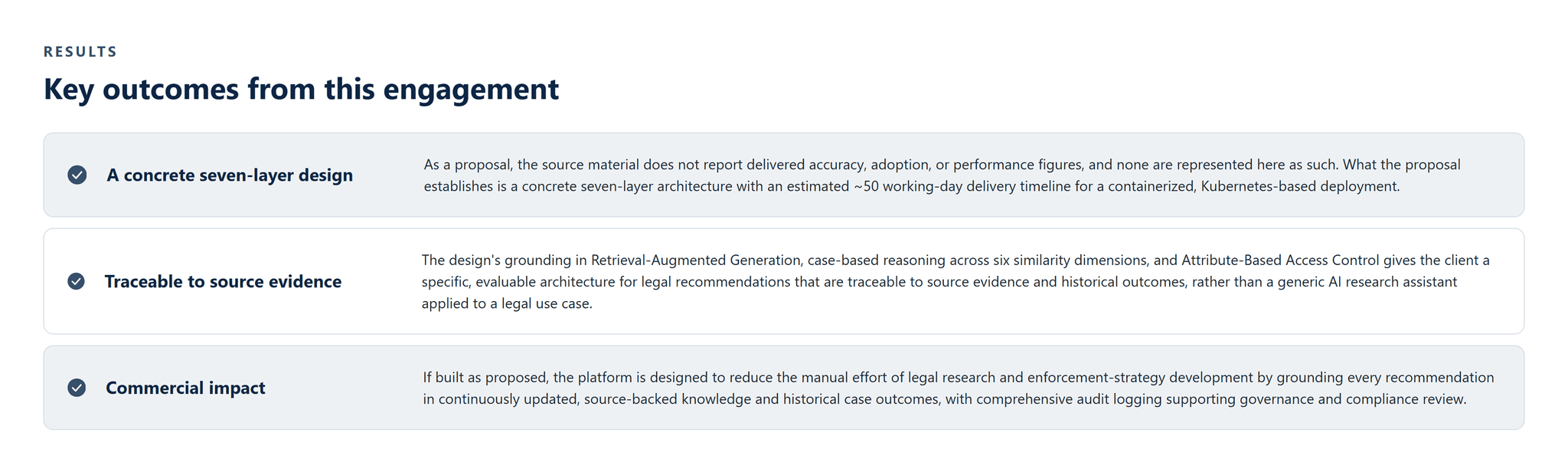
As a proposal, the source material does not report delivered accuracy, adoption, or performance figures, and none are represented here as such. What the proposal establishes is a concrete seven-layer architecture with an estimated ~50 working-day delivery timeline for a containerized, Kubernetes-based deployment.
The design's grounding in Retrieval-Augmented Generation, case-based reasoning across six similarity dimensions, and Attribute-Based Access Control gives the client a specific, evaluable architecture for legal recommendations that are traceable to source evidence and historical outcomes, rather than a generic AI research assistant applied to a legal use case.

What it enabled commercially

If built as proposed, the platform is designed to reduce the manual effort of legal research and enforcement-strategy development by grounding every recommendation in continuously updated, source-backed knowledge and historical case outcomes, with comprehensive audit logging supporting governance and compliance review.
WHY PFACTORIAL
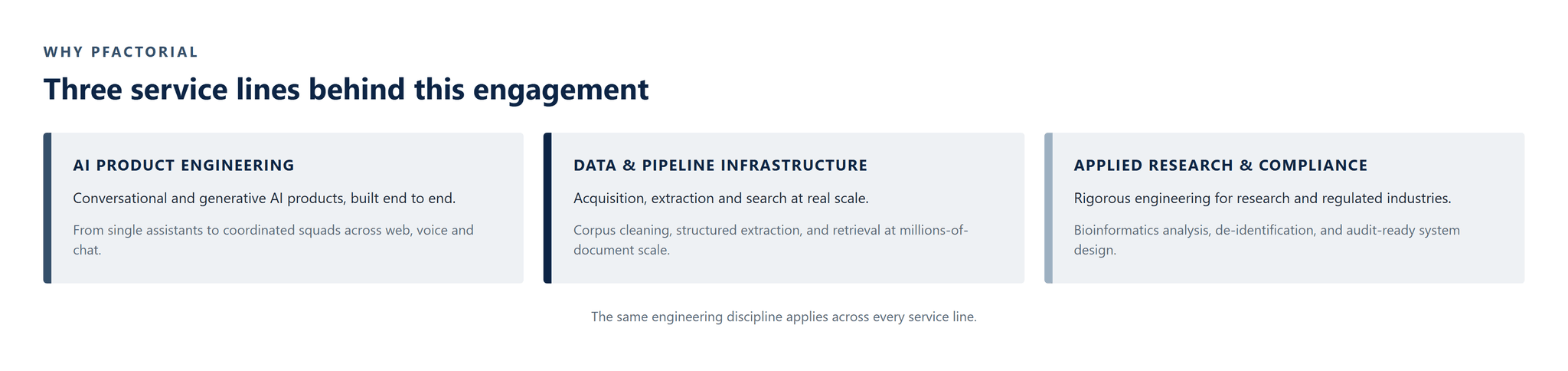
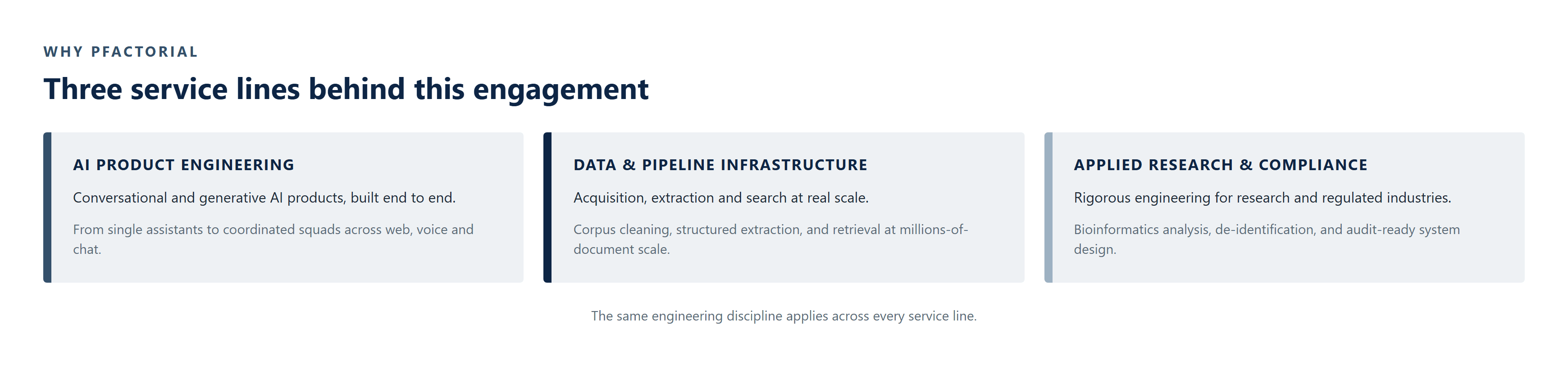
This engagement draws on Pfactorial's applied research and compliance capability: architecting retrieval-augmented AI systems for regulated professional domains where every recommendation needs to be traceable to verifiable source evidence and auditable for compliance.
CS-033_Legal_Research_Judgment_Enforcement_Assistant image 5
Figure - Service lines this engagement draws on.
Engagement enquiries Pfactorial Technologies works with legal technology and professional services teams evaluating whether a retrieval-augmented research or enforcement platform is worth building. If you are scoping a project where source traceability and auditability matter as much as automation, we are happy to give you an honest read on scope, cost, and risk before anyone commits to anything. · pfactorial.ai
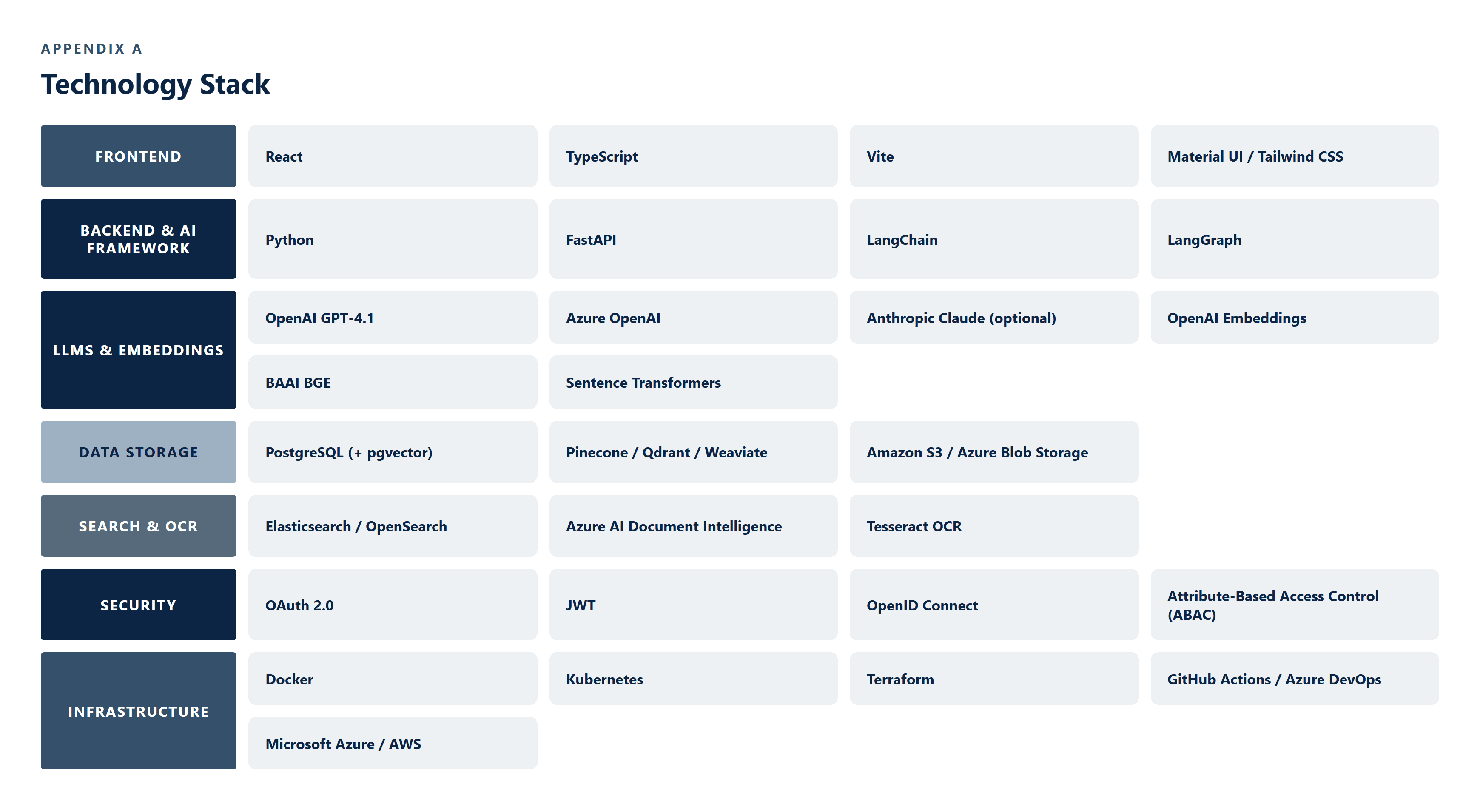
APPENDIX A - TECHNOLOGY STACK
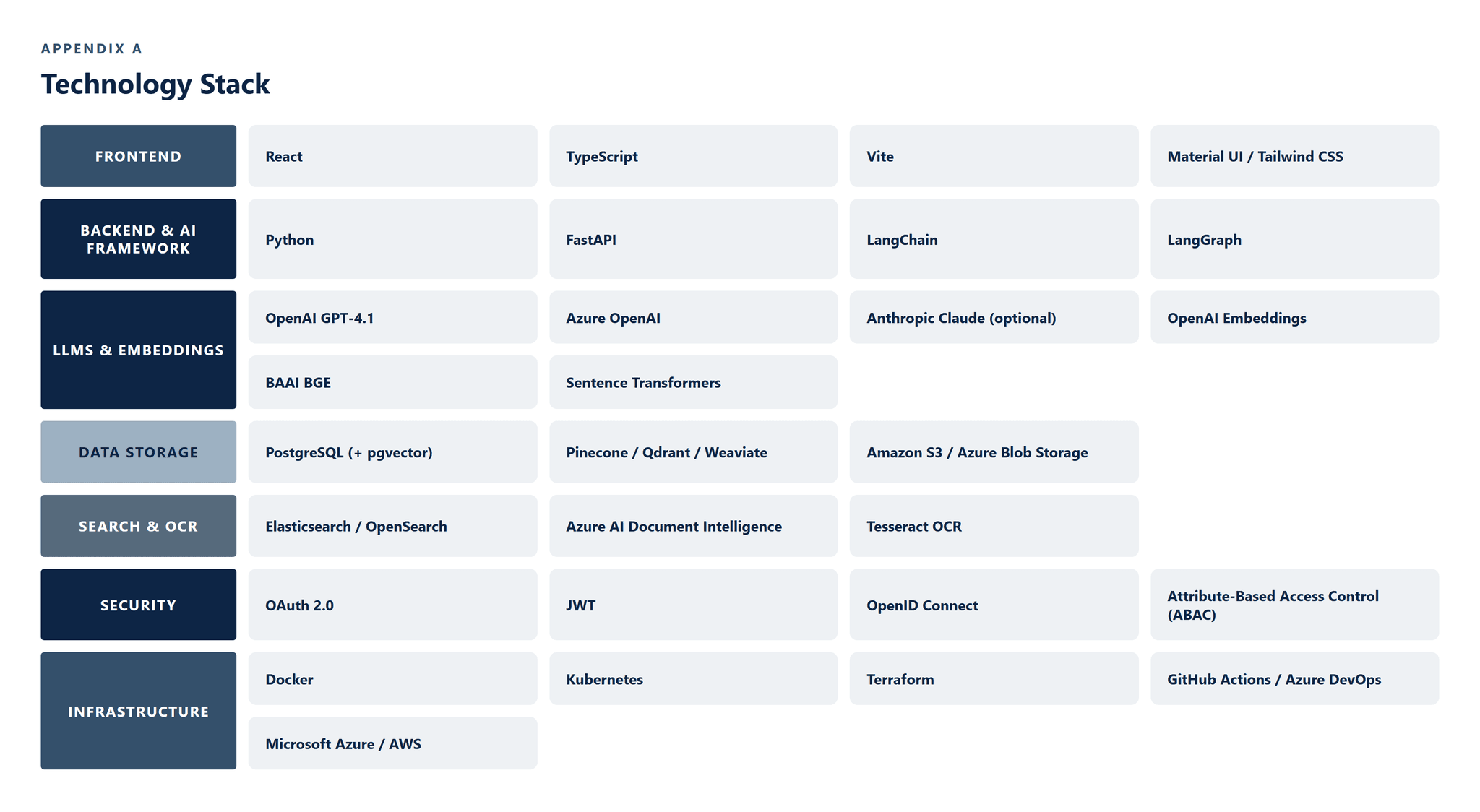
The technology stack underpinning the system, grouped by the layer it serves.
CS-033_Legal_Research_Judgment_Enforcement_Assistant image 6

Result and Analysis

ENGAGEMENT SNAPSHOT

A proposed RAG-and-knowledge-graph platform for legal research and judgment enforcement, designed to replace static legal databases with a living knowledge repository that ingests court judgments, regulations, and debtor intelligence as they change.
CS-033_Legal_Research_Judgment_Enforcement_Assistant image 1
CS-033_Legal_Research_Judgment_Enforcement_Assistant image 2
CS-033_Legal_Research_Judgment_Enforcement_Assistant image 3
CS-033_Legal_Research_Judgment_Enforcement_Assistant image 4
CS-033_Legal_Research_Judgment_Enforcement_Assistant image 5
CS-033_Legal_Research_Judgment_Enforcement_Assistant image 6