Back
Conversational AI & Chatbots

An AI That Interviews Employees to Reveal the Real Business Process Behind the Documented One

How Pfactorial Technologies is building ProcessArch, a conversational AI platform that discovers how work actually happens during ERP implementations - not how it's documented - and shows leaders where automation ROI is being lost.

August 21, 2026
Share
ENGAGEMENT SNAPSHOT

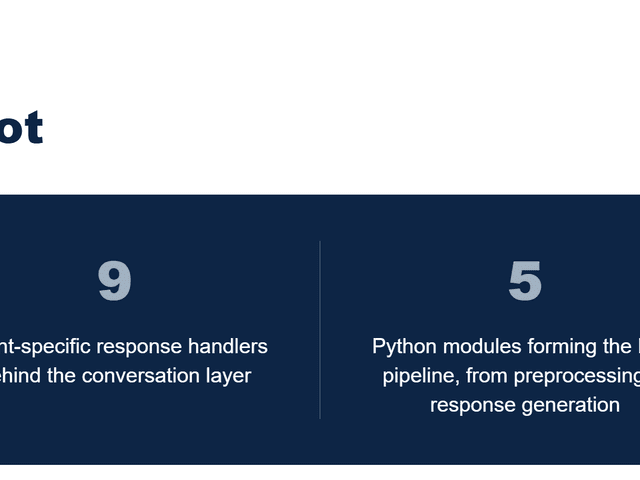
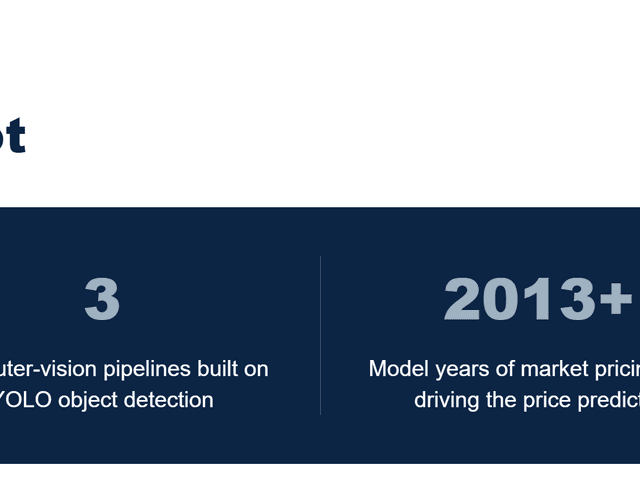
Pfactorial_Case_Study_ProcessArch_ERP_Discovery image 1
Figure 1 - Key figures from this engagement, at a glance.
EXECUTIVE SUMMARY
During ERP implementations, companies spend months interviewing employees to understand business processes - and often get back the idealized, documented version of a process rather than what people actually do, including every exception and workaround.
That discovery phase is slow, expensive, and frequently inaccurate, leaving leadership unable to clearly see where processes are broken, where automation would actually save money, or where ERP standards are quietly being violated by real day-to-day work.
Pfactorial is building ProcessArch: an AI system that interviews business users directly, probing specifically for exceptions and manual workarounds, then compares the discovered reality against ERP best practices and visualizes process debt, shadow IT, and high-ROI automation opportunities for leadership.
Why this engagement is representative This engagement shows Pfactorial applying conversational AI to a problem most people assume needs a human interviewer - discovering what employees actually do, including the parts they wouldn't volunteer to a documentation exercise.
THE CHALLENGE
Getting an accurate picture of real business process, at ERP-implementation scale, required designing around a specific, well-known failure mode of traditional discovery interviews.

1. Employees describe the ideal process, not the real one

Traditional discovery interviews tend to surface the documented or intended process, not the exceptions, manual work and workarounds that actually happen day to day.

2. Manual discovery doesn't scale across a large organization

Interviewing enough employees across finance, procurement and operations to get a representative picture takes months of dedicated effort.

3. Leadership lacks a clear, visual picture of process debt

Even when discovery interviews happen, leaders often have no consolidated view of where processes are broken, where ERP standards are violated, or where automation would deliver the highest return.

4. AI-generated recommendations need guardrails against hallucination

A system reasoning about business process and recommending automation investment has to be constrained against inventing findings that aren't grounded in what was actually discovered.
The real brief Not “build a chatbot survey tool” but “build an AI that knows how to probe for the reality behind the documented process, and can be trusted not to hallucinate its findings.”
THE SOLUTION
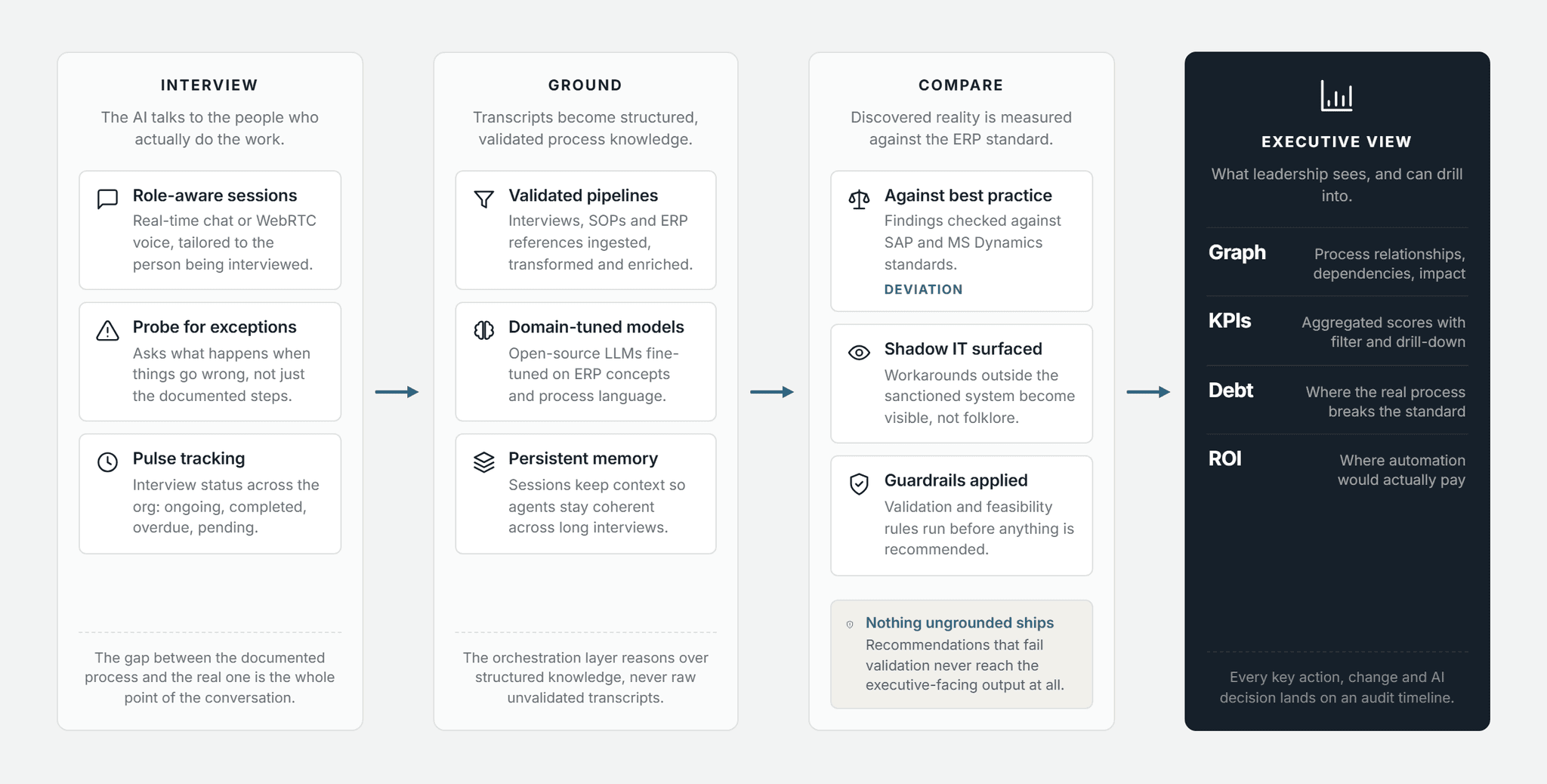
Pfactorial is building ProcessArch around a conversational interview layer specifically tuned to probe for exceptions and workarounds, feeding a knowledge-graph-backed analysis layer with explicit guardrails against invalid or hallucinated recommendations.
Pfactorial_Case_Study_ProcessArch_ERP_Discovery image 2
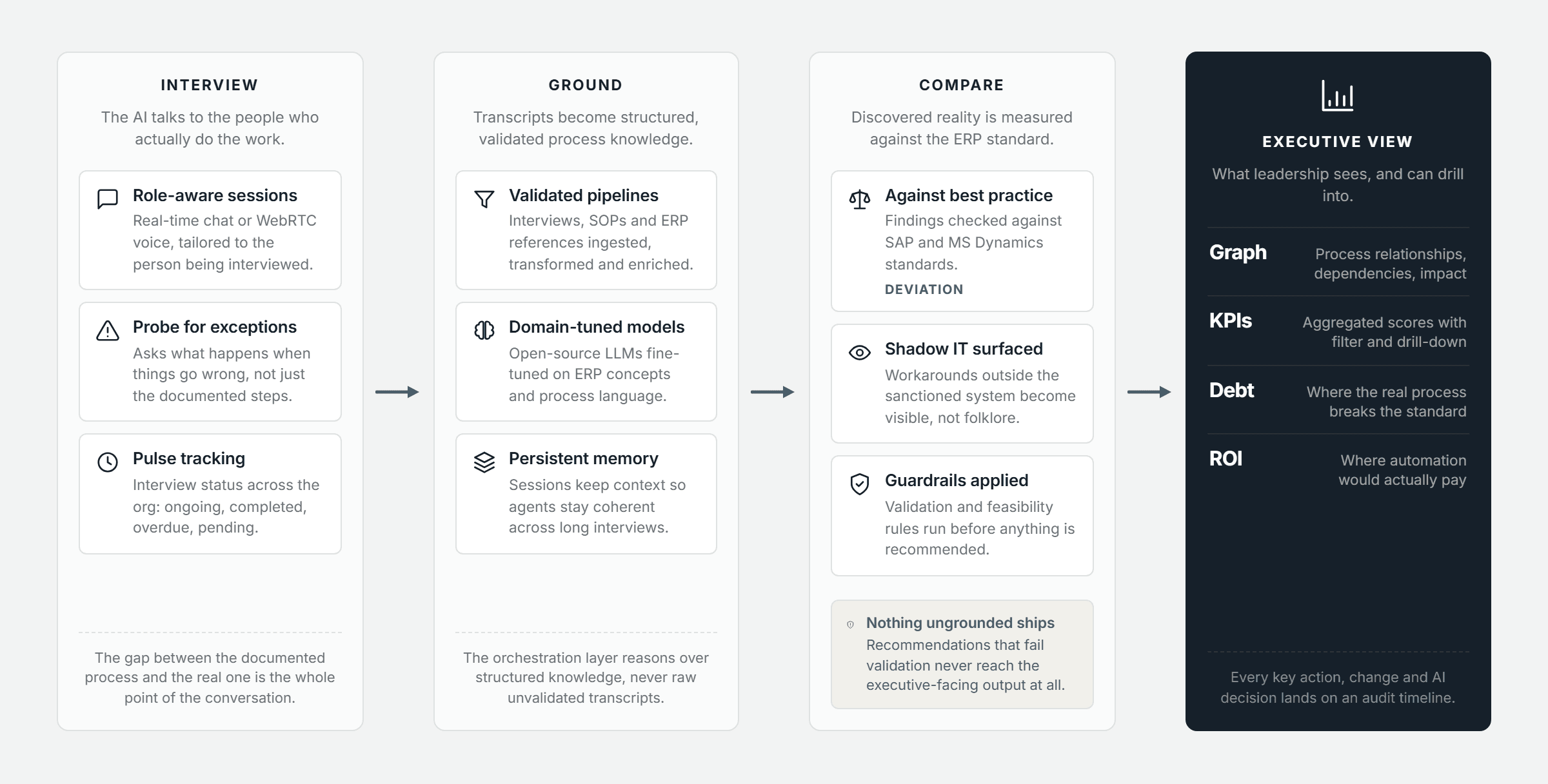
Figure 2 - From SME conversations to an executive view of process debt and automation ROI.

Architectural principles

  • Interview for exceptions, not just steps - The system is designed to ask specifically about exceptions, manual work, workarounds, and what happens when things go wrong - the parts of a process a standard documentation exercise tends to miss.
  • Compare discovered reality against ERP standards - Findings are compared against SAP and MS Dynamics best practices specifically, surfacing where the real process deviates from the standard the ERP implementation is meant to establish.
  • Visualize for leadership, not just for process analysts - Knowledge graph visualization, executive dashboards, and drill-down analytics are built to make process debt and automation opportunities legible to CXOs, not just to the ERP project team.
  • Guardrails before recommendations reach a leader - Validation and feasibility checks are applied specifically to prevent hallucinations and invalid recommendations from reaching the executive-facing output.
CAPABILITIES DELIVERED
The platform spans conversational discovery, AI orchestration, and executive-facing analytics as three connected capability areas.
CAPABILITY
WHAT IT DOES
Role-based conversational interviews
Real-time chat and WebRTC-based voice interviews tailored to each user's role.
Pulse interview state management
Tracking interview status - ongoing, completed, overdue, pending - across the organization.
Knowledge graph visualization
Node/edge exploration of process relationships, dependencies and impact.
Executive dashboards
Aggregated KPIs and scores with filtering and drill-down for leadership review.
Prompt & agent orchestration
Versioned prompt management and multi-agent routing for the underlying AI reasoning layer.
Audit logging
A timeline of key actions, changes and AI decisions for transparency and traceability.
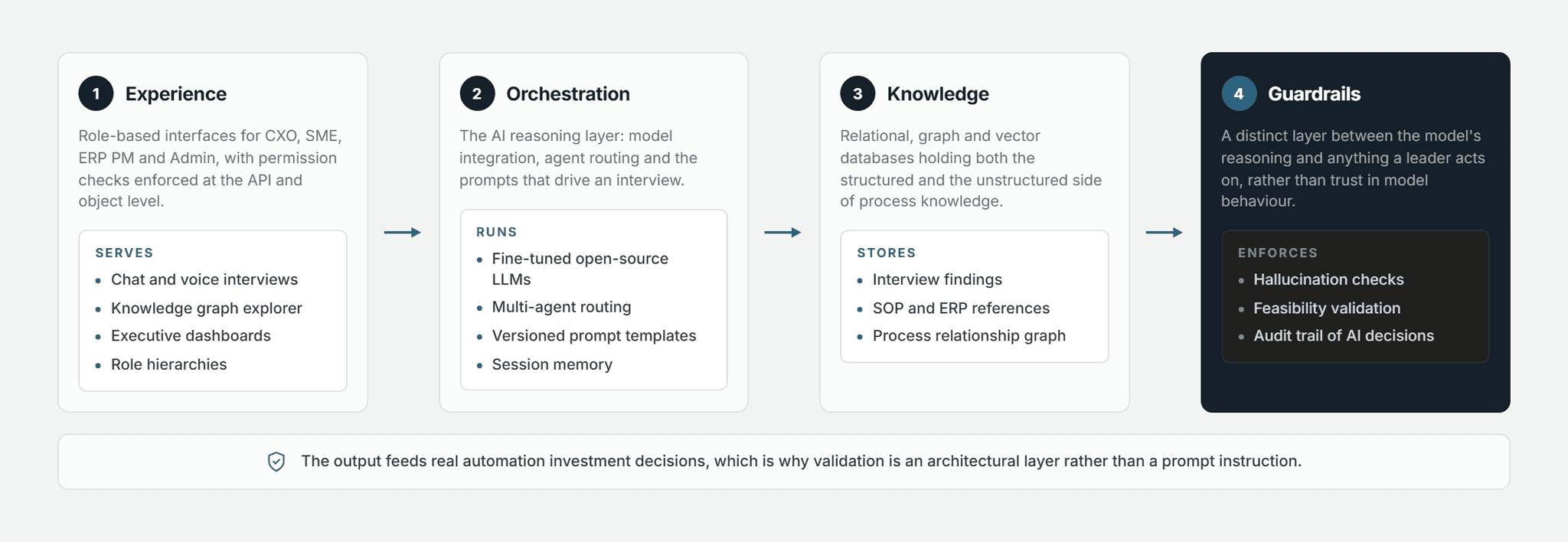
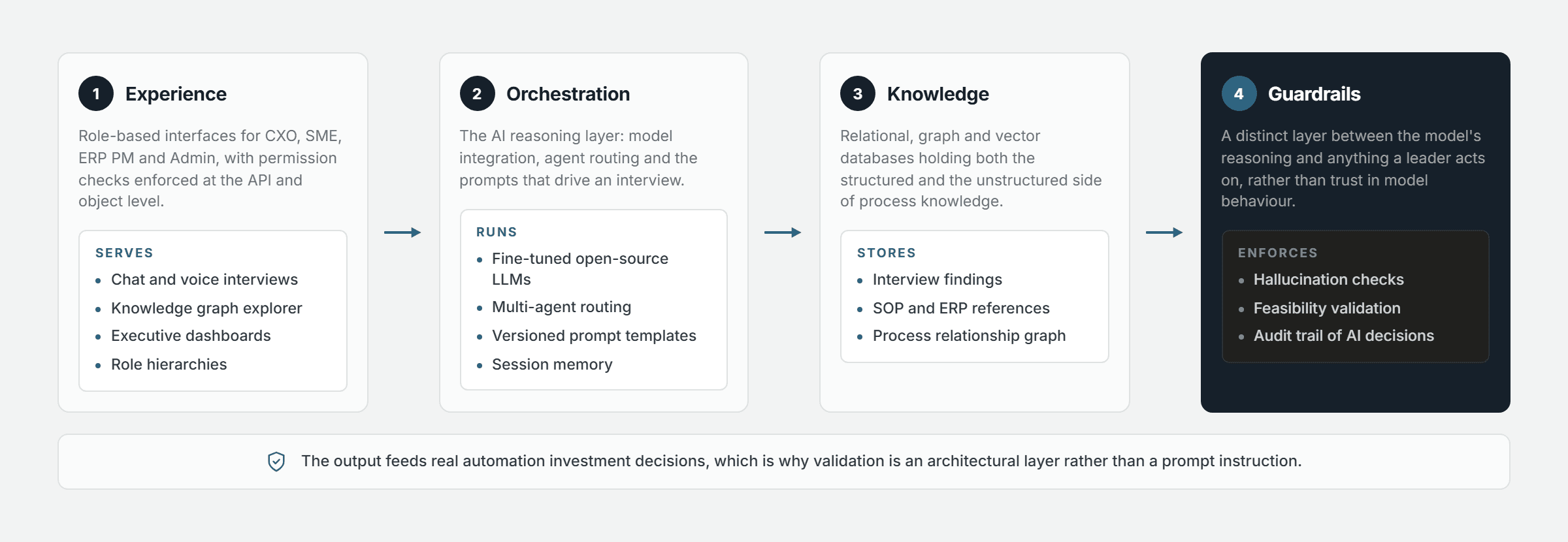
Pfactorial_Case_Study_ProcessArch_ERP_Discovery image 3
Figure 3 - Role-based frontend, AI orchestration, knowledge APIs and guardrails as separable layers.
Design note The system is explicitly designed to ask about "what happens when things go wrong" as a standard interview probe - that single question is where most of the gap between documented and real process actually lives.
ENGINEERING FOR SCALE AND RELIABILITY
Five architectural decisions keep the AI's discovery and recommendations grounded and auditable.

Domain fine-tuning on ERP concepts

The selected open-source LLMs are fine-tuned to domain-specific language and ERP concepts using curated training data, rather than relying on a general-purpose model's out-of-the-box understanding of enterprise process terminology.

Structured data pipelines from multiple source types

Data pipelines ingest, transform, validate and enrich data from interviews, SOPs and ERP references, giving the AI orchestration layer a structured foundation rather than raw, unvalidated interview transcripts.

Persistent conversational memory

Sessions and memory management maintain conversational context and long-term consistency, so AI agents remain coherent across long or multi-session interview interactions.

Fine-grained permission enforcement

Role hierarchies and permission checks are applied at the API and object level, controlling exactly what each role - CXO, SME, ERP PM, Admin - can see and do within the platform.

Explicit guardrails on AI recommendations

Validation and feasibility-check rules are applied specifically to prevent hallucinations and invalid recommendations, positioned as a distinct architectural layer rather than left to model behavior alone.
DELIVERY APPROACH
The engagement is building the platform from the conversational discovery core outward to the executive-facing analytics layer.
1. Role-based authentication & access - secure login, session handling, and role-appropriate UI rendering for CXO, SME, ERP PM and Admin users.
2. Conversational interview engine - real-time chat and WebRTC-based voice interaction for SME process-discovery interviews.
3. AI orchestration layer - LLM integration, fine-tuning, request routing, and prompt template management.
4. Data & knowledge APIs - relational, graph and vector database integration for structured and unstructured process knowledge.
5. Visual analytics - knowledge graph visualization, dependency highlighting, and executive dashboards.
6. Guardrails & audit logging - validation rules against hallucinated recommendations, plus a full audit trail of AI decisions.
RESULTS AND IMPACT

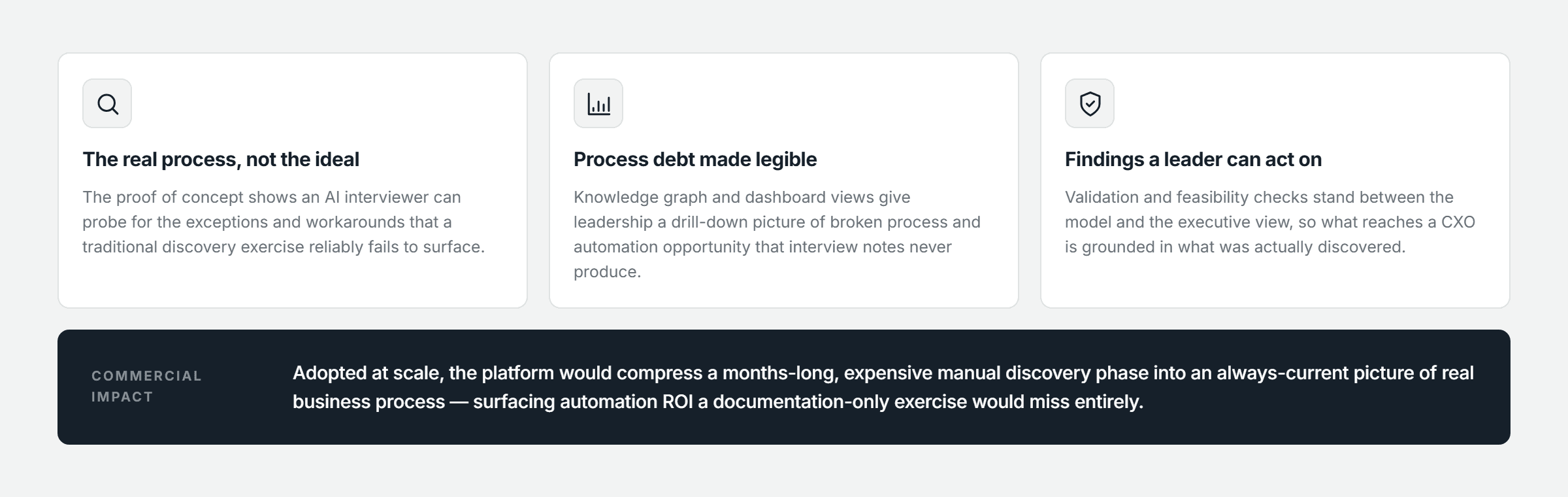
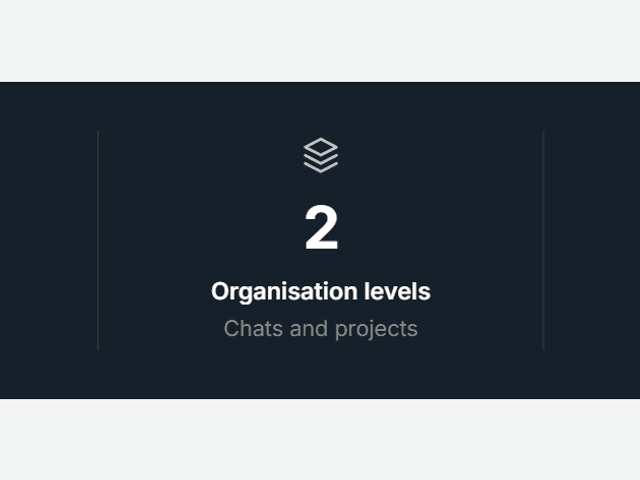
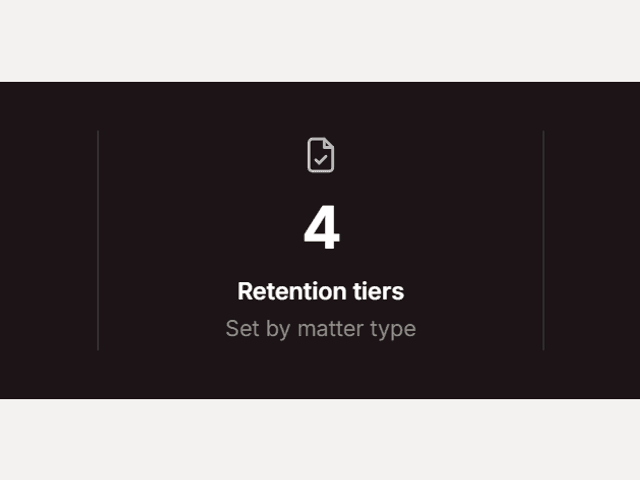
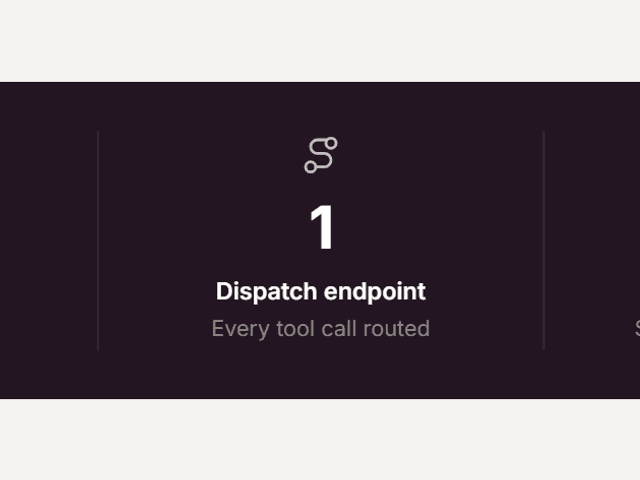
Pfactorial_Case_Study_ProcessArch_ERP_Discovery image 4
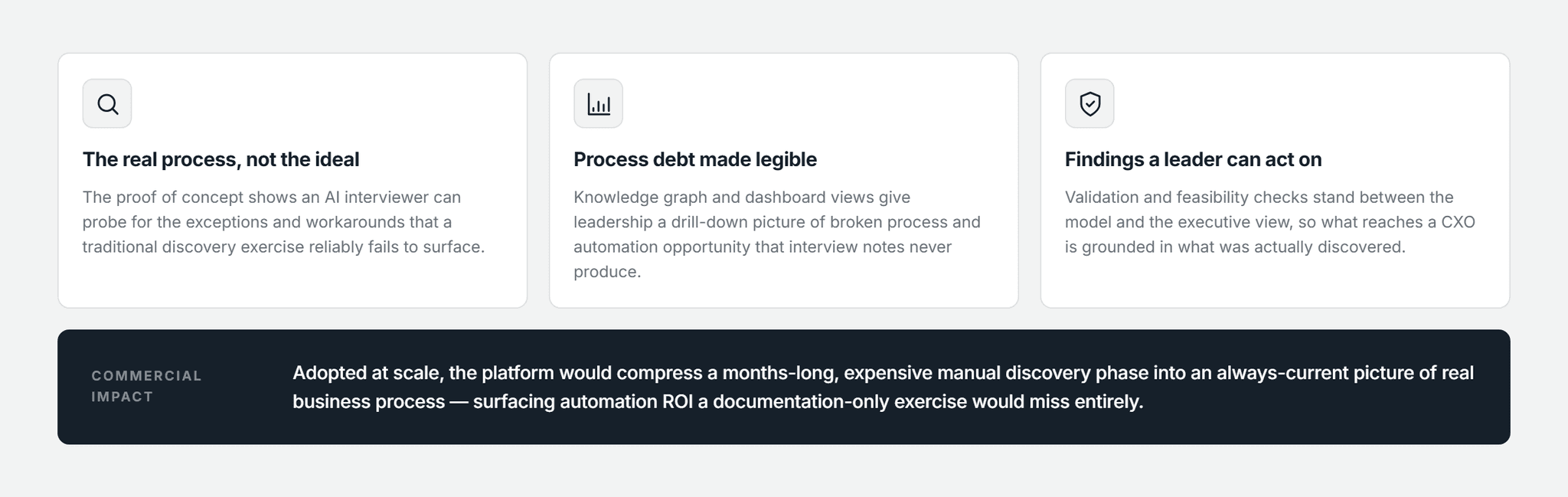
Figure 4 - Key outcomes from this engagement.
As a proof of concept, the platform demonstrates that an AI interviewer can probe specifically for the exceptions and workarounds that traditional discovery interviews tend to miss.
The knowledge-graph and dashboard layer gives leadership a visual, drill-down view of process debt and automation opportunity that a traditional interview-based discovery phase never produces.

What it enabled commercially

If adopted at scale, the platform would let clients compress a months-long, expensive manual discovery phase into an ongoing, always-current picture of real business process - surfacing automation ROI opportunities that a documentation-only exercise would miss entirely.
WHY PFACTORIAL
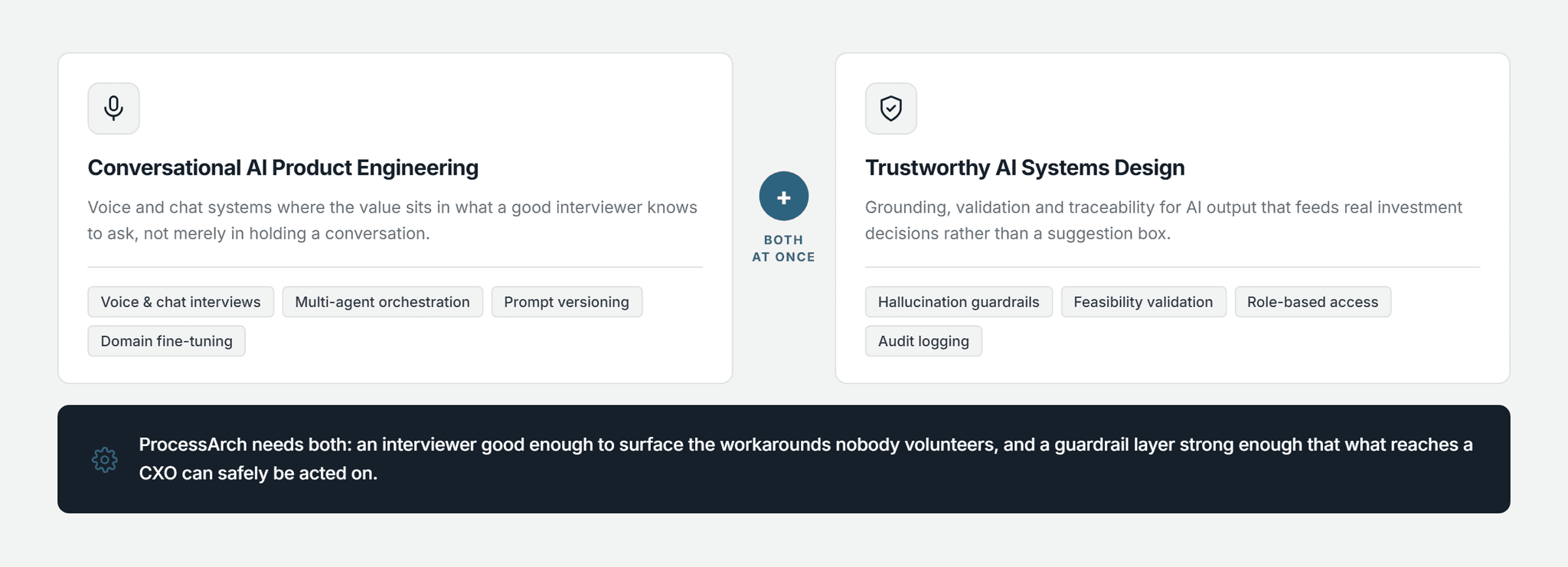
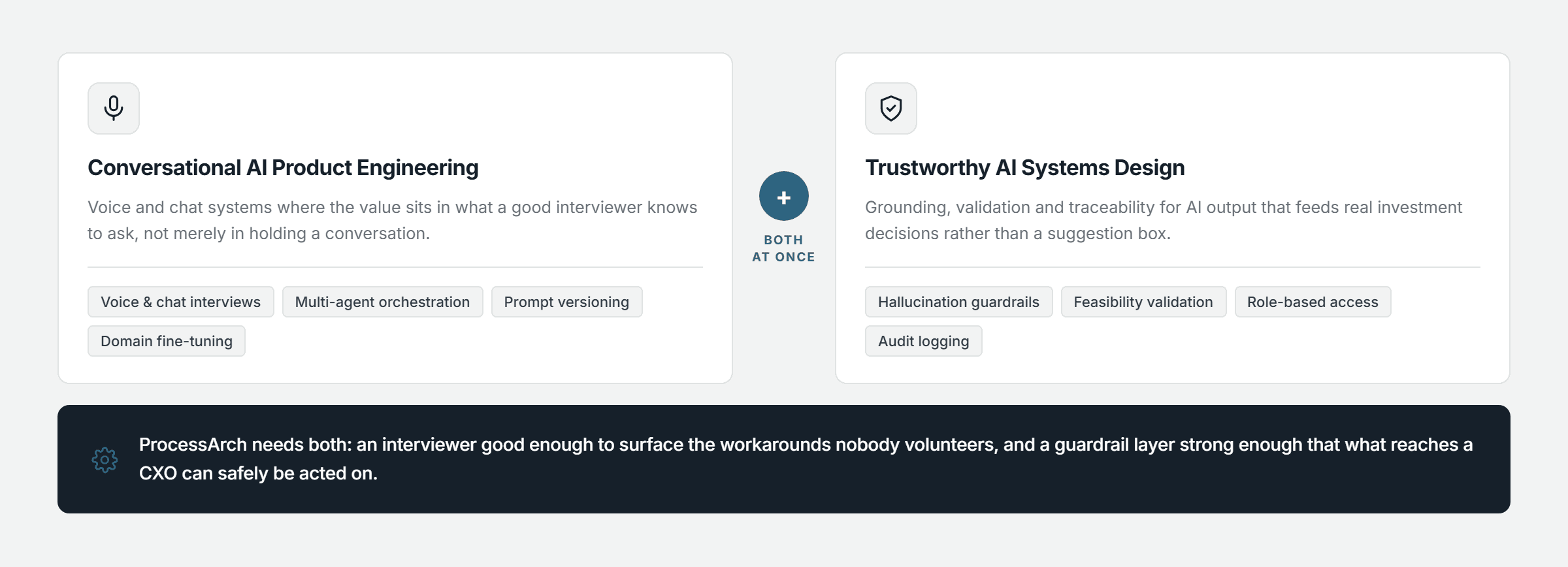
This engagement reflects Pfactorial's conversational AI product engineering service line, applied to a discovery problem where the value is specifically in what a good interviewer knows to ask - and where hallucination guardrails matter because the output feeds real investment decisions.
Pfactorial_Case_Study_ProcessArch_ERP_Discovery image 5
Figure 5 - Service lines this engagement draws on.
Engagement enquiries Pfactorial Technologies works with organizations running ERP implementations who need an accurate picture of real business process, not just the documented one. If you're evaluating an AI-driven process discovery initiative, we're happy to give you an honest read on scope and risk before anyone commits to anything. · pfactorial.ai
APPENDIX A - TECHNOLOGY STACK
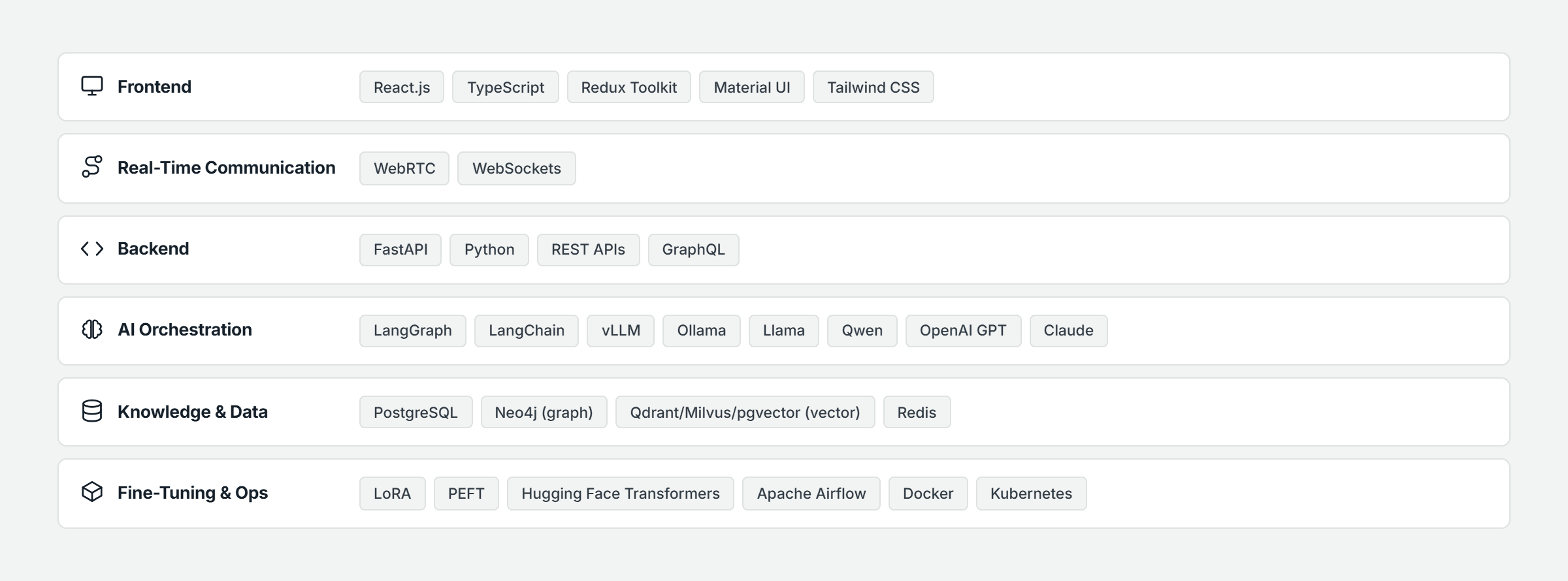
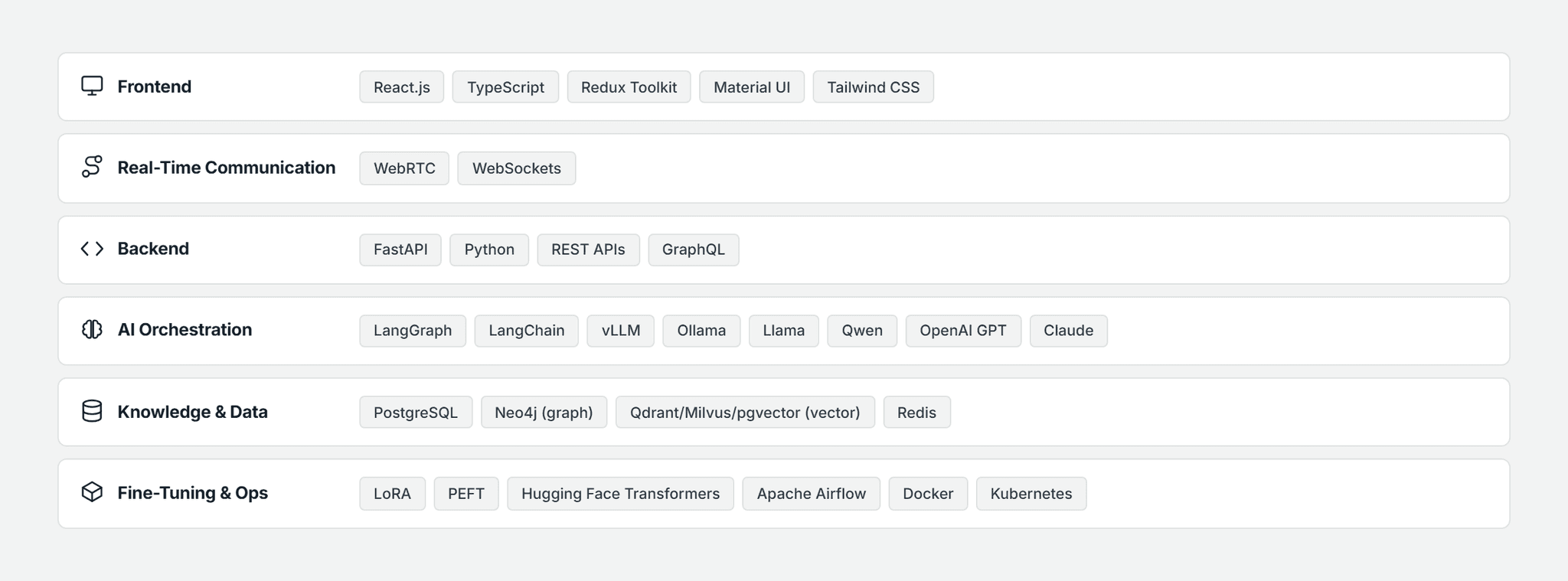
The technology stack underpinning the system, grouped by the layer it serves.
Pfactorial_Case_Study_ProcessArch_ERP_Discovery image 6
© 2026 Pfactorial Technologies. Client identity and product-specific implementation detail are withheld or generalized; no client data, credentials, source code, or infrastructure detail is included in this document.

Result and Analysis

ENGAGEMENT SNAPSHOT

How Pfactorial Technologies is building ProcessArch, a conversational AI platform that discovers how work actually happens during ERP implementations - not how it's documented - and shows leaders where automation ROI is being lost.

Pfactorial_Case_Study_ProcessArch_ERP_Discovery image 1
Pfactorial_Case_Study_ProcessArch_ERP_Discovery image 2
Pfactorial_Case_Study_ProcessArch_ERP_Discovery image 3
Pfactorial_Case_Study_ProcessArch_ERP_Discovery image 4
Pfactorial_Case_Study_ProcessArch_ERP_Discovery image 5
Pfactorial_Case_Study_ProcessArch_ERP_Discovery image 6