Back
Recruiting & HR Tech
An Authenticated Candidate-Sourcing Pipeline for Recruiting Teams
How Pfactorial Technologies built a browser-automation pipeline that turns an authenticated candidate search into structured, exportable profile data for recruiting workflows.

August 21, 2026
Share
ENGAGEMENT SNAPSHOT

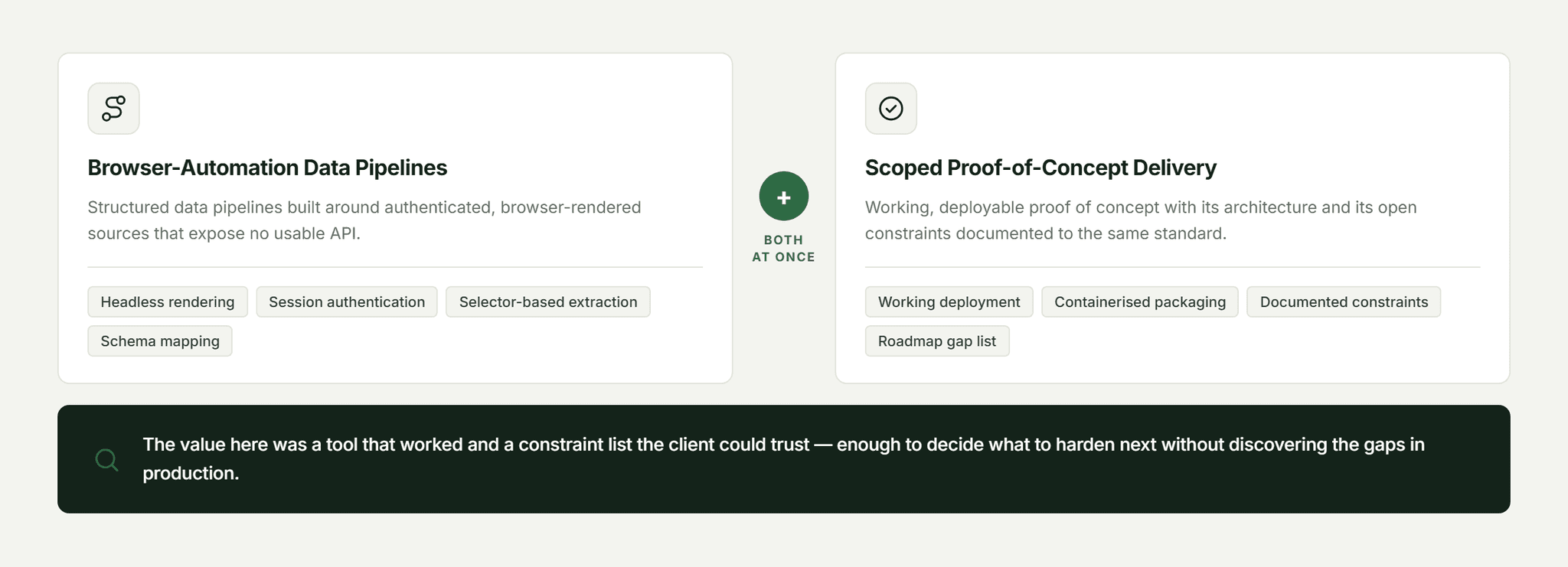
Figure 1 - Key figures from this engagement, at a glance.
EXECUTIVE SUMMARY
Our client's recruiting team needed to pull candidate profile data - name, location, job title, education, skills - from a major online job board's candidate search into a structured format they could actually work with, rather than manually copying details from search results one by one.
The candidate search interface is built for one-at-a-time human browsing, not bulk data collection, and any automated approach depends on an authenticated session and has to render and parse pages the same way a browser would.
Pfactorial built a two-part application - a browser-automation backend that captures rendered search results and a frontend that lets recruiters build a search, trigger the scrape, and review results as structured, exportable CSV data.
Why this engagement is representative This engagement is a straightforward example of Pfactorial building a scoped, working proof of concept - turning a manual, one-at-a-time data-gathering task into a structured pipeline - while being direct about the tool's known constraints rather than overstating its production-readiness.
THE CHALLENGE
Turning a browsing-oriented search interface into structured, bulk-usable data required solving three problems.
1. Candidate data lives in rendered HTML, not an API
The target platform's candidate search interface is built for human browsing; getting structured data out means rendering the page like a browser would and parsing the result, not calling a documented API.
2. Access depends on an authenticated session
Meaningful search results require a logged-in session, and that authentication has to be established and maintained separately from the scraping request itself.
3. Result structure varies and can change without notice
Candidate cards on the page follow a specific structure that the platform can revise at any time, meaning the extraction logic has a dependency on markup the client doesn't control.
The real brief Not “automate a login and click around” but “turn a one-candidate-at-a-time browsing interface into a structured, exportable dataset a recruiting team can actually use.”
THE SOLUTION
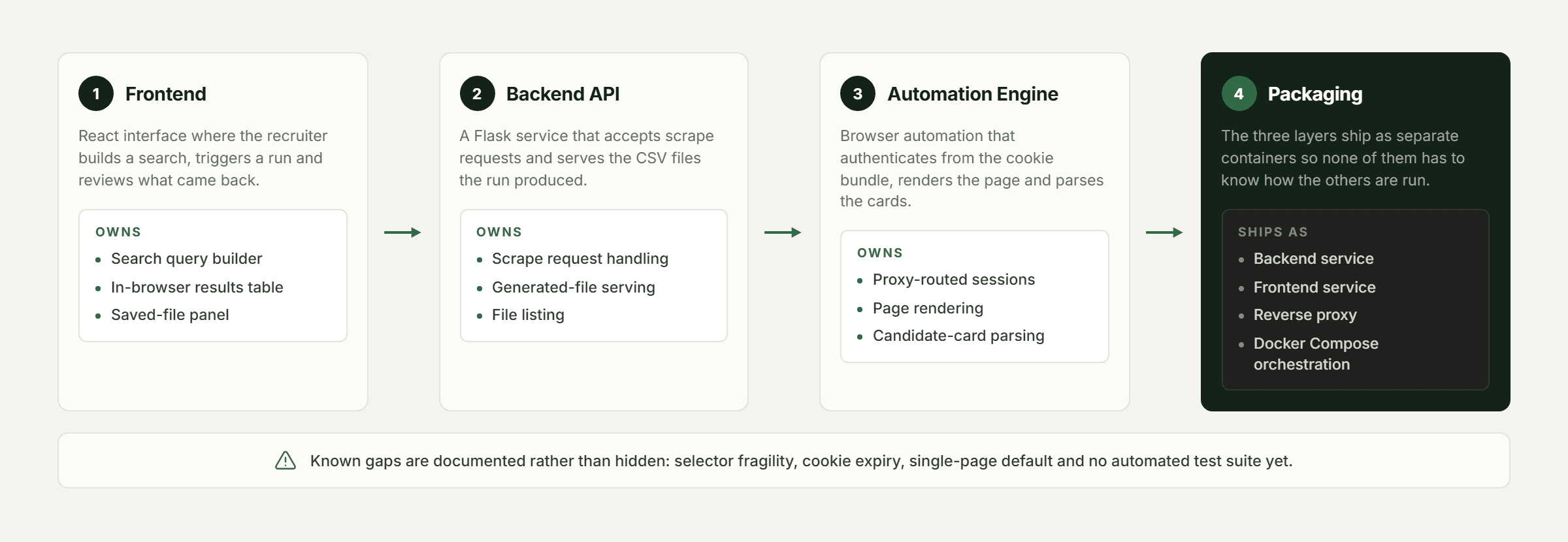
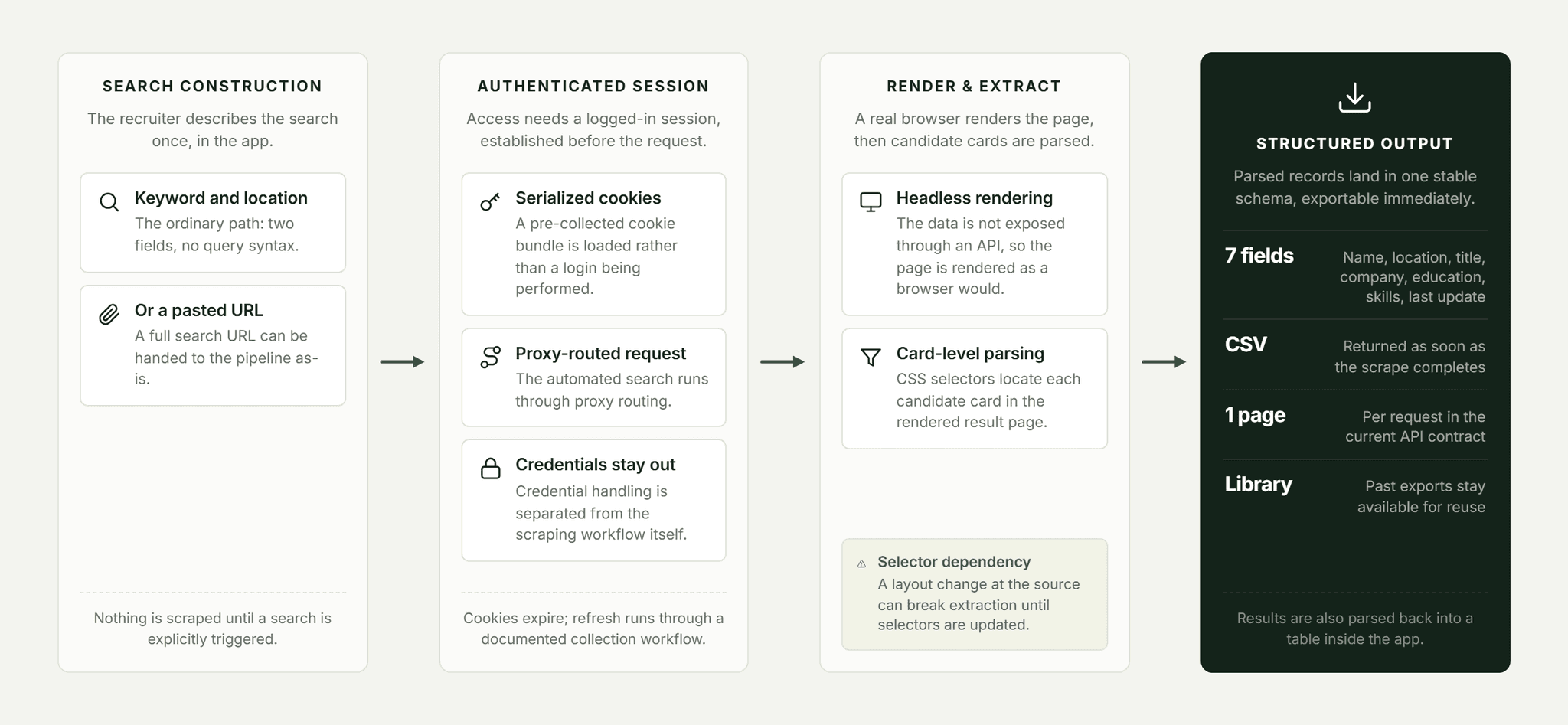
Pfactorial built a three-layer pipeline: a frontend for constructing searches, a backend API orchestrating the scrape, and a browser-automation engine that authenticates, renders and parses results into structured records.

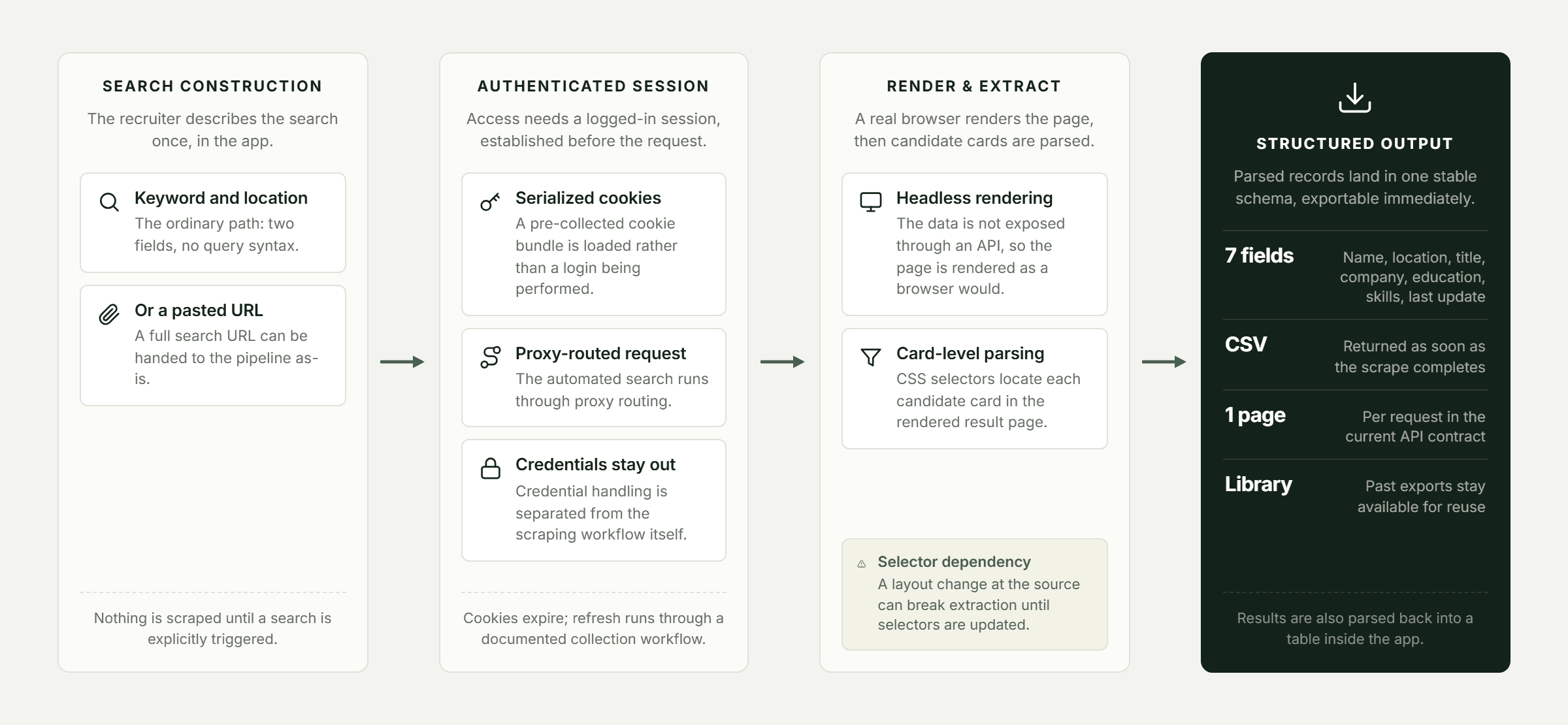
Figure 2 - From a search query to a structured, exportable candidate dataset.
Architectural principles
- Separate authentication from scraping - The scraper doesn't perform login during the request - it loads a pre-collected, serialized session-cookie bundle, keeping credential handling separate from the scraping workflow itself.
- Headless browser rendering, not raw HTTP requests - A full browser automation engine renders the page as a real browser would, since the target site's candidate data isn't available through a simple HTTP request.
- Structured extraction into a stable schema - Parsed candidate cards are mapped into a consistent set of fields - name, location, title, education, skills - regardless of how the underlying page markup is structured.
- Immediate, reusable export - Results return as CSV immediately after a scrape and remain available for later review through a saved-files panel, rather than requiring a separate export step.
CAPABILITIES DELIVERED
Each capability replaces a manual, one-candidate-at-a-time step in the recruiting team's sourcing workflow.
CAPABILITY | WHAT IT DOES |
|---|---|
Search query builder | Enter a keyword and location, or paste a full search URL directly. |
Authenticated automated search | Proxy-routed, cookie-authenticated browser session executes the candidate search. |
Structured field extraction | Name, location, job title, company, education, skills and last-update date parsed per candidate. |
In-browser results review | Returned CSV parsed and displayed as a results table without leaving the app. |
Saved file library | Previously generated CSV exports remain accessible for later reuse. |
Containerized deployment | Docker Compose packaging for backend, frontend and reverse-proxy services. |
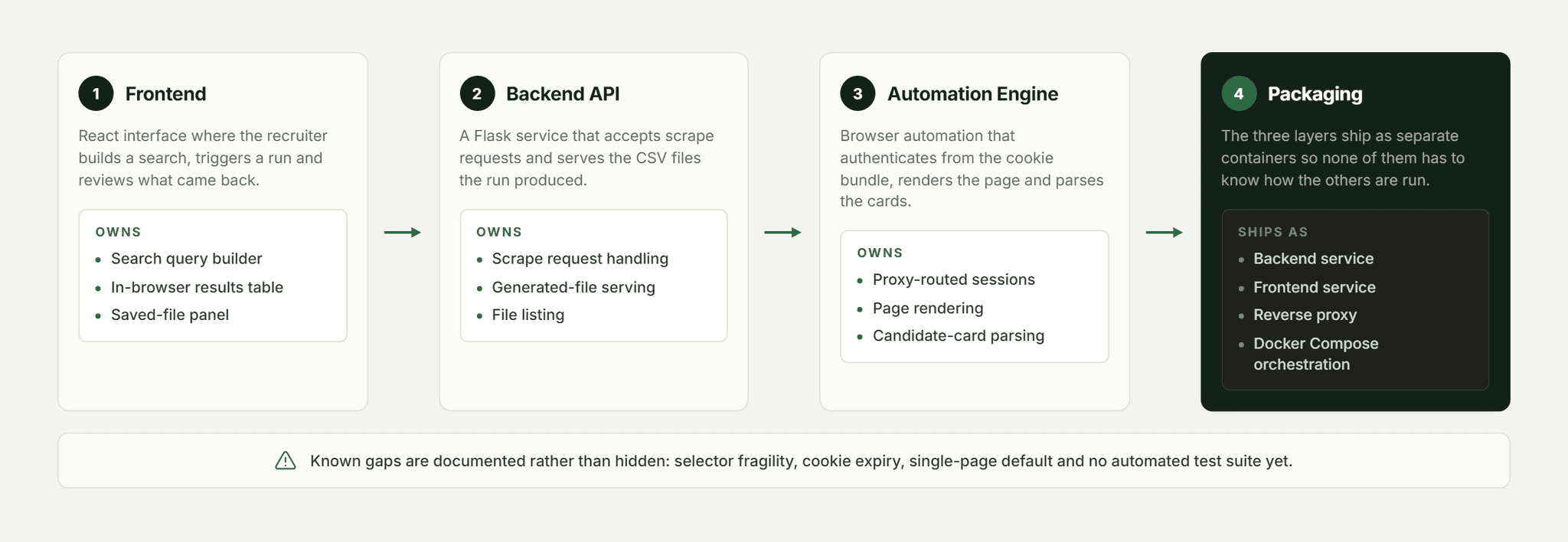
Figure 3 - Query construction, orchestration and extraction kept as separate concerns.
Design note This was delivered and documented as a working proof of concept, not a hardened production system - the source documentation explicitly tracks open issues like selector fragility and authentication expiry so the client can make an informed call on further investment.
ENGINEERING FOR SCALE AND RELIABILITY
Being direct about a POC's current limitations is part of delivering it responsibly. Several constraints are documented as-is, not glossed over.
Selector dependency on third-party markup
Extraction relies on CSS selectors matching the target platform's current page structure; any layout change on their end can break extraction until selectors are updated.
Session-cookie expiry
Authentication depends on externally collected cookies that can expire, requiring periodic refresh through the documented cookie-collection workflow.
Single-page scraping in the current API contract
The scraper's current default is limited to one results page per request; multi-page scraping is not yet exposed in the API surface.
Documented endpoint mismatch
A naming inconsistency between the file-listing endpoint's returned URLs and the actual file-serving route is called out explicitly as a known gap to resolve.
No automated test suite yet
Backend extraction logic and frontend API integration are not yet covered by automated tests - flagged as a gap for any further hardening investment.
DELIVERY APPROACH
The engagement delivered a working, scoped proof of concept with its architecture and known gaps clearly documented for the client's next-step decision.
1. Authentication workflow - the cookie-collection process for establishing an authenticated session ahead of scraping.
2. Scraper engine - browser automation with proxy support, page rendering, and candidate-card parsing.
3. Backend API - the Flask service accepting scrape requests and serving generated CSV files.
4. Frontend search & review UI - React-based search construction and in-browser CSV result review.
5. Containerized packaging - Docker Compose services for backend, frontend and reverse proxy.
6. Constraint documentation - explicit tracking of known gaps - selector fragility, cookie expiry, single-page limitation - for the client's roadmap.
RESULTS AND IMPACT

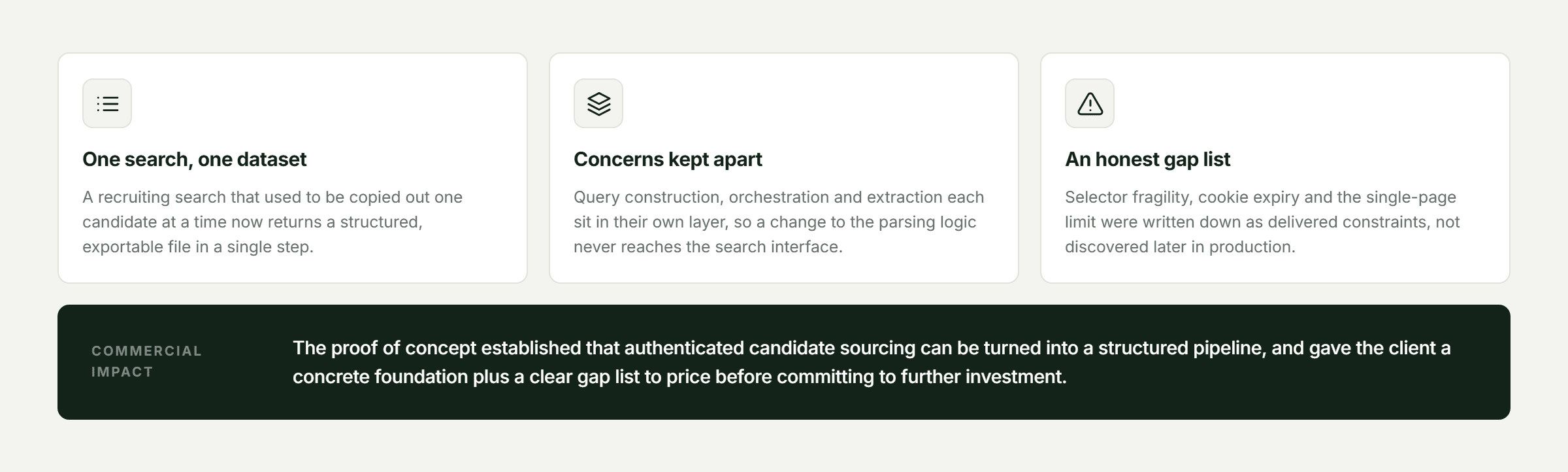
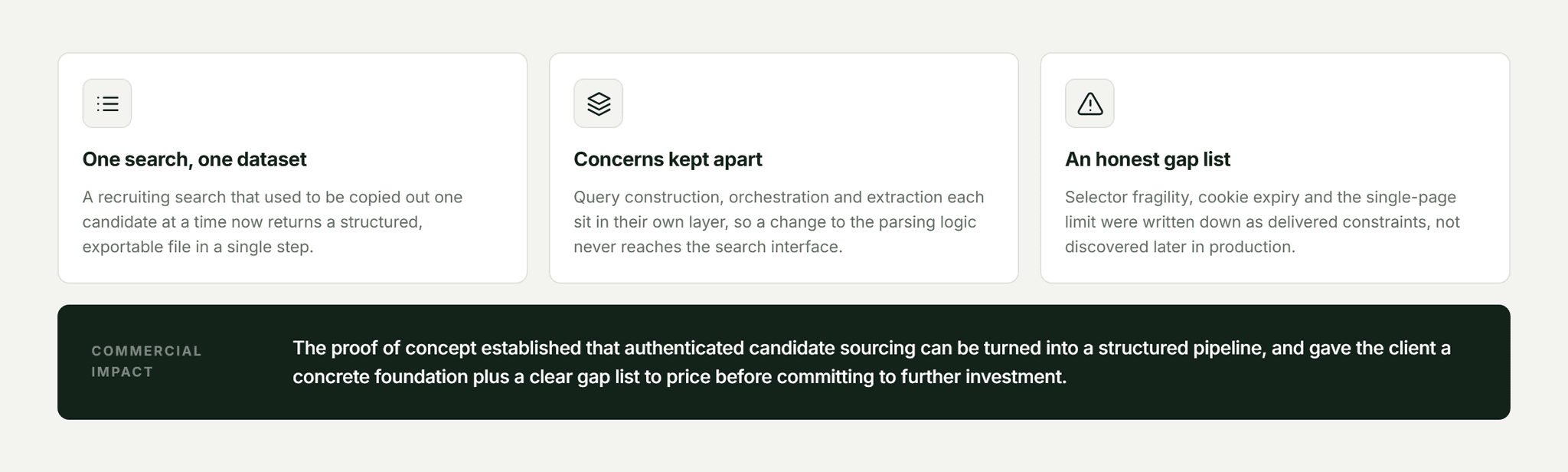
Figure 4 - Key outcomes from this engagement.
The client's recruiting team can now generate structured candidate datasets from a search query in one step, rather than manually copying profile details one candidate at a time.
Documented known constraints give the client a clear, honest basis for deciding what to harden next rather than discovering gaps in production.
What it enabled commercially
The proof of concept validated that authenticated candidate sourcing could be turned into a structured, exportable pipeline, giving the client a concrete foundation and a clear gap list to evaluate before further investment.
WHY PFACTORIAL
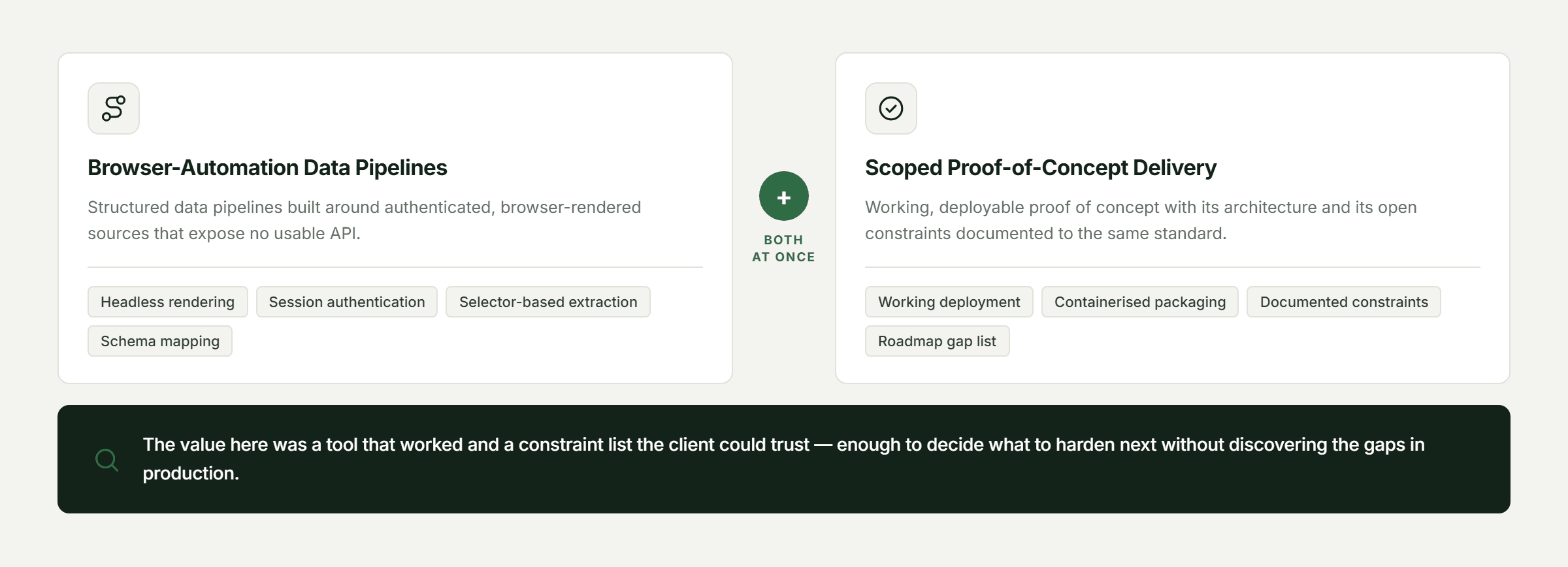
This engagement reflects Pfactorial's willingness to deliver a scoped, honestly-documented proof of concept - including its constraints - rather than overselling a POC's production-readiness.

Figure 5 - Service lines this engagement draws on.
Engagement enquiries Pfactorial Technologies works with recruiting and HR technology teams that need structured data pipelines built around authenticated, browser-rendered sources. If you're evaluating a sourcing automation initiative, we're happy to give you an honest read on scope and risk before anyone commits to anything. · pfactorial.ai
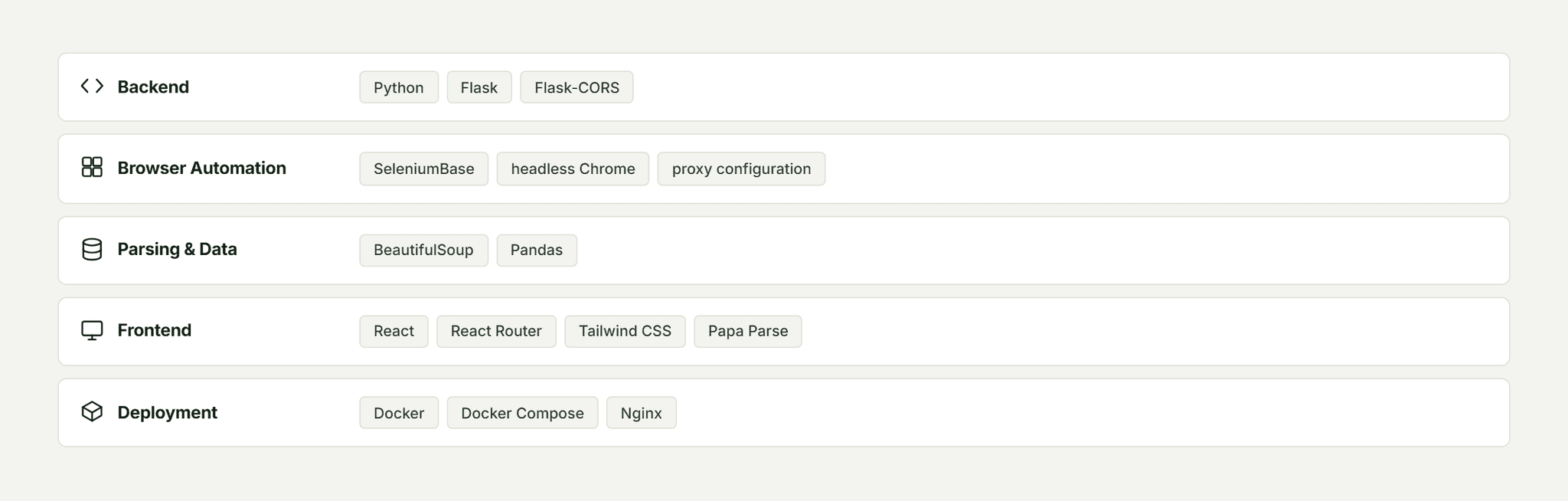
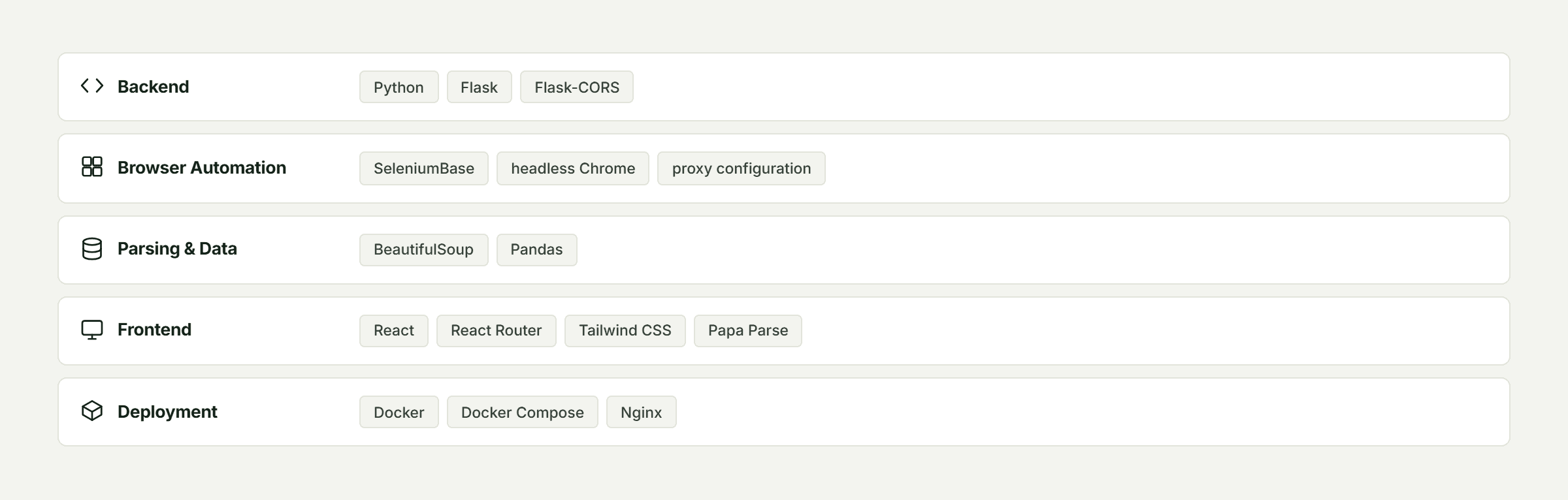
APPENDIX A - TECHNOLOGY STACK
The technology stack underpinning the system, grouped by the layer it serves.

© 2026 Pfactorial Technologies. Client identity and product-specific implementation detail are withheld or generalized; no client data, credentials, source code, or infrastructure detail is included in this document.
Result and Analysis
ENGAGEMENT SNAPSHOT
How Pfactorial Technologies built a browser-automation pipeline that turns an authenticated candidate search into structured, exportable profile data for recruiting workflows.

CASE STUDIES
You might also like...

Data Scraping & Aggregation
Aug 21, 20267 min readRead

Data Scraping & Aggregation
An LLM-Powered Resume Parsing and Candidate Scoring Platform for Two-Sided Hiring at Scale
Aug 21, 20268 min readRead

Speech & Audio Pipelines
A Modular Pipeline for Multilingual Manuscript Narration
Aug 21, 20268 min readRead

Multi-Agent & Agentic SystemsE-commerce & Retail
A Multi-Agent Voice & Chat Shopping Assistant Built on a Coordinated Squad Architecture
Aug 21, 20267 min readRead

A Multi-Format Resume Parsing Platform With Automated ATS Scoring
Aug 21, 20267 min readRead

E-commerce & Retail
A Multi-Platform Review Intelligence Tool Turning Raw E-Commerce Reviews Into Topic-Scored Sentiment
Aug 21, 20267 min readRead