Back
June 25, 2024
ML Infra, Classifiers & RL
Lending with Confidence: Credit Scoring Models for Institutions
Pfactorial
Share

Introduction
Ever imagine the banks decide so quickly whether to approve your loan application? It's not magic, it's artificial intelligence (AI) and machine learning (ML)! technologies are transforming many industries, and credit scoring is a prime example.
Imagine that loan officers meticulously reviewed each application by hand. Yawn! Thankfully, those days are gone. Today's AI-powered models can analyze massive datasets in seconds, uncovering hidden patterns to assess your creditworthiness with incredible speed. This translates to faster loan decisions for you and a smoother experience overall.
But that's not all. These models also help banks make smarter decisions, reducing their risk while keeping loan options accessible.
Here in this blog we are going to discuss such a model.

All we know is that financial institutions are pivotal contributors to economic vitality, facilitating growth, investment, and consumption. In this context, it becomes important to adopt effective measures to identify an individual's creditworthiness. Credit score models serve as vital tools for financial institutions, offering a systematic and data-driven approach to assess credit risk, make lending decisions, and allocate resources efficiently.
Credit score models are employed for several essential reasons within the financial institutions. Let's discuss what they are.
How credit score help financial institutions
Risk Assessment: Credit score models help financial institutions evaluate the risk associated with lending money to an individual. By analyzing an individual's credit history and financial behavior, these models provide insights into the likelihood of timely loan repayments.
Decision Making: Lenders use credit scores as a tool for making informed decisions on whether to approve or decline a loan application. The numerical representation of creditworthiness streamlines the decision-making process, allowing for quick and standardized evaluations.
Resource Allocation: Financial institutions utilize credit scores to distribute their available funds among various borrowers based on their creditworthiness. By understanding the creditworthiness of applicants, they can optimise their lending portfolios, directing resources toward individuals with lower risk profiles.
Predictive Tool: Credit score models serve as predictive tools, forecasting the likelihood of future credit behavior based on historical data. This predictive aspect aids lenders in anticipating potential risks and making proactive decisions to mitigate them.

Deployment Strategies
Data Collection
Now it’s time to develop a machine learning model for credit scoring. As always the first and most important step is data collection. Building an effective machine learning model demands a substantial volume of data. For instance we have selected a dataset from Kaggle which you can access through this link https://www.kaggle.com/competitions/GiveMeSomeCredit/data?select=cs-training.csv
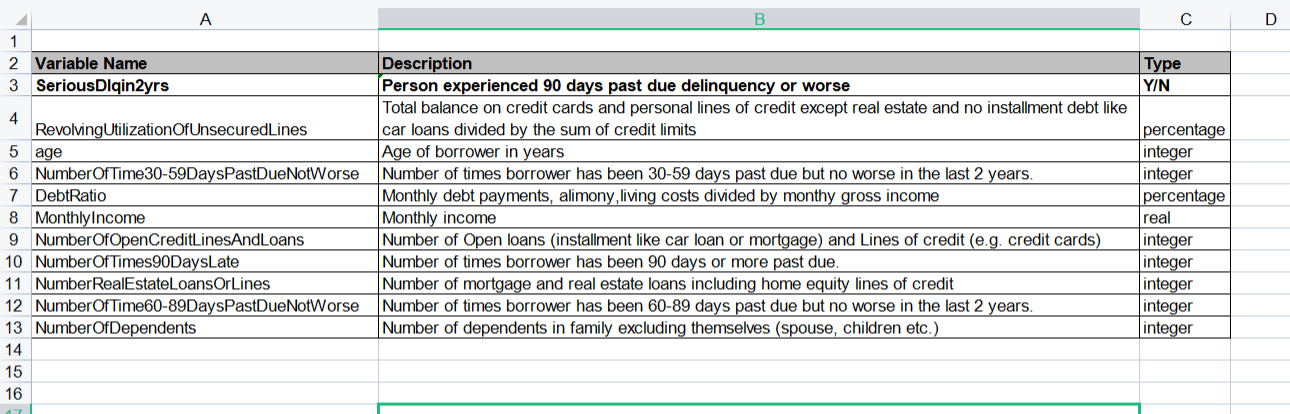
This is the data dictionary where we will get a general idea about features. SeriousDlqin2yrs is the target column and others are features.

Data preparation
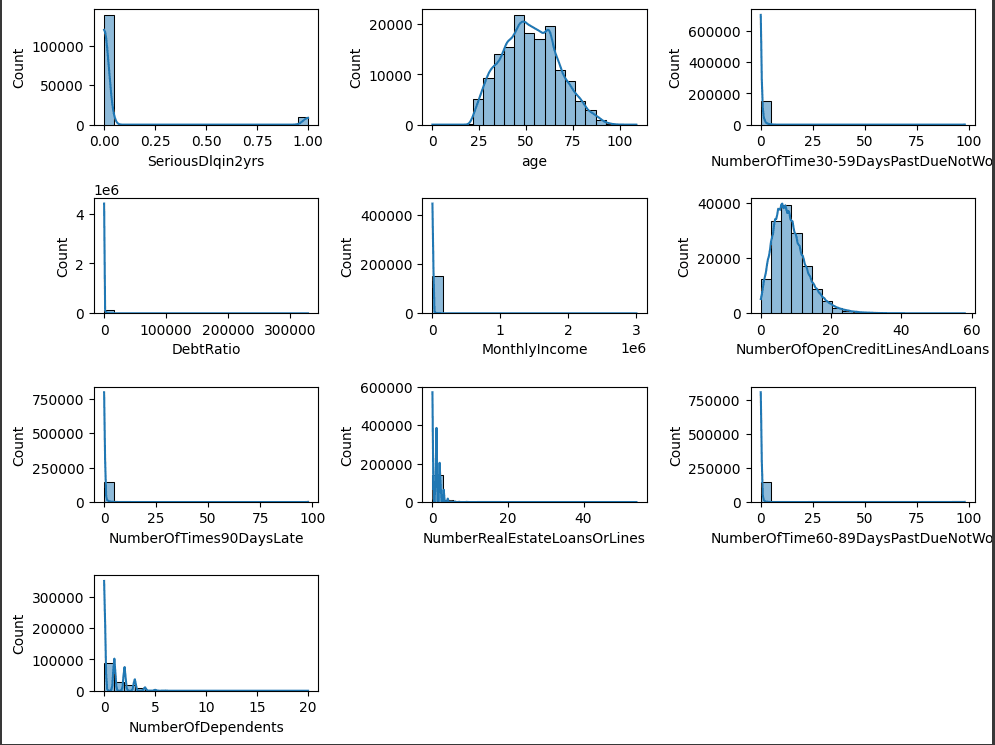
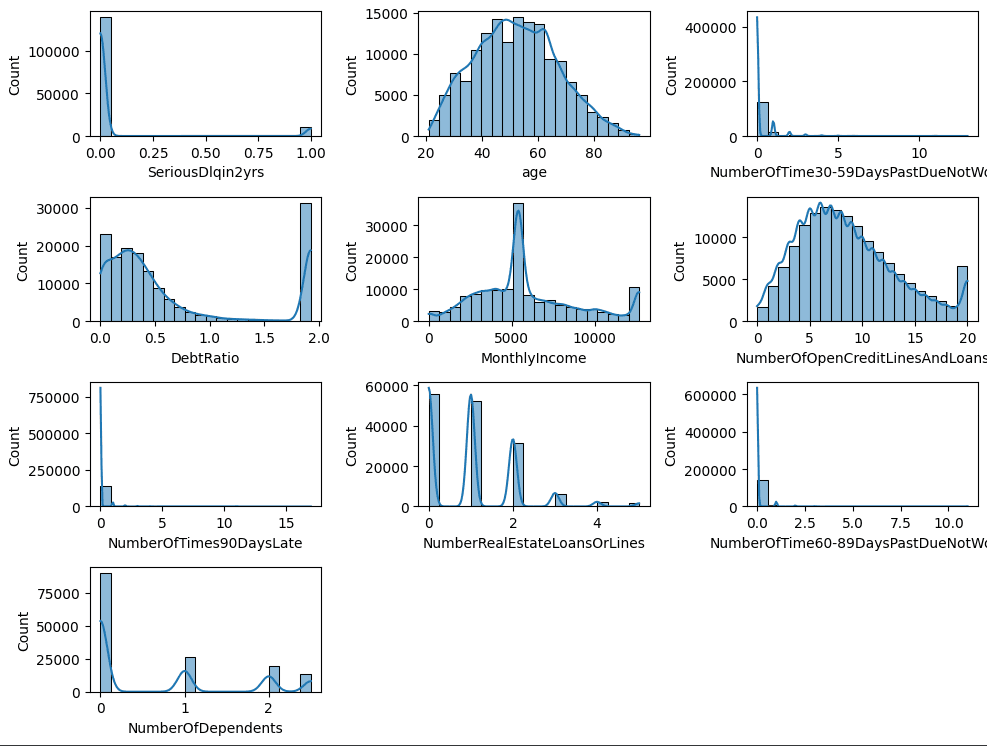
First we need to check any null values present in the data. Our data has missing values in MonthlyIncome and NumberOfDependents . When I draw a histogram of these columns it is skewed. We can see it in the figure. so we are going to impute the missing values using median.

From the histogram we can understand that our data has outliers. So we need to treat the outliers. We can detect outliers using boxplot . Here I have opted for the IQR (interquartile Range ) method to handle outliers in some of the columns . In some others the data may be valid. So the IQR method will cause data loss. So for other columns analyze columns individually and set a threshold value to remove outliers.

After removing outliers we have to check correlation to identify the relationship between columns. This helps in the feature selection process. Next we need to normalize the data. Here we are doing standard scaling. This procedure transforms all data into a standardized range of -1 to 1.
After handling outliers you can see the change in distribution like this

Model Selection
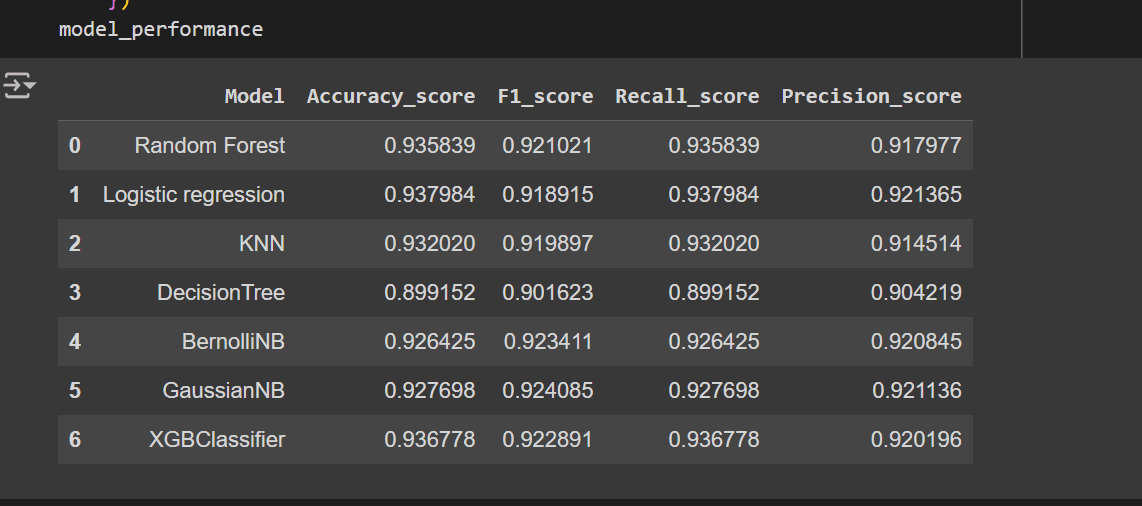
Now the preprocessing steps are completed. The data is prepared for input to the model. Now, it's time to choose a model. The selection process involves comparing the evaluation metrics of various models to identify the most suitable one. We have to fit our train data to different models and analyze the matrices.
The data frame presents the metrics of different models. After comparison, the Random Forest Classifier has been selected as our model of choice.

Next we need to save our model and preprocessing (standard scaling) as a pickle file. So that we can use it in the future.
Model loading and Score Prediction

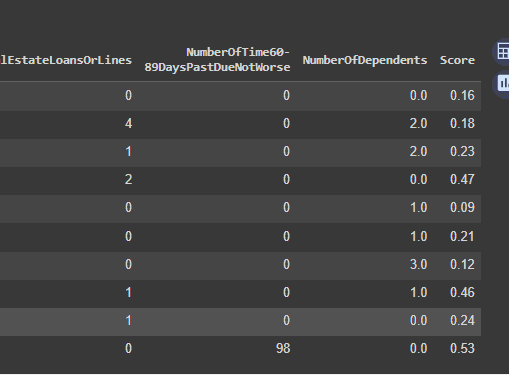
The score indicates the likelihood of a customer experiencing financial distress, providing valuable insights for financial institutions when evaluating new customers. When a new customer arrives, generating a score based on their table details becomes the primary task. A score closer to one suggests a higher probability of the customer facing financial distress.

Credit scoring models will provide an advanced solution that enhances credit assessment processes. Credit Scoring Machine Learning Model will optimise risk evaluation, improve decision-making, and ultimately contribute to the success of financial institutions. It represents a significant leap forward in the financial industry. The use of alternative data sources and advanced analytics has the potential to further refine these models, making them even more robust and inclusive. Through responsible development and implementation, credit scoring models can empower individuals, foster economic growth, and contribute to a more equitable financial landscape.
Hope you have an idea about Credit Scoring models. Continue learning !