Back
OCR & Document Extraction
A Three-Stage Speech Pipeline Turning Spoken Input Into Elaborated, Spoken Output
How Pfactorial Technologies built a speech-to-content pipeline that transcribes spoken audio, elaborates it with a language model, and speaks the result back.
August 21, 2026
Share
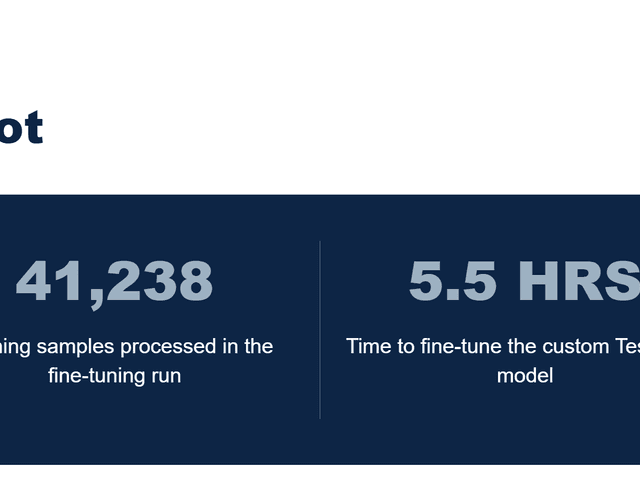
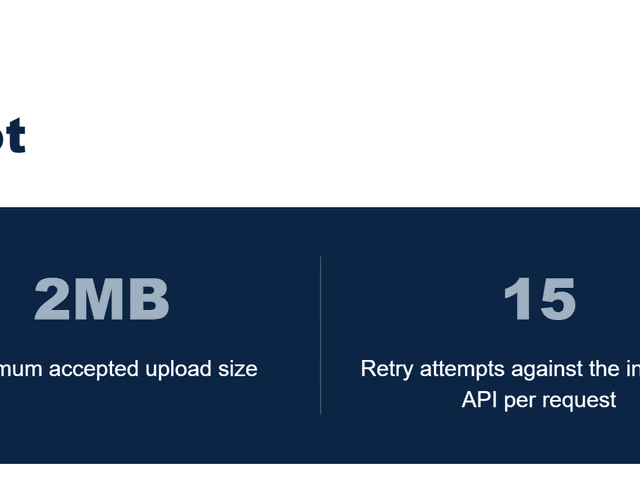
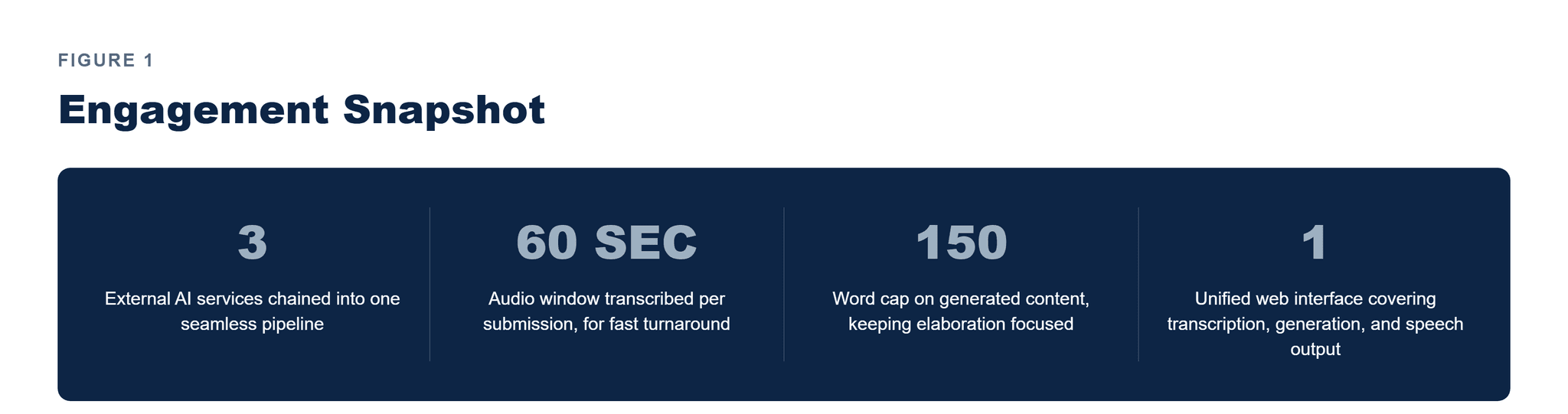
ENGAGEMENT SNAPSHOT

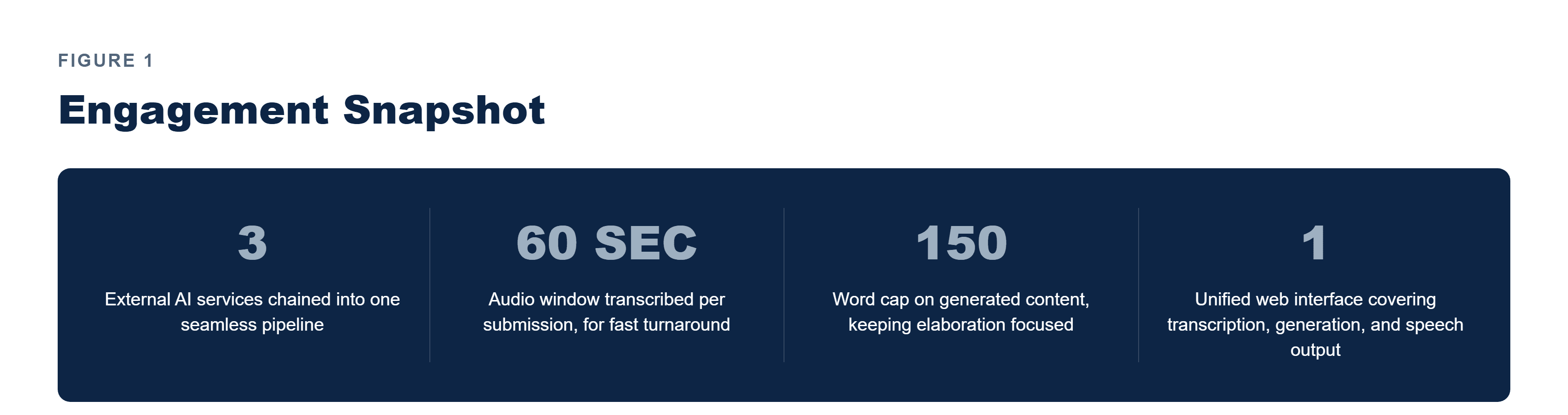
Figure 1 - Key figures from this engagement, at a glance.
EXECUTIVE SUMMARY
Our client wanted to turn a short spoken recording directly into new, elaborated written content and a matching audio version - useful for journalists, content marketers, or anyone doing quick note-to-content turnaround - without manually transcribing, drafting, and re-recording each step themselves.
Chaining that together isn't just three independent API calls: the audio has to be cleaned and trimmed before transcription is reliable, the transcribed text has to be fed into a generation step that stays on-topic and bounded rather than wandering, and the whole pipeline depends on the availability and behavior of external AI providers the application doesn't control.
Pfactorial built Voice Genius: a Flask application that pipes audio through OpenAI's Whisper for transcription, GPT-3.5 for bounded content generation, and Google's Text-to-Speech for the spoken result, surfacing all three outputs - transcript, generated text, and audio - in one interface.
Why this engagement is representative This engagement demonstrates Pfactorial's ability to orchestrate multiple external AI services into one dependable, bounded pipeline - a repeatable pattern for any client that needs speech, generation, and synthesis working together rather than as separate manual steps.
THE CHALLENGE
Turning a spoken recording into elaborated speech meant solving problems at each handoff between three independent AI services.
1. Raw audio needs cleaning before transcription is reliable
Background noise in the input recording degrades transcription quality, so the audio has to be thresholded and trimmed before it reaches the speech-to-text model, not fed in unprocessed.
2. Generated content needs a hard boundary, not open-ended elaboration
An unconstrained generation step can wander far from the transcribed source or produce output too long to be useful, so the elaboration step needs an explicit length and focus constraint.
3. The pipeline depends on external providers it doesn't control
Whisper and GPT-3.5 both run as external OpenAI services, so availability, latency, and behavior changes on either provider's side directly affect the application without the application being able to fix them itself.
4. Three outputs need to reach the user coherently, not as three disconnected artifacts
The transcript, the generated text, and the synthesized audio all need to be presented together as one result, not returned as three separate downloads the user has to reassemble mentally.
The real brief Not "call three AI APIs and show the results" but "chain speech-to-text, bounded generation, and text-to-speech into one dependable pipeline a user experiences as a single step."
THE SOLUTION
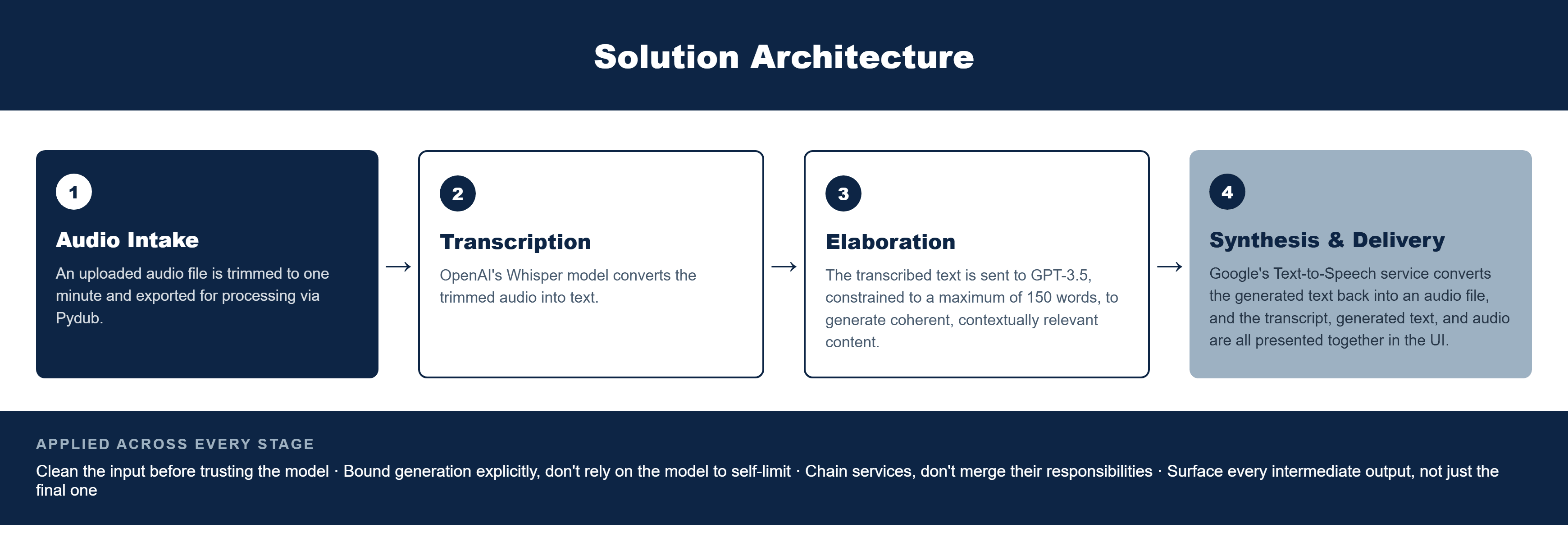
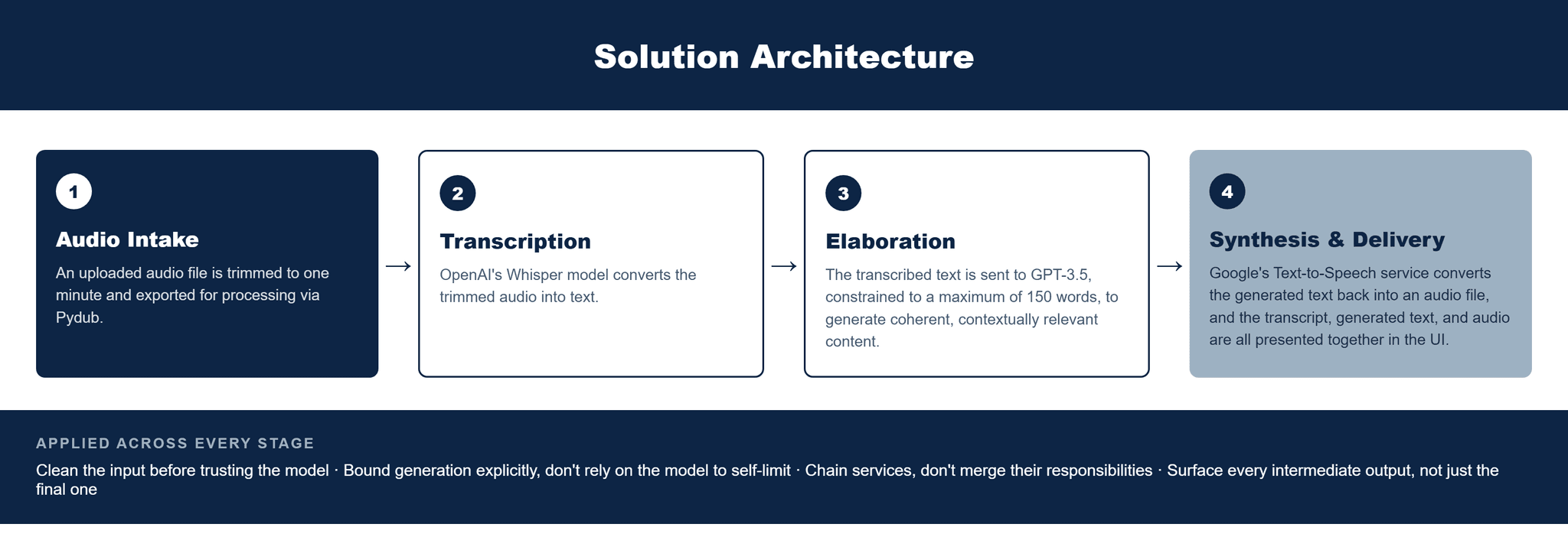
Pfactorial built Voice Genius as a Flask application orchestrating three chained AI services - Whisper for transcription, GPT-3.5 for generation, and Google Text-to-Speech for synthesis - behind one upload-and-listen interface.

Figure 1 - Each stage's output becomes the next stage's input, ending in an audio result the user can download.
Architectural principles
- Clean the input before trusting the model - Trimming and thresholding the audio ahead of transcription treats input quality as the pipeline's responsibility, not something to hope the model handles.
- Bound generation explicitly, don't rely on the model to self-limit - A hard 150-word cap on GPT-3.5's output keeps elaboration focused and predictable in length, rather than trusting the model's own judgment of when to stop.
- Chain services, don't merge their responsibilities - Transcription, generation, and synthesis stay as three distinct calls to three distinct services, each doing the one thing it's good at, rather than one service asked to do all three.
- Surface every intermediate output, not just the final one - The transcript and generated text are shown alongside the final audio, so a user can see exactly what the model heard and wrote, not just what it eventually said.
CAPABILITIES DELIVERED
Each capability handles one stage of turning spoken input into elaborated spoken output.
CAPABILITY | WHAT IT DOES |
|---|---|
Audio upload and preprocessing | Uploaded audio is trimmed to a one-minute window and prepared for transcription via Pydub. |
Speech-to-text transcription | OpenAI's Whisper model transcribes the processed audio into text. |
Bounded content generation | GPT-3.5 elaborates the transcribed text into new content, capped at 150 words to stay focused. |
Text-to-speech synthesis | Google's Text-to-Speech service converts the generated content into a downloadable audio file. |
Unified results view | The transcript, generated text, and synthesized audio are all presented together in one interface. |
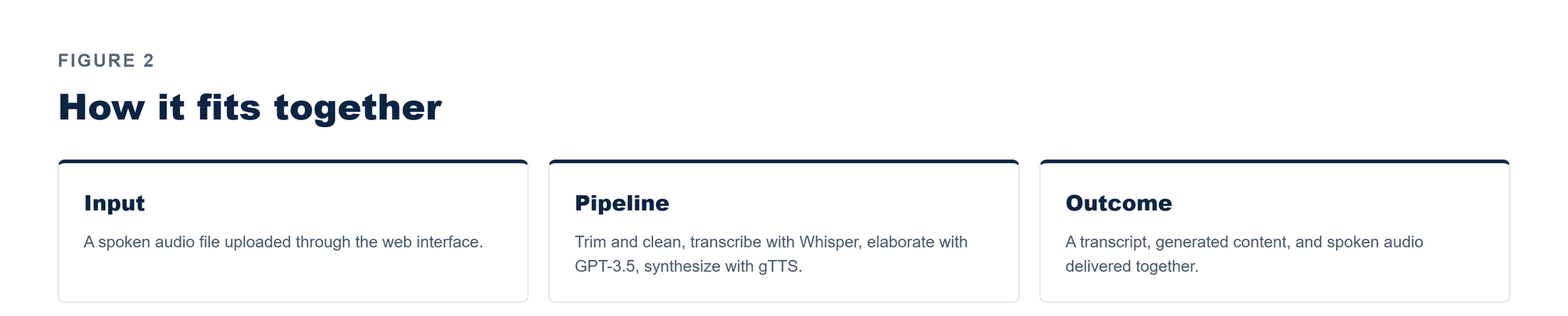
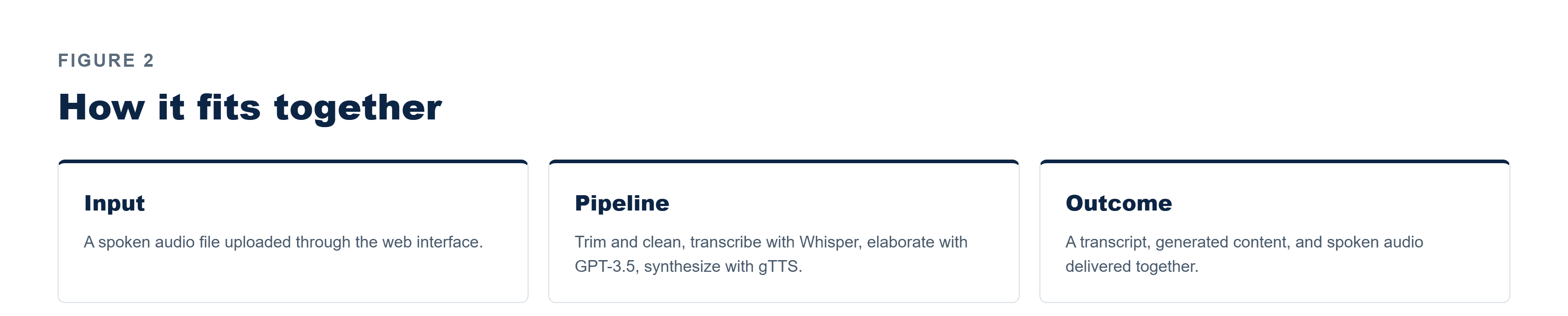
Figure 2 - The same three-stage chain - transcribe, elaborate, synthesize - produces all three outputs from a single upload.
Design note The one-minute audio trim and 150-word generation cap are deliberate, not incidental limits - they keep each external API call fast and predictable, trading input length for response time in a pipeline that depends on providers outside the application's control.
ENGINEERING FOR SCALE AND RELIABILITY
Four decisions kept a three-provider AI pipeline dependable and easy to reason about.
A hard audio-length trim ahead of transcription
Limiting input to one minute via Pydub bounds both processing time and the cost and latency of the Whisper call, keeping the pipeline responsive rather than exposed to arbitrarily long uploads.
An explicit word cap on generation instead of trusting model-side limits
Constraining GPT-3.5 to 150 words at the prompt level keeps output length predictable and the elaboration on-topic, rather than depending on the model's own stopping behavior.
Two distinct provider integrations kept clearly separated
OpenAI's APIs handle transcription and generation while Google's Text-to-Speech handles synthesis, with each integration isolated so a change or outage on one provider's side doesn't ripple into the other.
Structured logging at every pipeline stage
Icecream-based logging tracks file saving, transcription, and generation as the request moves through the pipeline, making it possible to see exactly where a failure occurred across three chained external calls.
DELIVERY APPROACH
The build followed the pipeline itself, validating each stage before chaining the next one onto it.
1. Audio intake and preprocessing - building the Flask upload flow and Pydub-based trimming to a one-minute window.
2. Speech-to-text integration - wiring in OpenAI's Whisper model for transcription of the processed audio.
3. Content generation - connecting the transcribed text to a 150-word-bounded GPT-3.5 generation call.
4. Speech synthesis and unified UI - integrating Google Text-to-Speech and building the interface that presents transcript, generated text, and audio together.
RESULTS AND IMPACT

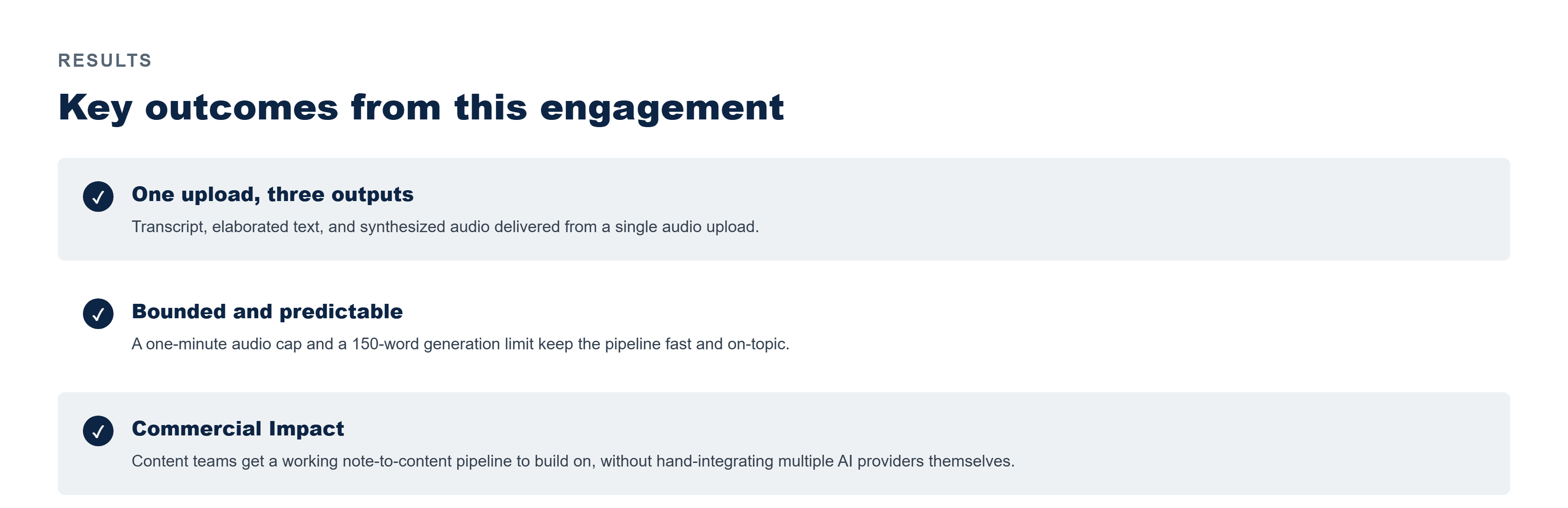
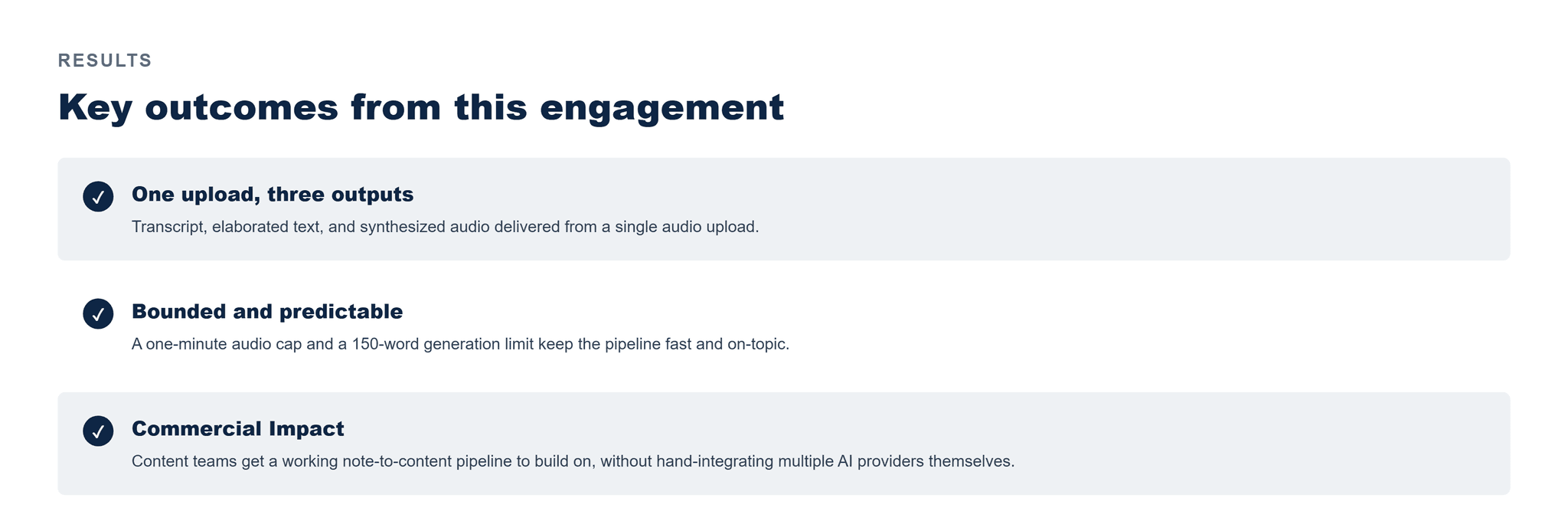
- Key outcomes from this engagement.
Voice Genius is built and functioning end to end, taking an uploaded audio file through transcription, bounded content generation, and speech synthesis, and presenting all three results together.
Because each provider integration is isolated and logged at every stage, the pipeline's behavior is traceable across three chained external AI calls rather than opaque when something goes wrong.
What it enabled commercially
The client has a working demonstration of a chained speech-to-content pipeline they can extend - longer audio handling, custom voice selection, or a production-grade deployment are all incremental additions on top of a proven three-stage chain rather than a rebuild.
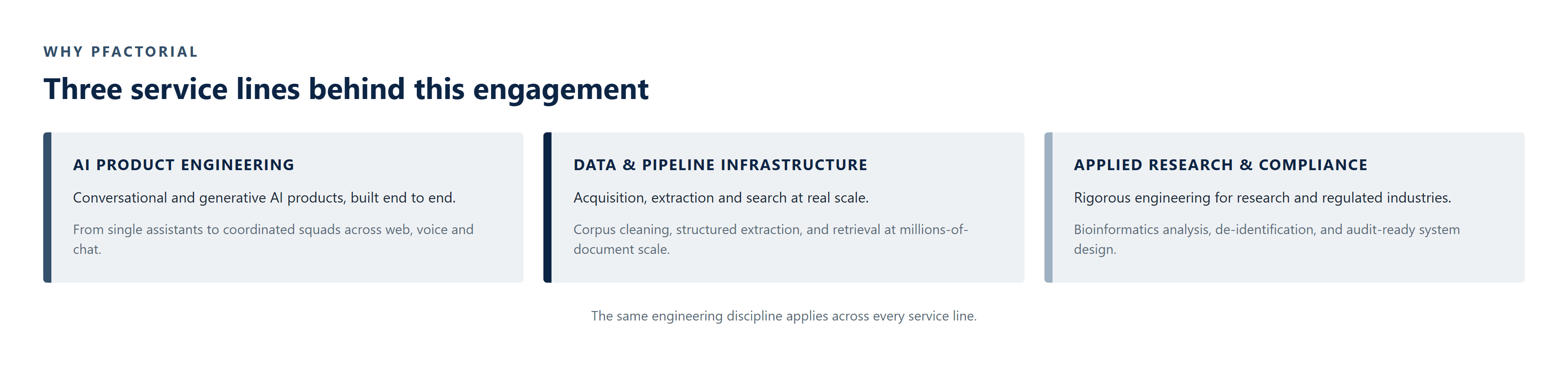
WHY PFACTORIAL
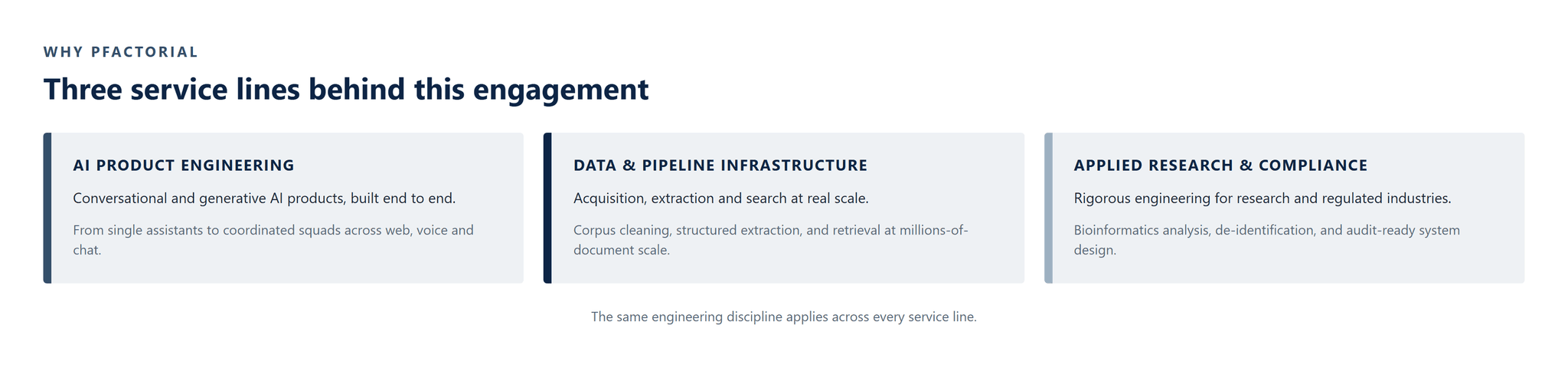
This engagement reflects Pfactorial's ability to orchestrate multiple external AI providers into one dependable pipeline, with explicit bounds and stage-by-stage visibility rather than treating chained AI calls as a black box.

- Service lines this engagement draws on.
Engagement enquiries Pfactorial Technologies works with organisations that need multiple AI services - speech, generation, synthesis - chained into one dependable product experience. If you're evaluating a voice or applied-AI pipeline, we're happy to give you an honest read on scope and risk before anyone commits to anything. · pfactorial.ai
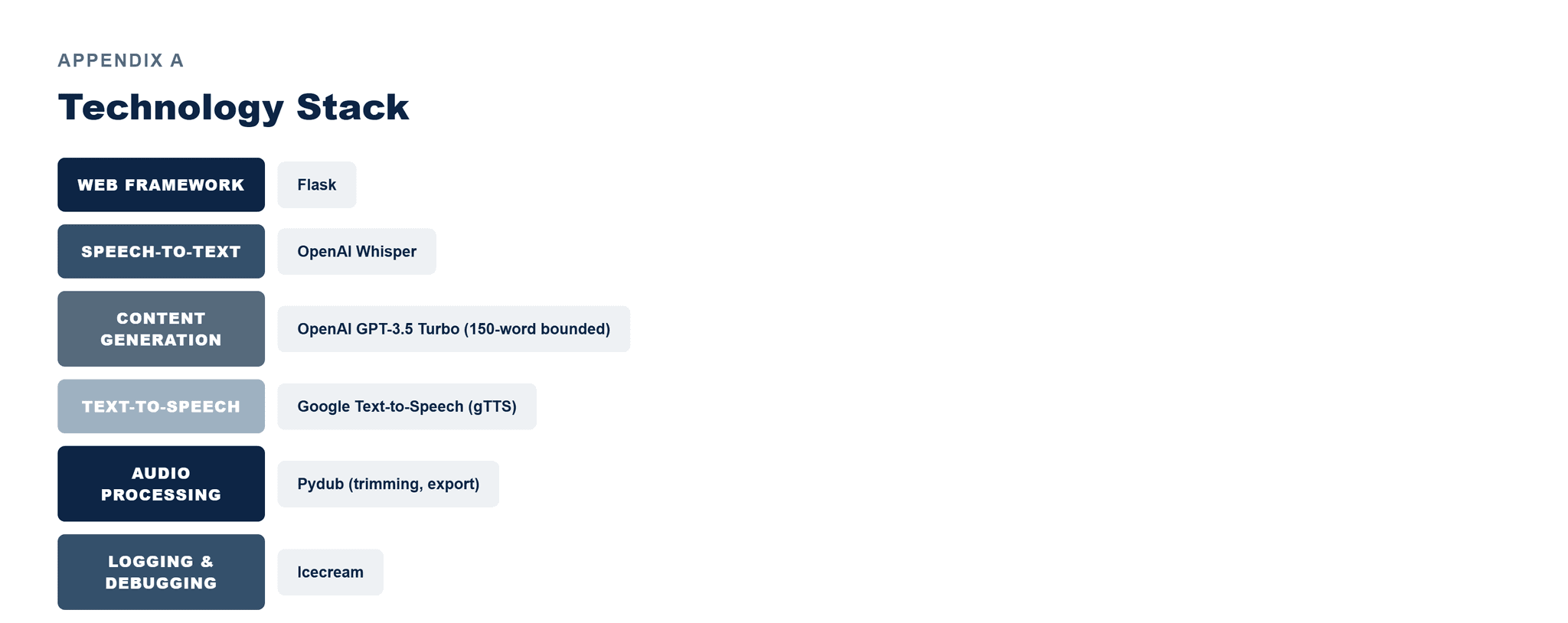
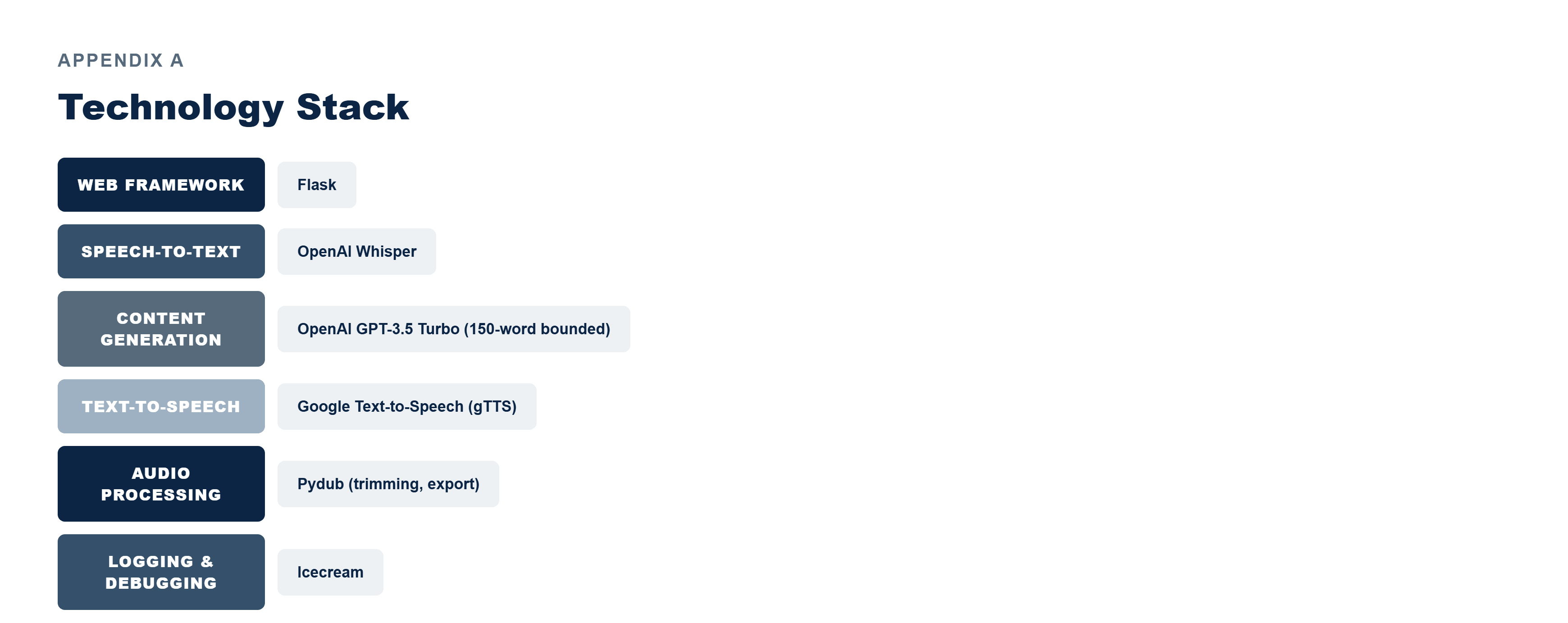
APPENDIX A - TECHNOLOGY STACK
The technology stack underpinning the system, grouped by the layer it serves.

Result and Analysis
ENGAGEMENT SNAPSHOT
How Pfactorial Technologies built a speech-to-content pipeline that transcribes spoken audio, elaborates it with a language model, and speaks the result back.
CASE STUDIES

You might also like...

Speech & Audio Pipelines
Aug 21, 20268 min readRead

OCR & Document ExtractionAutomotive & Vehicle
A Computer-Vision Platform for Real-Time Parking Occupancy and Vehicle Number-Plate Recognition
Aug 21, 20267 min readRead

A Fine-Tuned OCR Pipeline for Typed and Handwritten Documents, Served as a Governed API
Aug 21, 20268 min readRead

A Format-Agnostic Invoice Extraction Pipeline for Multi-Supplier AP Automation
Aug 21, 20267 min readRead

OCR & Document Extraction
A Hugging Face Inference-Backed Handwriting Transcription Tool for Single-Line Document Digitization
Aug 21, 20266 min readRead

Multi-Agent & Agentic SystemsE-commerce & Retail
A Multi-Agent Voice & Chat Shopping Assistant Built on a Coordinated Squad Architecture
Aug 21, 20267 min readRead