Back September 24, 2025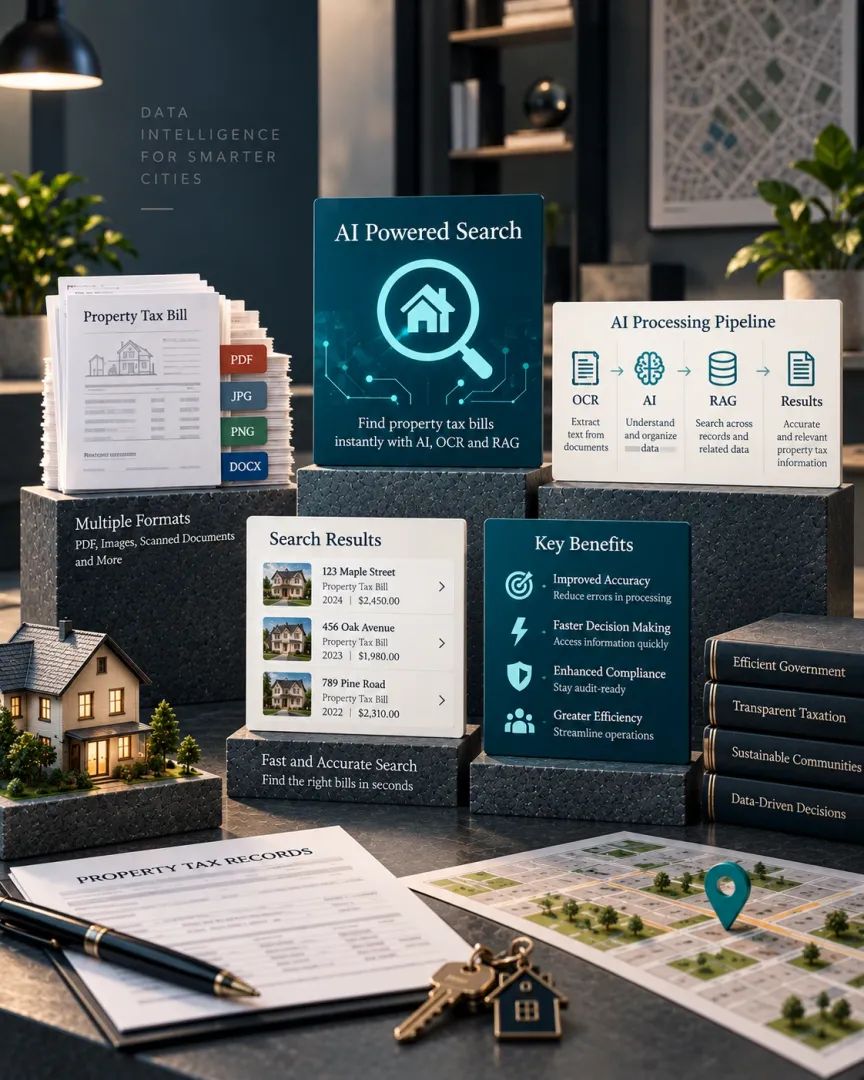
Real Estate & Property
AI Powered Search Engine for Property Tax Bills: Transforming Property Tax Management
.
Share
Managing property tax bills efficiently is a complex challenge faced by many local governments and real estate professionals. The traditional manual processing of thousands of property tax invoices annually often leads to delays, errors, and inefficiencies. Traditional methods, such as manual data entry and spreadsheet-based tracking, are increasingly being replaced by AI-powered solutions that offer greater speed and accuracy. However, the advent of AI powered search engine for property tax bills is transforming property tax management by leveraging cutting-edge technology such as optical character recognition (OCR), artificial intelligence (AI), and retrieval-augmented generation (RAG). This article explores how these AI powered tools are revolutionizing the property tax process, delivering key benefits like improved accuracy, faster decision making, and enhanced compliance for taxpayers and tax professionals alike. AI is not only reshaping property tax management but is also revolutionizing many industries, including telecommunications, energy, and digital identification, demonstrating its transformative impact across various industries.
AI Powered RAG Based Search Engine for Property Tax Invoices
The client processes over 20,000 property tax invoices every year, covering residential, commercial, and industrial properties. Historically, this process relied heavily on manual efforts, where clerks would search through scanned invoices scattered across different departments. This traditional method resulted in slow retrieval times, frequent errors, and bottlenecks, especially during peak assessment cycles. To address these challenges, Riverton implemented a Retrieval-Augmented Generation (RAG)-based AI powered search engine for property tax bills, designed to automate and optimize invoice management. Property tax management often varies by county, with each county having its own specific workflows and rules for assessment and valuation. The solution can be adapted to meet county-specific requirements, ensuring compliance and efficiency across different jurisdictions.
This innovative platform integrates advanced AI technology to provide efficient, accurate, and scalable solutions for managing property tax records. By transforming the process with AI driven insights and automated workflows, Riverton has empowered its staff and stakeholders with transparent, reliable, and timely access to critical tax data. The OCR and AI validation components achieve a high level of accuracy and reliability, ensuring both scanned and handwritten tax documents are processed with exceptional precision.
From Traditional to AI Powered Methods
Historically, property tax management relied heavily on manual processing, with tax professionals sifting through paper documents and spreadsheets to track assessments, payments, and deadlines. This traditional approach was not only labor-intensive but also susceptible to human error, leading to missed tax notices, compliance issues, and increased risk for both taxpayers and local authorities. The introduction of artificial intelligence and optical character recognition (OCR) has revolutionized the field. AI powered tools now automate data extraction, validate information, and perform compliance checks with remarkable speed and accuracy. Real estate professionals and local authorities benefit from AI driven insights that provide real-time updates on property tax notices, due dates, and assessments. This shift from manual to AI powered methods has dramatically improved efficiency, reduced errors, and delivered significant benefits for everyone involved in property tax management.
Solution Approach
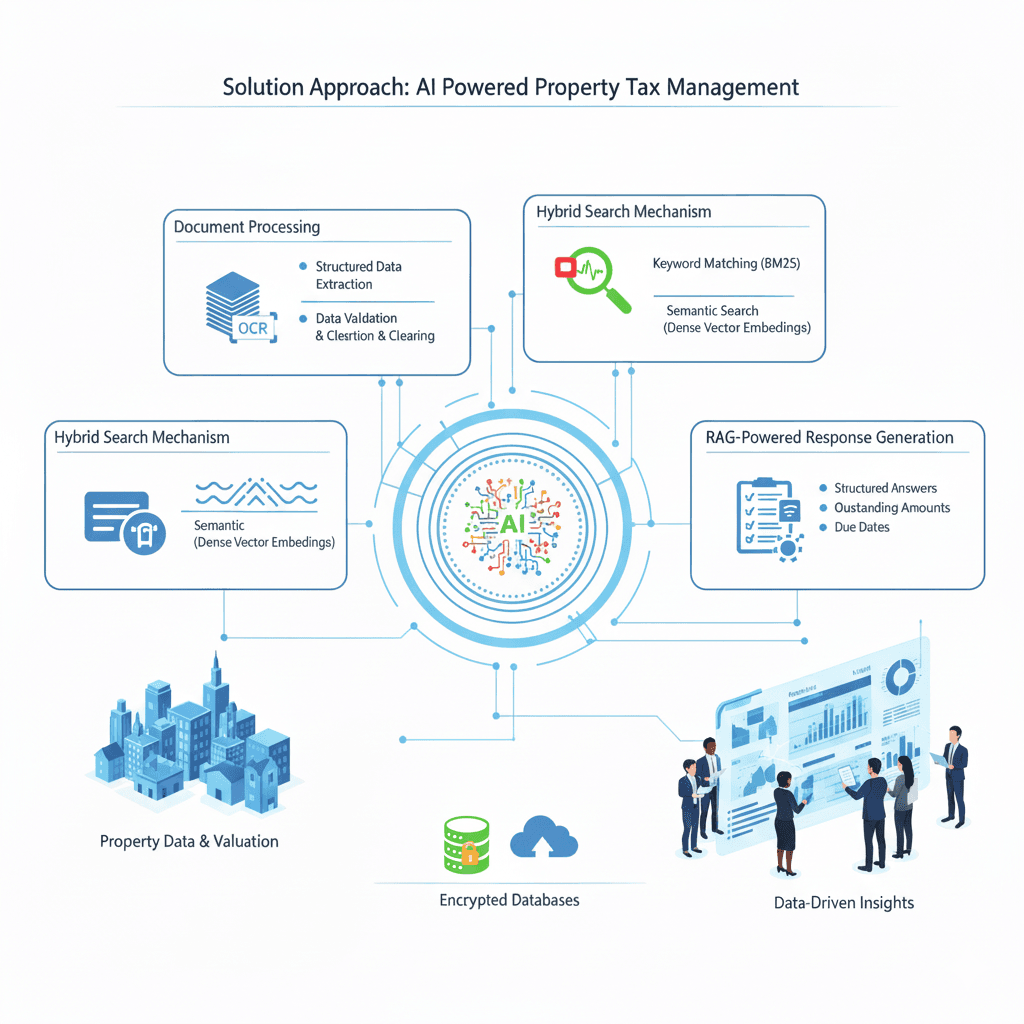
The AI powered search engine developed for Riverton incorporates several key technological components to streamline property tax management. This specialized tool automates document processing, including the extraction of unstructured data from scanned tax notices and handwritten forms.
The system is capable of extracting and tracking tax document references, which serve as unique identifiers for validation and audit purposes. Key data fields extracted include owner name, assessed value, tax year, property location or address, and payment status.
In the valuation process, the platform supports the work of the assessor by providing accurate, up-to-date property data and facilitating collaboration with other local government officials. This ensures that property assessments are both efficient and reliable. AI can also automate analytics on aerial imagery for property tax assessment, further enhancing the accuracy and efficiency of the valuation process.
AI-Driven Document Processing
All existing and incoming property tax invoices, whether scanned PDFs or digital documents, are uploaded to the platform. Using optical character recognition (OCR), the system converts these files into machine-readable text, extracting essential data fields such as account numbers, parcel IDs, tax years, assessed values, and payment histories. The AI further cleans and validates this data, addressing common issues like misaligned tables or faded scans, thereby enhancing accuracy and reliability.
Hybrid Search Mechanism
To meet diverse user needs, the solution employs a hybrid search approach:
- Keyword Matching (BM25 Algorithm): Enables clerks to quickly locate documents using exact details like account numbers or street names.
- Semantic Search (Dense Vector Embeddings): Allows staff to perform natural language queries such as “Show unpaid commercial property invoices from 2022,” ensuring relevant results even when phrasing varies or metadata is inconsistent. Natural language processing allows AI-powered tools to understand user intent in conversational queries, facilitating efficient retrieval of property tax information.
RAG-Powered Response Generation
The system uses a large language model to synthesize information from retrieved documents, providing users with structured answers along with valuable context such as outstanding amounts, past correspondence, and due dates. By delivering real time insights, the system enables users to respond quickly and efficiently. This AI powered response generation supports faster decision making and reduces manual effort.
Enhanced Transparency and Accountability
The platform produces detailed, auditable reports documenting the valuation process and tax assessments. This transparency builds trust among taxpayers, tax professionals, and local authorities, while supporting compliance and governance. AI property tax tools can also offer custom reports and dashboards to help understand tax metrics clearly, providing stakeholders with actionable insights.
Accurate and Impartial Valuations
By analyzing vast datasets with AI algorithms, the system minimizes human bias and delivers consistent property valuations. This impartiality benefits homeowners, potential buyers, and real estate professionals by ensuring fair tax assessments.
Data-Driven Insights and Analysis
The AI tools generate actionable insights from historical tax data, helping city leaders identify trends, optimize tax collection strategies, and make informed decisions about future tax policies. AI also predicts future tax liabilities and identifies trends by analyzing historical data and market conditions, enabling informed decision-making and proactive planning for both taxpayers and local authorities.
Workflow of the RAG-Based Search Engine
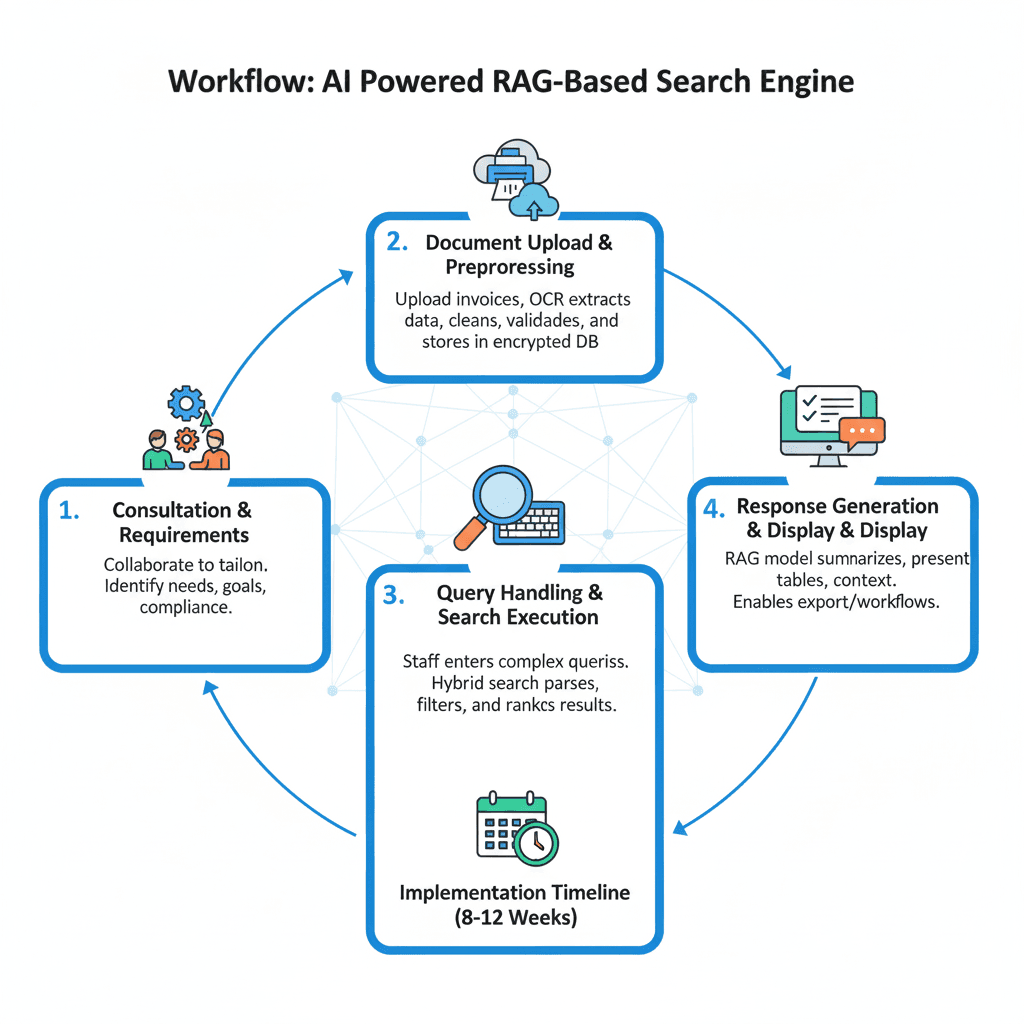
The implementation and daily use of the AI powered search engine follow a structured workflow designed for efficiency and effectiveness, ensuring the system can efficiently serve clients with varying requirements:
1. Consultation and Requirements Gathering: Project experts collaborate with city leaders to understand specific client needs, goals, and compliance requirements, tailoring the solution to meet those needs.
2. Document Upload & Preprocessing: After each billing cycle, the finance office uploads new property tax invoices. The system automatically processes and applies OCR to extract structured data such as owner details, property addresses, assessed values, and tax dues. Duplicate records and data gaps are identified and resolved before securely storing the information in encrypted databases.
3. Query Handling & Search Execution: Staff can enter complex queries like “List all unpaid residential invoices for Maplewood District, tax year 2023.” The hybrid search engine is designed to serve multiple clients, including city offices and external stakeholders. It parses these queries, filters results based on relevant criteria, and uses semantic intelligence to surface all pertinent invoices despite data inconsistencies. Results are ranked by factors such as recency or amount due.
4. Response Generation & Display: The RAG model summarizes search results, presenting clear tables of key invoice data alongside contextual information like average payment times and notes from prior reminders. The AI-powered system delivers improved response times, allowing users to export these summaries or trigger automated workflows such as sending reminders or managing appeals directly within the platform.
5. Implementation Timeline: From initial consultation to full deployment, the process typically takes 8 to 12 weeks, depending on data complexity and resource availability.
Implementing AI Powered Search Engine
Integrating an AI powered search engine into property tax management systems can transform the way tax professionals and organizations handle property tax records. With the ability to process and analyze vast amounts of historical data, these advanced tools deliver instant responses to even the most complex queries. Tax professionals can quickly locate specific tax records, monitor due dates, and identify potential errors or exemptions, all within a single platform. Additionally, AI can enhance title searches by instantly scanning and analyzing public property records, improving accuracy and speed during real estate transactions. The AI powered search engine also enhances collaboration between taxpayers, local authorities, and real estate professionals by ensuring that everyone has access to up-to-date and accurate information. By streamlining the management of property tax data, organizations can reduce operational costs, improve compliance, and make more informed decisions, ultimately leading to a more efficient and transparent property tax management process.
Results & Impact
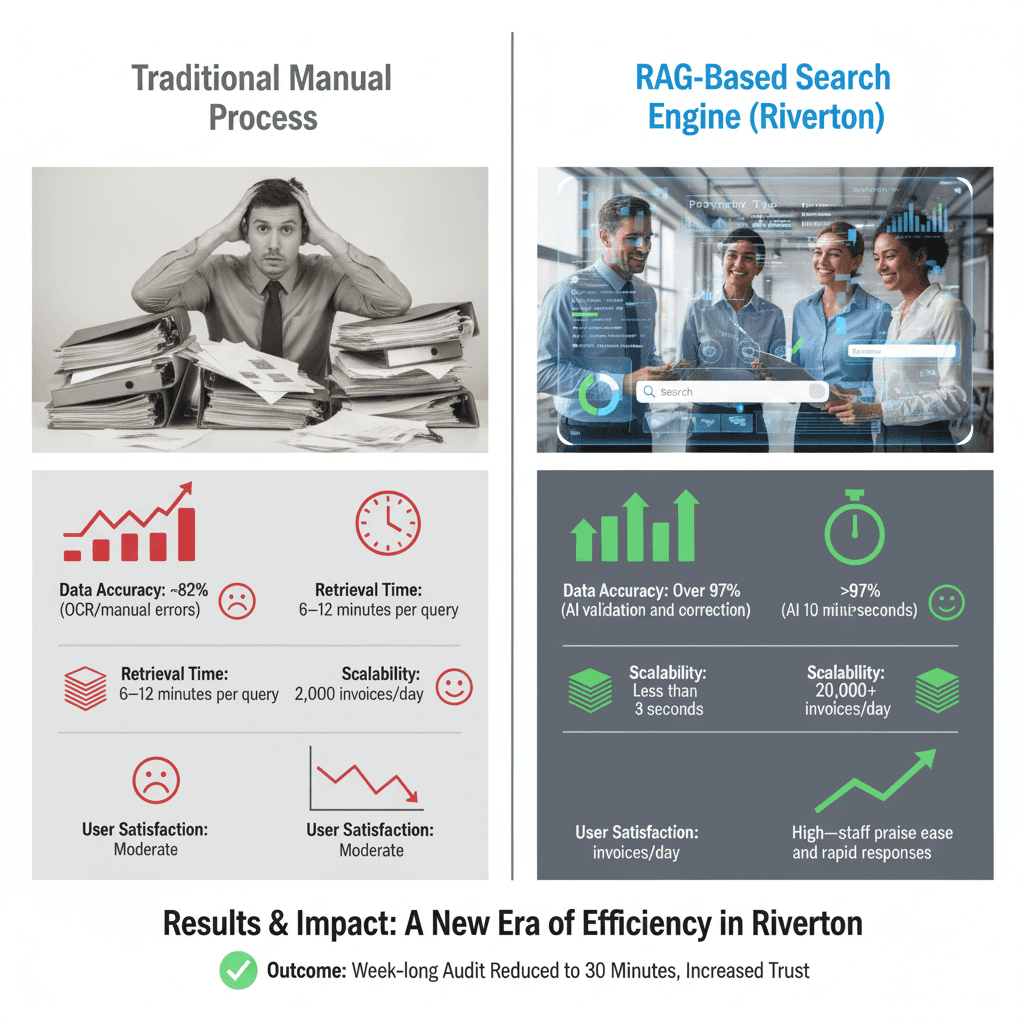
Since adopting the AI powered search engine for property tax bills, the City of Riverton has experienced significant improvements across multiple metrics. The AI-powered platform is also helping businesses streamline their property tax processes by providing faster retrieval, improved accuracy, and actionable insights that support better compliance and decision-making. Chatbots integrated into the system can provide accurate and instant property tax information, enhancing user experience and reducing the workload on staff.

For example, during the 2023 assessment season, Riverton’s finance department needed to identify delinquent properties quickly for notification. The AI powered platform reduced a week-long manual audit to just 30 minutes, allowing staff to focus on citizen services and high-value tasks. Additionally, the increased transparency and accuracy have lowered the number of disputes and expedited resolution times, building greater trust among taxpayers and local authorities.
For more information or support, please contact our team.
Key Benefits
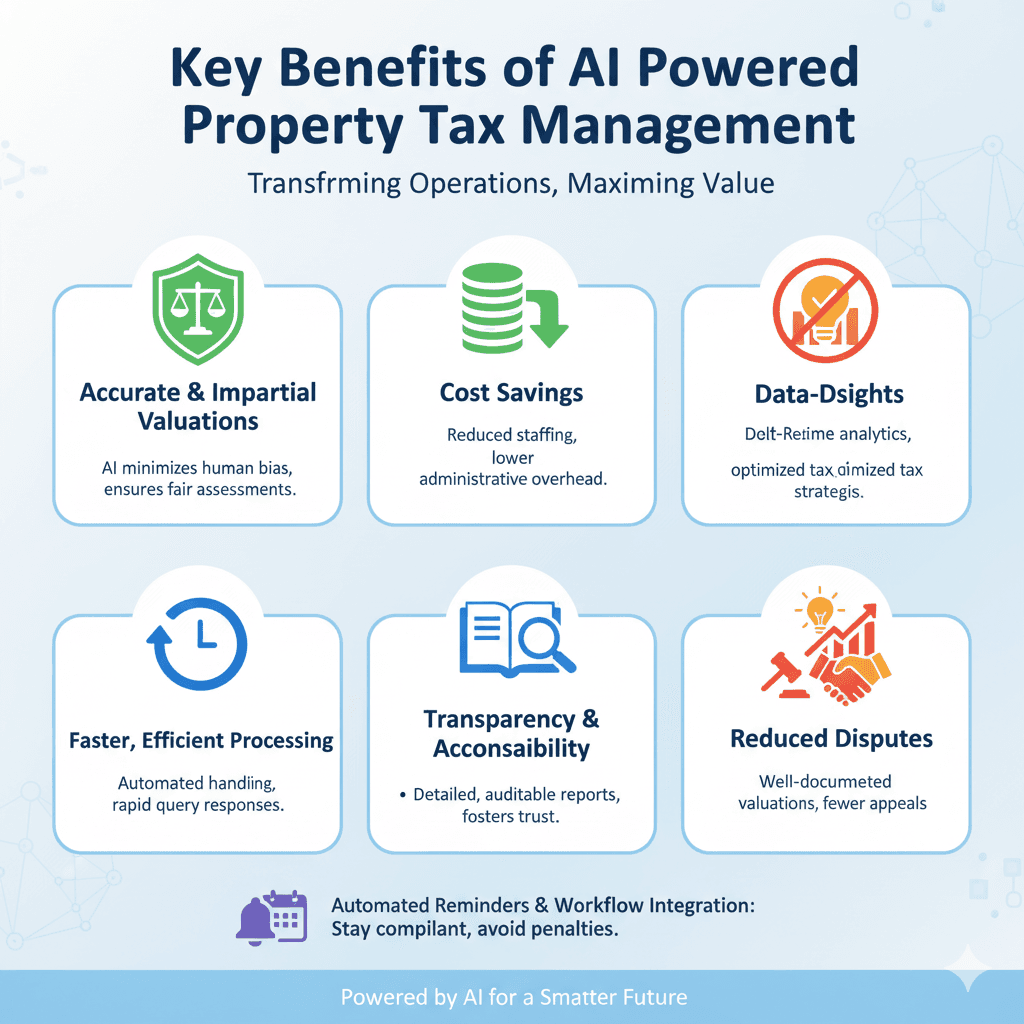
The implementation of this AI powered search engine offers numerous key benefits for property tax management:
- Accurate and Impartial Valuations: AI minimizes human bias, ensuring fair assessments across jurisdictions.
- Faster, Efficient Processing: Automated document handling and semantic search enable rapid responses to complex queries, significantly reducing manual processing time.
- Cost Savings: Streamlined operations reduce the need for seasonal staffing and lower administrative overhead.
- Transparency and Accountability: Detailed, auditable reports support compliance and foster trust among taxpayers and officials.
- Data-Driven Insights: Access to real-time AI driven insights empowers city leaders to optimize tax strategies and manage risks effectively.
- Reduced Disputes and Litigation: Well-documented, AI-assisted valuations decrease the frequency of appeals and conflicts.
- Automated Reminders and Workflow Integration: The platform’s ability to trigger notifications and manage deadlines helps taxpayers stay compliant and avoid penalties.
Tools, Frameworks, and Models Used
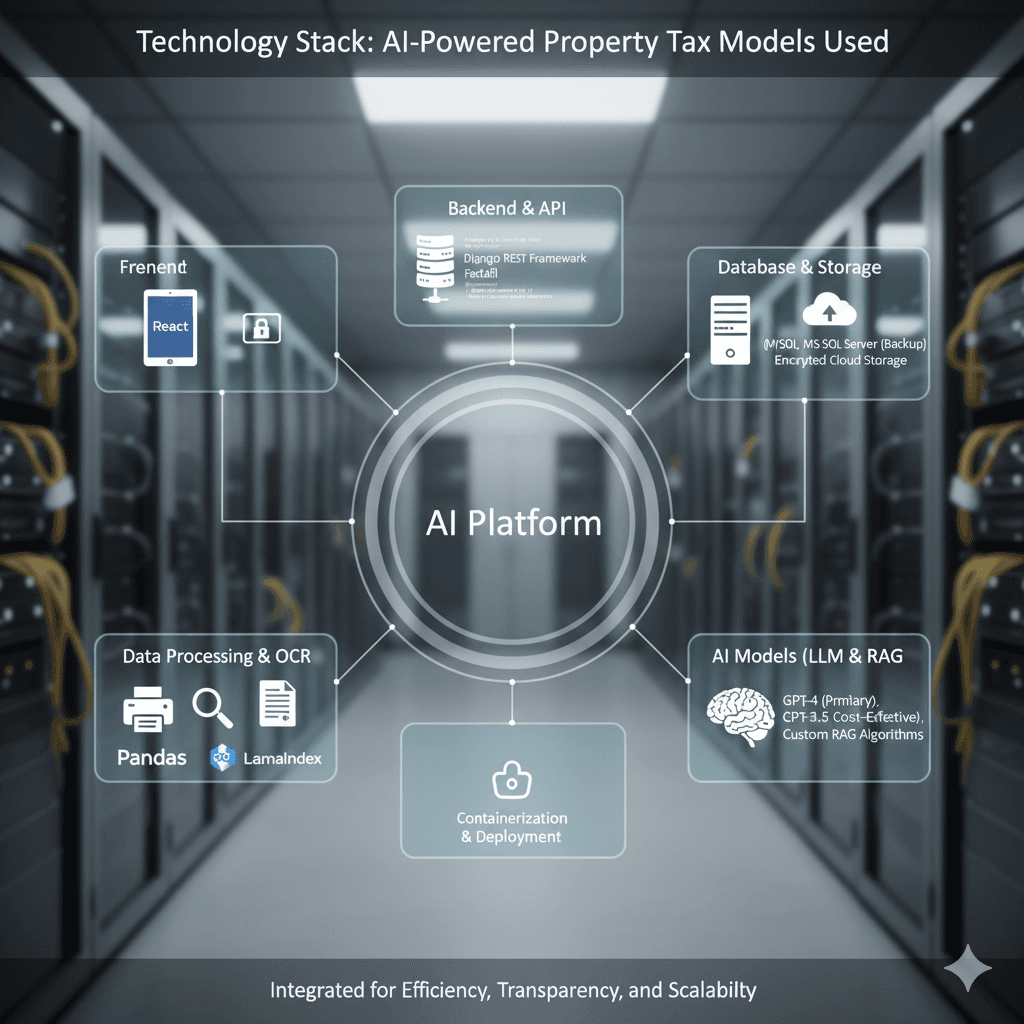
The AI powered search engine integrates a robust technology stack tailored for municipal tax management:
· Frontend: React interface designed for user-friendly municipal workflows, with secure JWT authentication.
· Backend: Django REST Framework for API and user management, combined with FastAPI for fast search and query processing.
· Database & Storage: MySQL for core records, MS SQL Server for backup and disaster recovery, and encrypted cloud storage for document safety.
· Data Processing: Pandas for querying and reporting, Document AI for OCR and data extraction, and LlamaIndex for semantic and hybrid search with RAG capabilities.
· Containerization & Deployment: Docker ensures consistent deployment across environments.
· AI Models: GPT-4 serves as the primary large language model for generating responses, with GPT-3.5 available for cost-effective alternatives.
By combining these advanced tools with AI powered valuation technology, Riverton’s property tax management process has become more efficient, transparent, and scalable—ready to meet future demands while controlling costs and risks.
In conclusion, the AI powered search engine for property tax bills is a game-changing solution that is transforming property tax management for cities like Riverton. By automating repetitive tasks, improving data accuracy, and providing real-time AI driven insights, this technology empowers tax professionals, real estate experts, and local authorities to make informed decisions quickly and confidently. As property tax compliance becomes increasingly complex, adopting integrated AI powered tools will be essential for businesses and governments aiming to enhance efficiency, reduce risks, and serve their communities better.
The Future of Property Tax Management with AI
Looking ahead, artificial intelligence is set to play an even greater role in transforming property tax management. As AI powered tools become more sophisticated, tax professionals will be able to analyze larger datasets, uncover trends, and predict future property tax assessments with greater accuracy. Automation will further reduce the need for manual processing, allowing property tax notices and assessments to be handled swiftly and with minimal risk of error. This evolution will not only make property tax management more efficient and cost-effective but will also enhance compliance and customer service for taxpayers, local authorities, and real estate professionals. The future of property tax management lies in leveraging AI to enable faster decision making, reduce risks, and deliver actionable insights that benefit all stakeholders.
Getting Started with AI Powered Search Engine
Embarking on the journey to implement an AI powered search engine for property tax management begins with a clear understanding of your organization’s unique needs. Start by identifying the types of property tax data you manage and the level of automation required to meet your goals. Next, select an AI powered search engine solution that seamlessly integrates with your existing software and workflows. Once in place, tax professionals can take advantage of features like automated data extraction, real-time tax calculations, and compliance monitoring. To ensure a smooth transition, provide comprehensive training and support for users, and regularly review system performance to optimize efficiency and accuracy. By following these steps, businesses and organizations can harness the power of AI to enhance property tax management, reduce costs, and achieve greater compliance and operational excellence.